

This article vs. the pipeline-mechanics guide
This article covers the 20-minute daily routine: the foundational habits, the SSI, and the basic 5-comment + 3-request + 2-follow-up cadence. If you want the deeper content-to-pipeline system - reading engagement signals to spot warm prospects, the 2-week pre-warm window, and the DM playbook that turns conversations into pipeline - read our LinkedIn social selling techniques guide.
If you are using LinkedGrow for social selling, the engagement dashboard tracks your daily likes and comments with progress bars, so you can see at a glance whether you are hitting your engagement goals. Combined with LinkedIn's native analytics showing who is viewing your profile and which posts drive the most engagement, you have a complete picture of where your social selling efforts stand and where to adjust. The full "who viewed your profile" list sits behind a paid plan, so it helps to know whether LinkedIn Premium is worth it for your goals before you upgrade. Understanding how to use LinkedIn social selling to convert connections to clients starts with one uncomfortable truth: cold outreach is dying a slow, painful death. Connection requests with a pitch in the first message get ignored. Templated InMails land in a graveyard of unread notifications. And that sales sequence you bought from a guru who swears it generates "50 meetings a month" barely gets a 2% reply rate. People on LinkedIn have developed an immune system against being sold to, and every generic "I noticed your profile and thought we could connect" message triggers it instantly.
Social selling flips the entire model. Instead of reaching out cold and hoping someone responds, you build visibility and trust over time so that prospects come to you already warmed up. You post content that demonstrates your expertise. You comment thoughtfully on your prospects' posts so they recognize your name. You share insights that make them think "this person actually understands my problem." By the time you send a direct message, it does not feel like a cold pitch because you are not a stranger anymore. You are that helpful person who keeps showing up in their feed with something genuinely useful to say.
This guide will walk you through exactly how to build a LinkedIn social selling strategy that converts connections into customers. Whether you are a coach selling high-ticket services, a small business owner generating B2B leads, or a sales professional trying to fill your pipeline, the principles are identical. We will cover the daily habits, the content strategy, the engagement tactics, and the tools that make the entire process sustainable without eating your whole day.
What does LinkedIn social selling actually mean in 2026?

Social selling has become one of those terms that everyone uses and nobody agrees on. Some people think it means sending connection requests to everyone in their target market and then dropping a pitch in the welcome message. Others think it means posting motivational quotes and waiting for clients to magically appear in their inbox. Both interpretations are wrong, and both will waste your time.
Real social selling is the process of using your LinkedIn presence to build trust with potential buyers before you ever ask for anything. It sits at the intersection of content marketing, networking, and sales, and the key word in the whole equation is "before." You are not selling on social media. You are using social media to earn the right to sell later. That distinction matters because it changes every single thing about how you use the platform, from what you post to who you engage with to how you measure success.
Think of it like attending a networking event. The person who walks in, hands out business cards to everyone, and pitches their service within thirty seconds of meeting someone is universally disliked. The person who asks thoughtful questions, shares a relevant story, remembers names, and follows up with something genuinely helpful is the one who leaves with three warm leads and two dinner invitations. Social selling on LinkedIn works exactly the same way, just at a much larger scale because the "event" happens in the feed every single day.
The reason social selling works so well in B2B is that most purchasing decisions involve significant trust. Nobody hires a consultant, signs a SaaS contract, or partners with an agency based on a single cold message. They research. They check your profile. They read your content. They look at who engages with your posts. They ask mutual connections about you. Social selling ensures that when a prospect goes through that research process, everything they find reinforces that you are credible, knowledgeable, and worth talking to. By the time you reach out, the sale is already half made.
What is the LinkedIn Social Selling Index (SSI)?
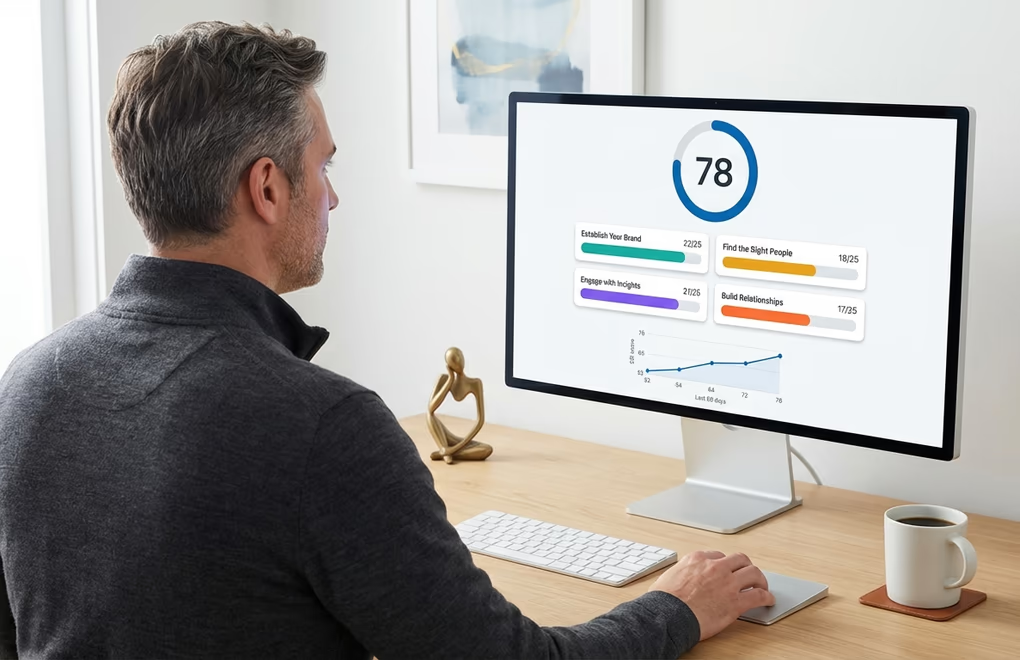
LinkedIn gives every user a Social Selling Index score between 0 and 100, and you can check yours right now at LinkedIn's SSI page. The score updates daily based on your last 90 days of activity, and while LinkedIn has been quietly de-emphasizing it in favor of their AI tools, it remains the clearest diagnostic available for understanding how well your social selling habits are working. For a complete walkthrough on how to find, read, and improve your LinkedIn SSI score, see our dedicated guide.
The SSI measures four pillars, each worth up to 25 points. The first pillar is "Establish Your Professional Brand," which tracks how complete and compelling your profile is. The second is "Find the Right People," measuring how effectively you use search and targeting to connect with decision-makers in your market. The third is "Engage with Insights," which looks at how actively you create and interact with content. And the fourth is "Build Relationships," evaluating the quality and strength of your connections over time.
The average score across all LinkedIn users hovers around 35, which tells you that most people barely use the platform beyond accepting connection requests and occasionally scrolling the feed. A score above 70 puts you in the top tier of your industry, and the people who consistently score in this range tend to have one thing in common: they treat LinkedIn as a daily habit, not an occasional afterthought. That said, do not turn SSI chasing into your goal. The score is a diagnostic, not a destination. If your SSI is climbing but your pipeline is empty, something is off with your strategy regardless of what the number says.
The most overlooked pillar is the second one, "Find the Right People." Many social sellers post great content and engage actively, but they never systematically build a network of people who could actually buy from them. If your feed is full of other marketers and content creators instead of your actual prospects, your social selling will feel productive but produce no revenue. Be intentional about who you connect with, and make sure at least half your weekly connection requests go to people in your ideal customer profile.
What is the 20-minute daily social selling routine?

The biggest misconception about social selling is that it takes hours a day. It does not. The professionals who generate consistent leads through LinkedIn typically spend 15 to 20 minutes per day on focused engagement, and they do it with the same discipline as any other sales activity. The secret is not volume, it is consistency. Showing up every single day for five focused minutes beats a two-hour marathon once a week because the algorithm and your audience both reward regular presence.
Here is what an effective 20-minute daily routine looks like. Most social sellers in this space evaluate Taplio alternatives before settling on a stack since Taplio bundles CRM features on top of content - the right pick depends on whether you want a separate CRM or just the content side. Start with five minutes of targeted engagement on your prospects' posts. Do not just hit the like button and move on, because a like is invisible after three seconds. Write a thoughtful comment that adds perspective, asks a genuine question, or shares a related experience. This is the single highest-leverage social selling activity because it puts your name and face directly in front of people you want to do business with, and it does so in a context where you are adding value rather than asking for something.
Spend the next five minutes responding to any comments or messages from the previous day. If someone commented on your post, reply. If someone sent you a connection request, review their profile and decide whether to accept. If a prospect sent a message, respond quickly and with substance. These small interactions compound over time into real relationships, and the speed of your responses signals to people that you are engaged and accessible.
Use the next five minutes to send three to five personalized connection requests. Do not use the default message. Reference something specific about their profile, a post they wrote, or a mutual connection you share. The acceptance rate on personalized requests is dramatically higher than generic ones, and each accepted request expands the pool of prospects who will see your content in their feed going forward.
The final five minutes go toward content creation or planning. Some days this means writing a quick text post. Other days it means brainstorming ideas for later in the week or polishing a draft you started yesterday. The point is to keep your content pipeline moving so you never have a week where you go silent. LinkedGrow's AI post generator can compress this step significantly by turning a one-line idea into a full draft that matches your voice, so even on busy days you can keep your posting schedule intact.
What content warms up prospects without a sales pitch?

Social selling content is fundamentally different from brand marketing content. You are not trying to go viral or get maximum impressions. You are trying to make the 200 to 500 people in your target market think "I should talk to this person" the next time they have the problem you solve. That means your content needs to demonstrate expertise in a way that feels conversational rather than promotional, and it needs to address the specific challenges your ideal buyers face in their daily work.
The most effective social selling content follows the "teach, don't pitch" principle. Share frameworks your clients use to solve problems. Break down a case study without mentioning your product. Explain a concept that your prospects google frequently but never find a clear answer for. When you consistently publish content that saves your prospects time or teaches them something they did not know, you become the obvious choice when they are ready to buy because you have already proven your competence dozens of times in their feed.
One pattern that works exceptionally well is what experienced social sellers call "pain point storytelling." You describe a situation that your ideal client is currently experiencing, explain why the common approaches to solving it fail, and then offer a different perspective without ever mentioning your product or service. The prospect reads it and thinks "this is exactly what I am dealing with right now, and this person clearly understands the nuances." That recognition alone is more powerful than any pitch because it creates a feeling of being understood, which is the foundation of trust.
Mix your content between educational posts, personal stories that reveal your professional journey, and occasional industry opinions that show independent thinking. If you need help keeping this mix consistent, a content calendar makes it easy to plan a month of posts that cover all three angles. The key is to keep promotional content to less than 15% of what you publish. The moment your feed starts feeling like a series of advertisements, the prospects who were warming up to you will tune out and you will have to start the trust-building process all over again.
How do you turn LinkedIn engagement into real conversations?

Posting content and commenting on posts builds visibility, but the actual selling happens in direct messages. The critical difference between social selling DMs and cold outreach DMs is context. When you message someone whose posts you have been commenting on for three weeks, and who has seen your content in their feed multiple times, the conversation starts at a completely different level of trust than a message from a total stranger.
The most effective social sellers follow a predictable engagement ladder. Week one, you comment on a prospect's post with something thoughtful. Week two, you send a personalized connection request that references the conversation you had in the comments. Week three, you react to another of their posts and maybe share it with a tag. Week four, you send a short, low-pressure message that references something they posted and offers a relevant insight, not a sales pitch. By the time you suggest a call in week five or six, it does not feel like cold outreach because you have been building the relationship in public for over a month.
The engagement ladder works because each touchpoint reinforces your expertise and your genuine interest in the prospect's work. When your name appears in their notifications five or six times over a few weeks through comments, reactions, and content they find valuable, you move from "random stranger in my network" to "that person who always has interesting things to say." This psychological shift is enormously powerful and it cannot be replicated by any automation tool or message template because it requires real, sustained interaction.
The challenge with this approach is scale. Manually tracking dozens of prospects, remembering who you commented on last week, and making sure you do not forget to follow up is mentally exhausting. Building a small private circle of the prospects you care most about and getting an email every time they publish helps - it removes the "will I catch their next post in the feed?" lottery. LinkedGrow's Network Notifications are built for exactly this: a clean email the moment someone in your circle publishes, with a direct link to the post on LinkedIn so you can react in your own voice within the critical first hour. No automated likes, no scripted comments - just a heads-up so you never miss the moment to start a real conversation.
Social selling done properly is a daily habit, and the part that slips first is always the searching. LinkedIn prospecting keeps that half running on the days the calendar fills up, so the routine survives a busy week instead of restarting after one.
What metrics actually matter in social selling?
One of the traps social sellers fall into is measuring their success by vanity metrics. Post impressions, follower count, and even SSI score can all go up while your pipeline stays empty. The metrics that matter for social selling are different from the metrics that matter for content marketing, and confusing the two leads to a lot of wasted effort.
The three metrics that actually predict social selling success are profile views from your target market, inbound connection requests from prospects, and DM conversations initiated by people you did not message first. Profile views tell you that your content is driving curiosity. Inbound connections tell you that prospects are actively choosing to add you to their network. And inbound DMs are the clearest signal that your social selling is working because someone went out of their way to start a conversation with you based purely on the trust you built through content and engagement.
Track these weekly, not daily. Social selling is a compounding activity and the results come in waves, not in a straight line. You might go two weeks with minimal inbound activity and then get three qualified conversations in a single day because a post happened to land with the right audience at the right time. The creators who give up at week three miss the breakthrough that usually comes around week six, so commit to at least 90 days of consistent execution before you judge whether the strategy is working.
If you are using LinkedGrow for social selling, the engagement dashboard tracks your daily likes and comments with progress bars, so you can see at a glance whether you are hitting your engagement goals. Combined with LinkedIn's native analytics showing who is viewing your profile and which posts drive the most engagement, you have a complete picture of where your social selling efforts stand and where to adjust.
How do you stop pitching and start connecting on LinkedIn?
Social selling is not a hack, a shortcut, or a clever way to disguise cold outreach. It is a fundamentally different approach to generating business on LinkedIn, one built on the premise that trust precedes transactions. The professionals who commit to this approach, who post valuable content three to four times a week, who spend 20 minutes a day engaging with their prospects' content, and who follow a structured engagement ladder from comment to connection to conversation, consistently outperform their peers who rely on volume-based cold outreach.
You do not need a massive following or a perfect SSI score to start seeing results. You need a clear picture of who your ideal buyer is, a daily engagement habit, and content that positions you as someone worth listening to. If you want a tool that brings all of these pieces together, from AI-powered content creation to curated prospect engagement lists to daily accountability tracking, LinkedGrow was built for exactly this workflow. The connections are already in your network. It is time to turn them into customers.
Frequently Asked Questions
Social selling is the practice of using LinkedIn to build relationships with potential customers by sharing valuable content, engaging with their posts, and having genuine conversations before ever making a sales pitch. It replaces cold outreach with a trust-first approach that leads to warmer, more qualified leads.
Most professionals start seeing inbound interest within four to eight weeks of consistent daily engagement. The first two weeks build visibility, weeks three and four generate recognition, and by week six you typically start receiving direct messages from prospects who feel like they already know you.
The average SSI score across LinkedIn sits around 35 out of 100. A score above 70 puts you in the top tier of your industry and network. Focus on the four pillars equally rather than maxing out one, and treat the score as a weekly health check rather than an end goal.
Three to four posts per week is the sweet spot for social sellers. Fewer than three makes it hard to stay visible, while posting daily can lead to burnout without proportional returns. Focus on quality and mix educational content with personal stories and industry insights.
Absolutely. Social selling works for any B2B relationship where trust matters before a purchase. Coaches, consultants, freelancers, and small business owners often see faster results than enterprise sellers because their personal brand feels more authentic and approachable to prospects.
The people you just read about are already on LinkedIn.
LinkedGrow runs an agent that finds the ones who match the customers you already have, sends the invitation in your words, and opens the conversation. You pick it up when somebody answers.
Build my agent free