
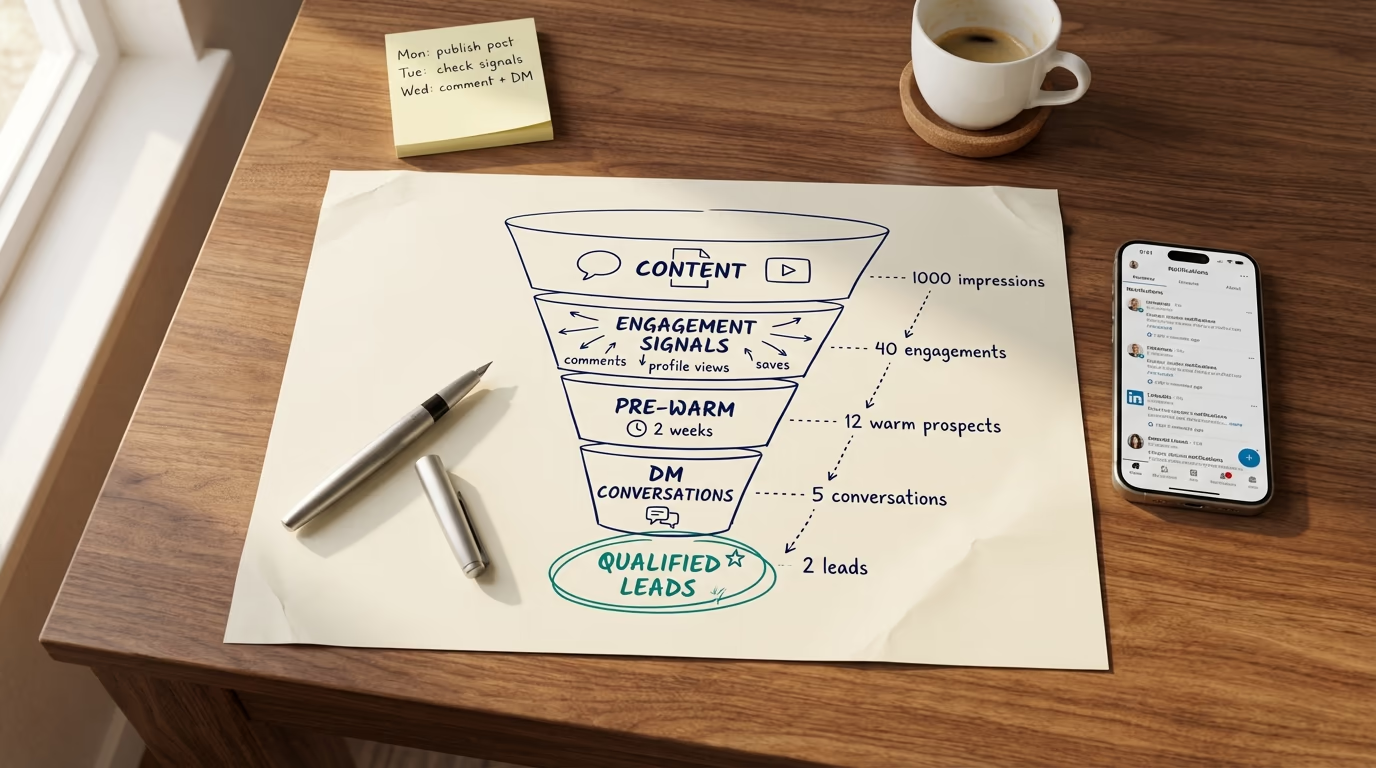
There is a fundamental problem with how most people approach lead generation on LinkedIn: they treat the platform like a phone book. They find prospects, send connection requests with a thinly veiled pitch, and then wonder why their inbox is full of silence. The reason is that buyers in 2026 have zero tolerance for unsolicited sales messages, and every generic "I noticed your impressive profile" DM triggers an instant delete reflex that no clever copywriting can overcome. If you want to learn how to use LinkedIn for social selling and generate qualified leads, you need to abandon the outbound playbook entirely and build something different: a system where your content does the selling, your engagement signals identify who is interested, and your conversations start warm because the prospect already knows who you are and what you do. LinkedGrow's social selling workflow supports this exact process, but the framework works with any tool because the principles are about human behavior, not software features.
The shift from cold outreach to content-led selling is not a theory or a trend. It is the direct result of how LinkedIn's algorithm and user behavior have evolved. Decision-makers now consume hours of content every week from people in their industry, and by the time they are ready to buy, they have already formed opinions about who understands their problems and who is just selling something. The question is whether you are one of the people shaping those opinions through your content, or whether you are the stranger who shows up in their DMs two months too late trying to pitch a solution they have already found through someone else's posts. This guide covers the full pipeline: what to post to attract the right people, how to read engagement signals to identify warm prospects, how to start conversations without being salesy, and how to turn those conversations into business.
If you are looking for a foundational overview of what social selling is and how the Social Selling Index works, we have a separate social selling strategy guide that covers that ground thoroughly. We also published a dedicated deep-dive on the LinkedIn Social Selling Index that explains how to find your SSI score, read each pillar, and improve it systematically. This article picks up where that one leaves off and goes deep into the lead generation mechanics that turn social selling activity into actual pipeline and revenue. For the wider playbook that ties content, outreach, and buying signals together, see our guide on how to generate leads on LinkedIn.
What content attracts LinkedIn buyers, not just an audience?
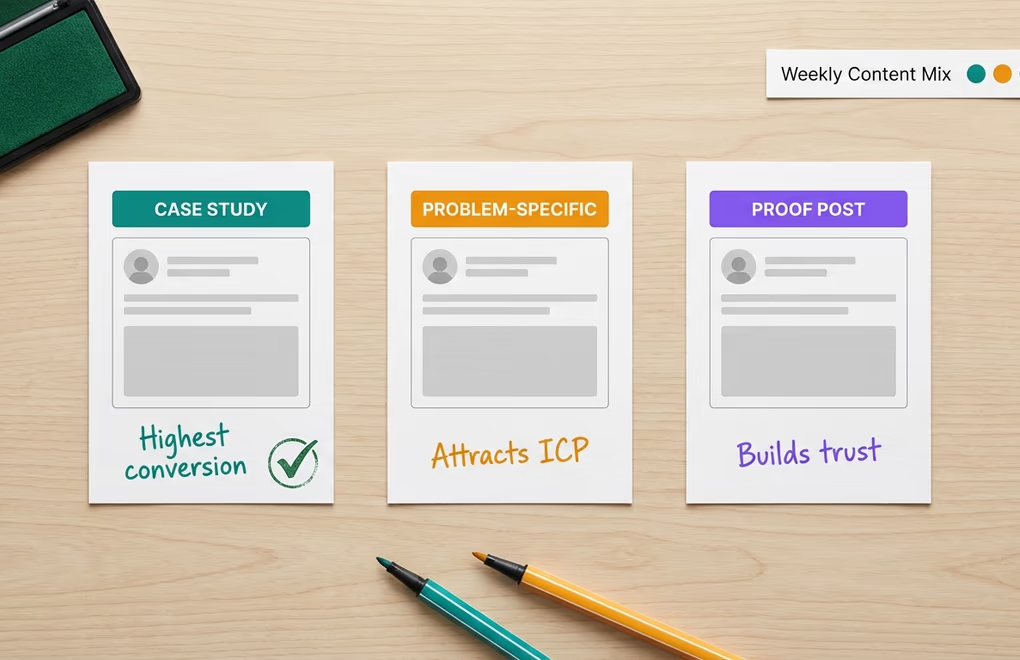
The biggest mistake social sellers make with content is optimizing for engagement instead of lead quality. A hot take about remote work might get 500 likes, but if your business helps SaaS companies reduce churn, none of those 500 people are potential clients. They liked your post because it was entertaining, not because it signaled that you understand their specific problem. Lead-generating content is narrow by design - it speaks to a specific pain point that only your ideal client profile recognizes, which means it might get fewer total likes but dramatically more profile visits, DMs, and conversations from people who actually buy what you sell.
The content type with the highest lead conversion rate is the problem-specific post - a post that describes a challenge your ideal client faces with enough specificity that they feel like you are reading their mind. Instead of "B2B companies struggle with lead generation," write about "why SaaS companies with 50 to 200 employees keep losing deals at the proposal stage when the product demo went perfectly." That second version will repel anyone who does not have that exact problem, which is a feature, not a bug. The people who do have that problem will stop scrolling, read every word, check your profile, and remember your name the next time they see you in their feed.
Case study posts are the second most effective format for generating leads because they combine proof with specificity. The formula is straightforward: describe the before state of a real client, explain what you changed, and share the result with concrete numbers. One consultant who focuses exclusively on SaaS churn reduction posted four detailed case study breakdowns per month and closed three five-figure contracts directly from DM conversations that started with prospects commenting on those posts. The posts themselves never got more than a few hundred likes, but the people who engaged were exactly the right audience because the content was too specific for anyone else to care about. LinkedGrow's AI post generator can help you draft these case study formats quickly, but the real magic is in choosing which client stories to tell, because the stories you share act as a filter that attracts more of the same type of client.
The third format to build into your content calendar is the "what we actually do" post - not a generic service description but a specific walkthrough of your process for solving one problem. Describe the first call, what you ask, what you analyze, what you deliver, and what the client sees at the end. These posts work for lead generation because they let prospects self-qualify. Someone reading your process and thinking "that is exactly what I need" is infinitely more likely to reach out than someone who vaguely knows you "do consulting." The transparency of showing your method also builds trust in a way that marketing copy never can, because it signals confidence that your process is good enough to share publicly.
How do you read engagement signals to identify warm prospects?
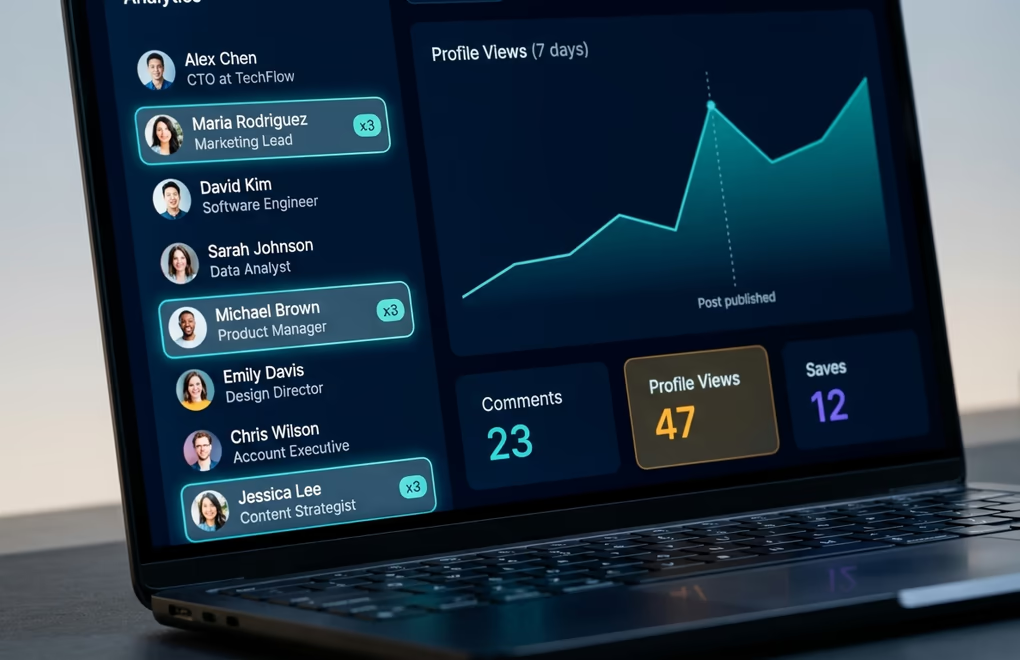
Every person who interacts with your content is telling you something about their level of interest. The problem is that most people treat all engagement as equal when it is not even close. Someone who likes your post is acknowledging they saw it. Someone who comments is investing time and putting their name next to yours publicly. Someone who views your profile after reading your post is actively evaluating whether you could help them. And someone who comments on three different posts over two weeks is sending a signal so strong that ignoring it is essentially leaving money on the table. The entire social selling pipeline depends on your ability to read these signals and act on them at the right time.
Repeat commenters are your warmest prospects. When someone comments on one post, they might just be engaged with the topic. When they comment on a second post, they are paying attention to you specifically. By the third interaction, they are functionally raising their hand and saying "I find your perspective valuable enough to keep coming back." These people should be at the top of your outreach list, not because they are ready to buy today, but because a conversation with them will feel natural rather than forced. They already have context on what you do and how you think, which means you are not starting from zero when you reach out. When you want to add a deliberate outbound list to these warm signals, our guide to how to prospect on LinkedIn covers the colder side that complements them.
Profile views are the second most valuable signal, especially when they happen within 24 hours of you publishing a post. That timing correlation tells you the person read your post, was intrigued enough to check who wrote it, and reviewed your profile for more context about what you do. If that person fits your ideal client profile - right industry, right role, right company size - they are a warm lead whether they realize it yet or not. The practical challenge is that LinkedIn only shows limited profile viewer data on free accounts, but even the last five viewers are worth checking after every post because the ones who visit your profile are consistently the ones closest to a buying conversation. Small business owners and solopreneurs in particular can build an entire pipeline from this one signal because their client base is focused enough that even a handful of warm prospects per week translates into meaningful revenue. Real estate agents are a prime example: they use referral-network social selling on LinkedIn to generate leads from adjacent professionals like mortgage brokers and HR directors who handle relocations.
The signal you should pay the least attention to is likes. A like is the lowest-effort action on LinkedIn, often done while speed-scrolling through the feed without actually reading the post. Likes are fine for vanity metrics but they tell you almost nothing about purchase intent. If you have limited time for outreach - and everyone does - prioritize commenters first, profile viewers second, and save anyone who bookmarked or shared your post for the top of the list because those are the highest-intent actions available on the platform.
What is the 2-week pre-warm strategy on LinkedIn?
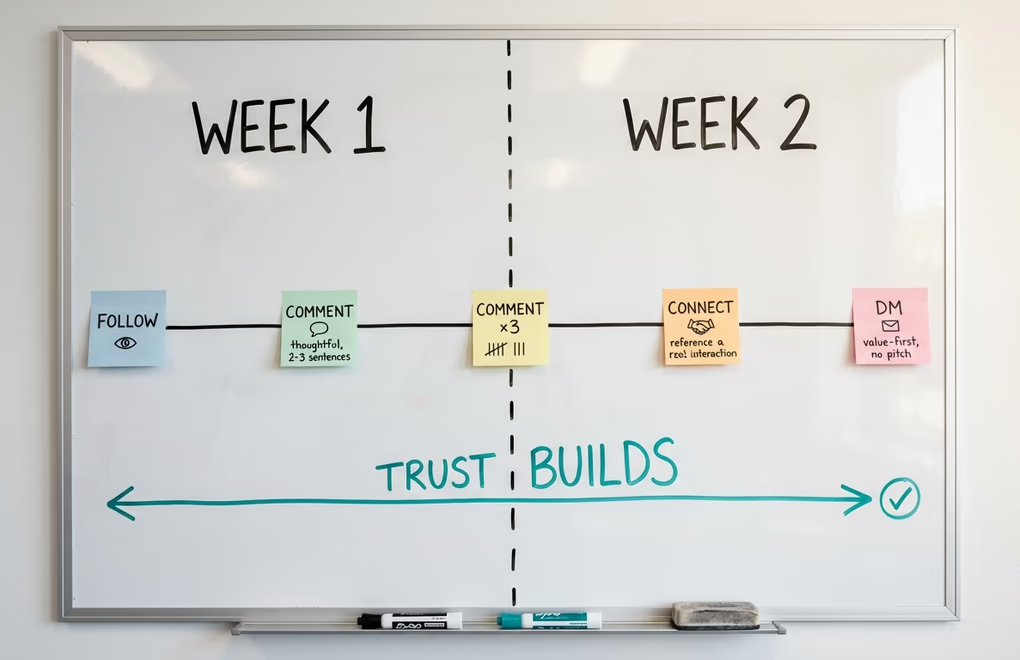
The difference between a connection request that gets accepted and one that gets ignored often comes down to whether the person recognizes your name when they see it. A cold connection request from a stranger with a pitch in the note has a single-digit acceptance rate. The same request from someone who has been commenting thoughtfully on their posts for two weeks has a dramatically higher chance of being accepted, because the recipient already has a positive association with your name and sees the request as a natural next step rather than an interruption. This is the pre-warm strategy, and it is the single most effective bridge between publishing content and starting sales conversations.
The process starts with identifying 30 to 50 people who fit your ideal client profile and following them without sending a connection request. Following shows up in their notifications but creates no pressure to respond. Turn on post notifications for each person so you see when they publish, and then - this is the critical part - leave a genuinely thoughtful comment on their next post within the first hour. Not "great post!" or "totally agree!" but a substantive two to three sentence comment that adds your perspective or experience to what they wrote. The comment needs to demonstrate that you actually read the post and have something intelligent to say about the topic, because surface-level engagement is invisible to the kind of senior decision-makers you are trying to reach.
After two weeks of consistent commenting - aim for two to three comments per prospect during that window - send a connection request with a brief, personalized note that references a specific interaction. Something like: "Enjoyed the conversation on your post about pipeline forecasting last week. Would love to stay connected." That message works because it is true, it is specific, and it makes the recipient feel valued rather than targeted. There is no pitch, no mention of what you sell, and no calendar link. The goal of the connection request is to open a direct message channel, nothing more. Everything else happens after the relationship has room to breathe.
Once connected, continue engaging with their content for another week before sending any direct message. When you do message, lead with something relevant to their recent activity or content rather than anything about your business. A practical message framework is: acknowledge something specific they posted or commented on, share a brief relevant insight or resource, and ask a genuine question about their experience with the topic. This feels like a conversation between professionals, not a sales sequence, and it opens the door for them to ask about what you do rather than you having to pitch it. The entire pre-warm timeline from first follow to meaningful conversation is typically three to four weeks, which feels slow until you realize that the conversations you start this way convert at five to eight times the rate of cold outreach and the relationships last years rather than ending at "not interested, thanks."
How do you start DM conversations that don't feel like a pitch?
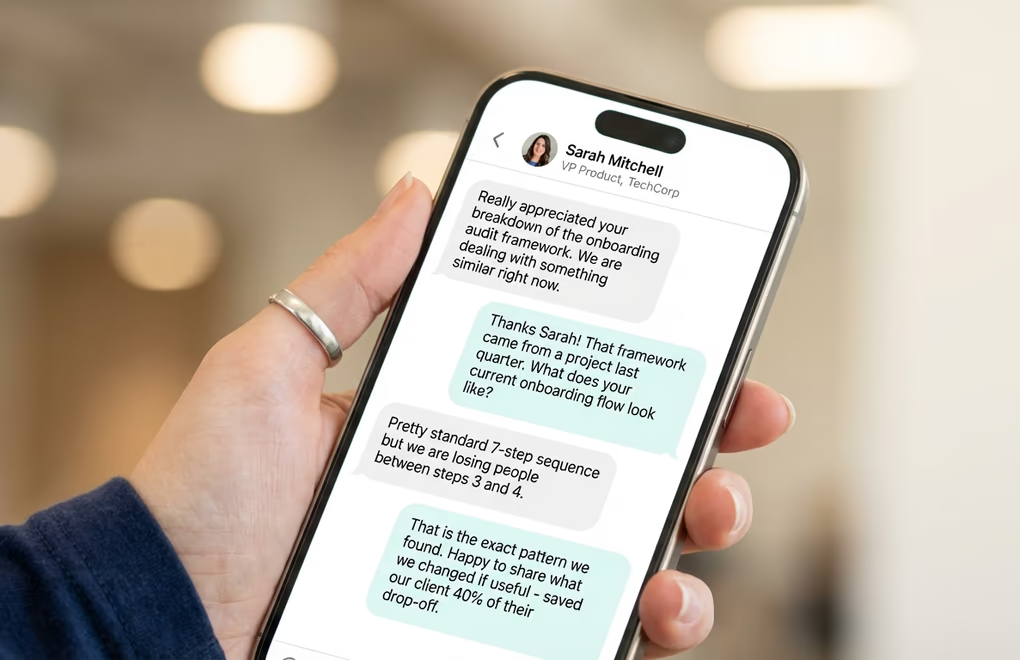
The moment you turn a warm prospect into a DM conversation is the most delicate part of the entire pipeline. Everything you built through content and pre-warming can evaporate in a single message if it reads like a pitch deck instead of a human being talking to another human being. The fundamental principle is this: the first DM should continue the conversation your content started, not start a new one about your product. If someone commented on your post about SaaS onboarding challenges, your DM should be about SaaS onboarding challenges, not about scheduling a demo. The sales conversation will happen naturally if the professional conversation is good enough.
For prospects who commented on your content, the easiest opening is to respond to their comment in the DM with a follow-up thought that would have been too long or too detailed for a public reply. "Your point about churn during the first 30 days really stood out to me. We had the exact same pattern with a client last quarter and the root cause was not what we expected. Happy to share what we found if it would be useful." That message works because it is genuinely helpful, it references a real interaction, and the offer to share more is positioned as a gift rather than a pitch. If they say yes, you send a brief summary of the insight and then ask about their specific situation. If they say no or do not reply, you have not damaged the relationship because nothing in the message was pushy.
For prospects who viewed your profile but did not engage with a specific post, the approach is slightly different because you do not have a content interaction to reference. In this case, lead with something from their recent content or profile that caught your attention and connect it to a perspective you can share. The goal is the same: start a professional conversation, add value, and let the sales opportunity emerge from genuine dialogue rather than manufacturing it with a template. Voice training helps here because your DM should sound exactly like your posts - if your content sounds like a thoughtful expert and your DMs sound like a sales bot, the disconnect destroys the trust your content built.
The critical rule for DM conversations: never pitch before the third exchange. The first message starts the conversation. The second message deepens it by asking about their situation or sharing something relevant. The third message, if the conversation is flowing naturally, is where you can ask whether they would find it helpful to explore the topic further on a quick call. By the third exchange, you have given value twice, demonstrated understanding of their world, and earned the right to suggest a next step. Even then, frame it as an offer rather than a request: "Would it be useful to walk through how we approached this? I could share our framework in 15 minutes if that would save you some time." That framing puts the prospect in control and positions the call as a favor rather than a sales meeting.
Reading engagement signals by hand works until you are watching more than a handful of accounts. Buying signals watches competitor engagement, public questions and new people in the seat for you, and every name comes back with the post that surfaced it attached.
How do you optimize your LinkedIn profile as a landing page?
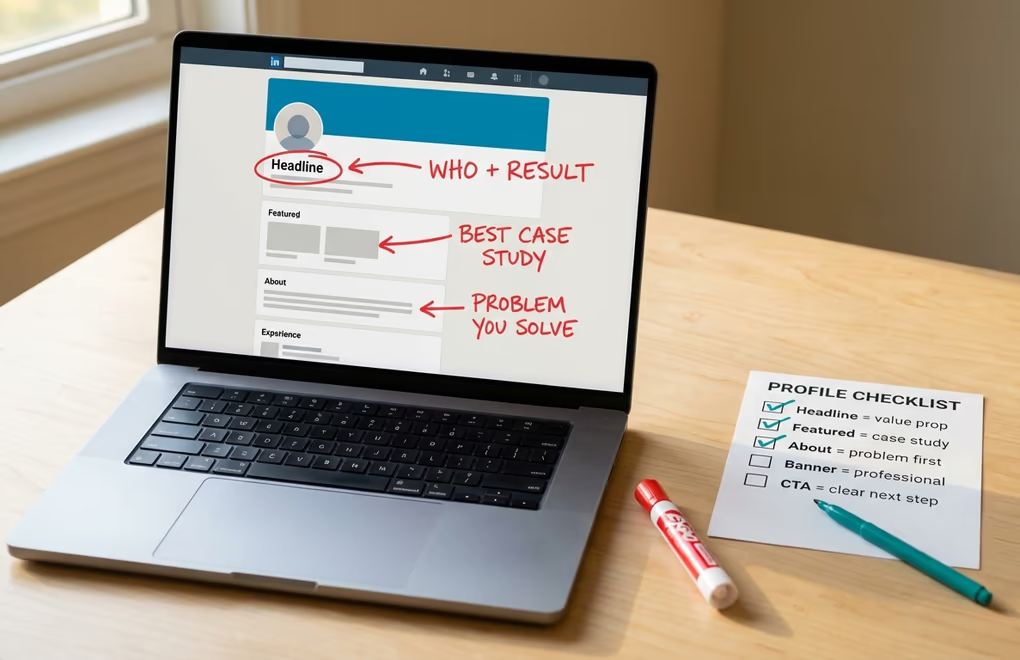
Every prospect who reads your content and thinks "this person might be able to help me" does the same thing next: they visit your profile. That profile visit is the highest-intent moment in the entire social selling pipeline, and if your profile reads like a resume instead of a value proposition, you lose the prospect right at the point where they were most ready to become a lead. Your LinkedIn profile needs to answer one question in the first three seconds: "how does this person help people like me?" If the answer is buried in your About section after a four-paragraph career biography, most visitors will leave before finding it.
Your headline is the single most important line on your profile because it appears everywhere: in search results, next to your comments, in connection suggestions, and at the top of your profile page. A headline that reads "VP of Sales at [Company]" tells visitors what you do but nothing about how you can help them. A headline that reads "Helping SaaS founders reduce churn by 15% through onboarding redesign" tells exactly the right person that they should keep reading. The formula for a lead-generating headline is: "Helping [specific audience] [achieve specific result] through [your method or approach]." Be as specific as possible about who you serve and what result you deliver, because specificity is what makes the right people stop and the wrong people self-select out.
The Featured section is the most underused real estate on LinkedIn profiles. Most people leave it empty or fill it with random posts. For social sellers, the Featured section should function like the CTA section of a landing page: pin your best case study post, a link to a free resource that demonstrates your expertise, or a post that explains your methodology. When a warm prospect visits your profile after engaging with your content, the Featured section is where you convert that interest into a next step. If you have a lead magnet, a free assessment tool, or even just a particularly strong post that lays out your framework, pin it in Featured and treat it as the primary conversion path on your profile.
Your About section should read like a personal branding statement, not a chronological career summary. Lead with the problem you solve and who you solve it for, then briefly describe how you do it, then include one or two proof points that show results. Keep it under 300 words because most people will not scroll through a long bio, and end with a clear next step: "If you are dealing with [specific problem], feel free to message me" or "Connect and tell me what you are working on." That closing line converts passive profile visitors into active conversations because it gives them explicit permission to reach out, which removes the social friction that stops most people from sending a first message.
Putting the Pipeline in Motion This Week
The entire system described in this guide connects into a weekly rhythm that takes roughly two to three hours once it is running. One scheduled problem-specific or case study post per week feeds the top of the pipeline. Fifteen minutes each morning reviewing engagement signals and profile viewers identifies who to focus on. A handful of thoughtful comments on prospects' posts maintains the pre-warm engine. And one or two DMs per day to the warmest signals keeps conversations moving forward. The beauty of content-led social selling is that it compounds - every post you publish adds to the body of expertise that makes future prospects trust you faster, and every conversation you start through warm outreach reinforces the pattern that cold outreach simply cannot replicate.
If you want to accelerate the content side of this pipeline, LinkedGrow's AI post generator combined with voice training lets you draft problem-specific and case study posts in minutes rather than hours, and the content calendar keeps your publishing rhythm consistent so the pipeline never runs dry. But the framework works with any tool or no tool at all. What matters is that you stop treating LinkedIn as a place to broadcast and start treating it as a lead generation engine where every post, every comment, and every DM is part of a system designed to turn professional relationships into business conversations. Start with your content this week, watch who engages, and follow up with the ones who fit. The pipeline builds itself from there.
Frequently Asked Questions
Most professionals who follow a structured content-to-pipeline approach generate between 10 and 30 qualified conversations per month after the first 60 to 90 days. The number depends on how specific your content is to your ideal client's problems and how consistently you follow up on engagement signals rather than waiting for people to reach out first.
Cold outreach starts with a pitch to someone who has never interacted with you. Social selling starts with content that attracts your ideal prospects, then uses their engagement as a signal that they are already interested. When you message someone who has commented on three of your posts, the conversation starts warm because they already know your perspective and expertise.
Within 24 to 48 hours while your content is still fresh in their mind. If someone comments on your post on Tuesday, sending a connection request or DM on Thursday feels natural and timely. Waiting two weeks makes the outreach feel disconnected from the original interaction and more like a cold approach.
Never. The first message should acknowledge the interaction and continue the conversation they started by engaging with your content. If they commented something thoughtful, respond to that comment directly in the DM. The goal of the first message is to start a real conversation, not to schedule a call. Pitching in message one destroys the trust your content worked to build.
Case study posts and problem-specific content generate the most leads because they attract people who have the exact problem you solve. High-engagement posts like hot takes and motivational content generate likes but rarely attract buyers. Focus on writing about specific challenges your ideal clients face rather than general industry observations.
The people you just read about are already on LinkedIn.
LinkedGrow runs an agent that finds the ones who match the customers you already have, sends the invitation in your words, and opens the conversation. You pick it up when somebody answers.
Build my agent free