
Learning how to write LinkedIn posts that generate leads and clients is the gap most creators never close. The posts are getting likes, the follower count is climbing, and the engagement rate looks healthy on paper. But when you check your pipeline, your inbox, and your actual revenue, the needle hasn't moved. Hundreds of people reacted to your last post, and not a single one turned into a conversation that could lead to business.
The reason is deceptively simple: engagement and lead generation are two different skills, and most LinkedIn advice conflates them into one. The typical guidance tells you to post consistently, write strong hooks, and watch the followers roll in. That's fine for building an audience, but an audience that never buys is just a group of spectators. LinkedIn generates 80% of all B2B social media leads according to industry data, yet the vast majority of people posting on the platform never see a single lead from their content because they're writing engagement posts when they should be writing conversion posts.
This guide breaks down how to write LinkedIn posts that actually generate leads in 2026. Not vanity metrics, not impressions that look pretty in a screenshot, but real conversations with real prospects who want what you sell. We'll cover the specific post frameworks that convert, the CTA strategies that work with LinkedIn's algorithm rather than against it, and the content mix that keeps your audience growing while simultaneously filling your pipeline. Whether you're a coach building a practice or a small business owner trying to fill a sales funnel, the frameworks here work regardless of industry or audience size.
Only 3% of LinkedIn users post more than once per week, which means the platform remains massively under-saturated with quality content. The opportunity is wide open for anyone willing to approach their posts with intention rather than improvisation, and the lead generation potential on LinkedIn is still barely tapped by most businesses in 2026.
Why do most LinkedIn posts get likes but never generate leads?
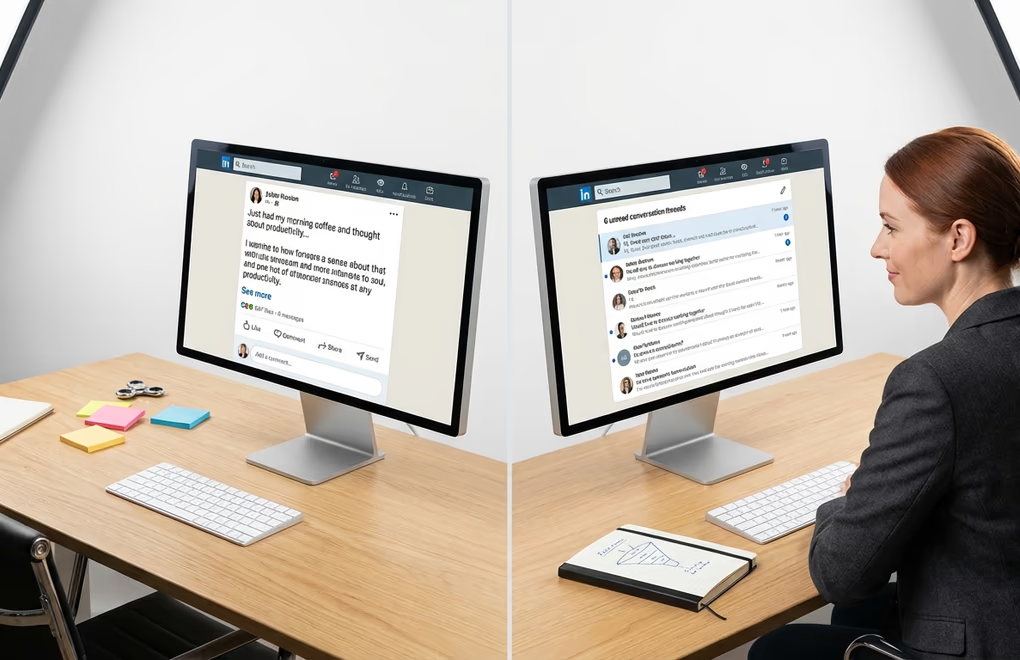
The fundamental mistake people make is treating every LinkedIn post the same way. They write something interesting, add a question at the end to drive comments, and call it a day. The post might perform well - maybe 50 likes and a handful of comments - but that performance lives entirely in the engagement layer. Nobody reading that post is thinking about hiring you, buying from you, or even visiting your profile to learn what you do, because the post itself never gave them a reason to.
Engagement posts and lead-generation posts serve different purposes and they need to be written differently. An engagement post exists to build reach, attract new followers, and keep your existing audience warm. It's broad, relatable, and designed to make people nod along. Think hot takes on industry trends, relatable stories about work life, or observations that make people want to hit the react button. These posts are important for growth, but they don't move anyone closer to a buying decision.
A lead-generation post does something entirely different. It identifies a specific problem your ideal customer faces, demonstrates that you understand that problem at a deep level, and creates a natural bridge between the reader's pain and your ability to solve it. The goal isn't maximum likes, because a post that generates 15 likes and 3 DMs from qualified prospects is infinitely more valuable than a post that generates 500 likes and zero conversations. The best lead-gen posts often get moderate engagement precisely because they speak to a narrower, more targeted audience rather than trying to appeal to everyone in the LinkedIn ecosystem.
Here's the mental shift that changes everything: stop writing for your followers and start writing for your buyers. Your followers are anyone who finds your content interesting, and that includes peers, competitors, friends, and random people who liked your hot take. Your buyers are the specific people who have the problem you solve and the budget to pay for a solution. When you write with your buyer in mind, every paragraph serves a purpose - establishing the problem, building credibility, and making the next step obvious. The engagement numbers might look lower, but the business impact will be dramatically higher.
This doesn't mean you should stop writing engagement posts. You need both types in your content mix, and we'll cover the exact ratio later in this guide. The key insight is that lead generation on LinkedIn requires intentional, structured posts that are designed from the first word to attract, qualify, and convert prospects, and that is a very different animal from writing something that gets a lot of thumbs up.
How does LinkedIn's 2026 algorithm reward lead-gen content?
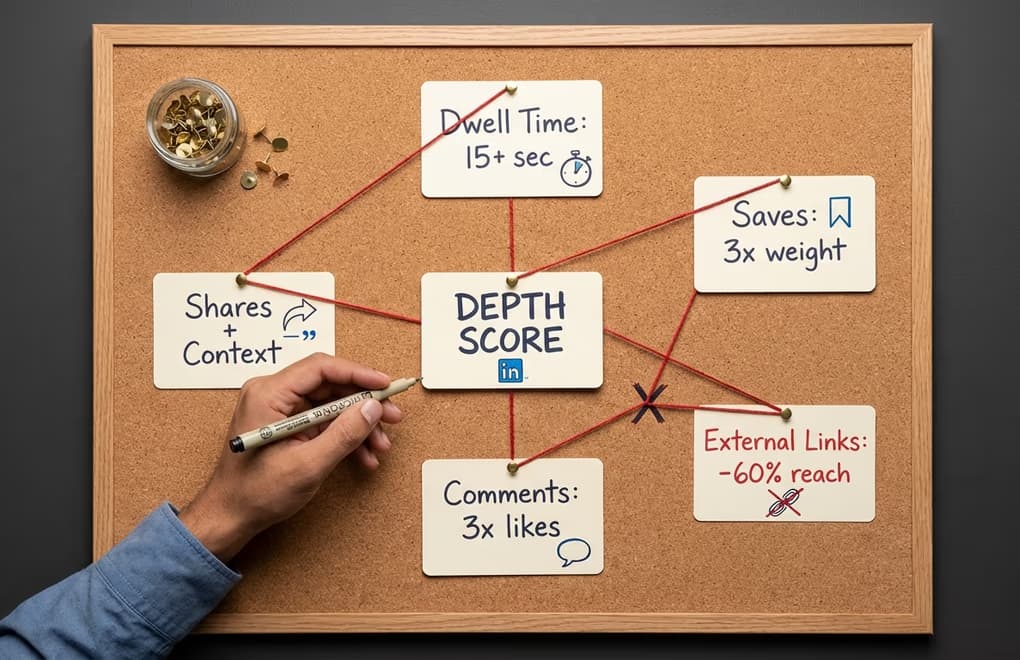
LinkedIn made significant changes to its algorithm in 2026, and the good news for lead-focused creators is that those changes actually favor the type of content that drives business results. The platform introduced what's been called a "Depth Score" - a composite metric that measures how deeply users interact with your content rather than just how many people tapped a reaction button. This score weighs dwell time, saves, shares with added commentary, and meaningful comments far more heavily than simple likes.
That shift is a gift for lead generation because lead-gen posts naturally produce deeper engagement. When someone reads a post that describes their exact problem and offers a thoughtful perspective on solving it, they don't just tap like and scroll past. They pause, re-read the key paragraphs, maybe save it for later, and often leave a comment that's more than two words. A single thoughtful comment now carries roughly three times the algorithmic weight of a like, which means a lead-gen post with 20 genuine comments will often reach more people than an engagement post with 200 hollow reactions. If you want a deeper understanding of these ranking signals, our full breakdown of the 2026 LinkedIn algorithm covers every detail.
The other critical change in 2026 is the penalty on external links. Posts containing URLs in the caption see up to a 60% reduction in organic reach, and LinkedIn has also started detecting the old workaround of dropping a link in the first comment. This sounds like bad news, but it's actually a clarifying constraint. The old playbook of writing a teaser post and linking to a landing page doesn't work anymore. Instead, the winning strategy is what marketers are calling "zero-click content" - you deliver complete value inside the post itself and use profile-based or DM-based calls to action that don't require anyone to leave the platform.
Zero-click lead generation actually converts better than the old link-based approach because you're filtering for intent. When someone reads your entire post about a problem they're facing and then takes the extra step to comment a keyword, send you a DM, or visit your profile, they've already self-qualified as genuinely interested. Compare that to someone who mindlessly clicks a link in a post and bounces from your landing page in three seconds. The algorithm change forced a better lead-gen strategy, and creators who have adapted to it are seeing higher quality leads from fewer total interactions.
There's also the timing factor to consider. LinkedIn now surfaces strong content for up to 48 hours instead of the old 12-24 hour window, which means a well-crafted lead-gen post keeps working for you long after you publish it. The first 60-90 minutes still matter most for initial distribution, so posting when your audience is active and responding to early comments within 15 minutes remains critical for maximizing the reach of every lead-gen post you write.
Which 5 post frameworks turn LinkedIn readers into prospects?
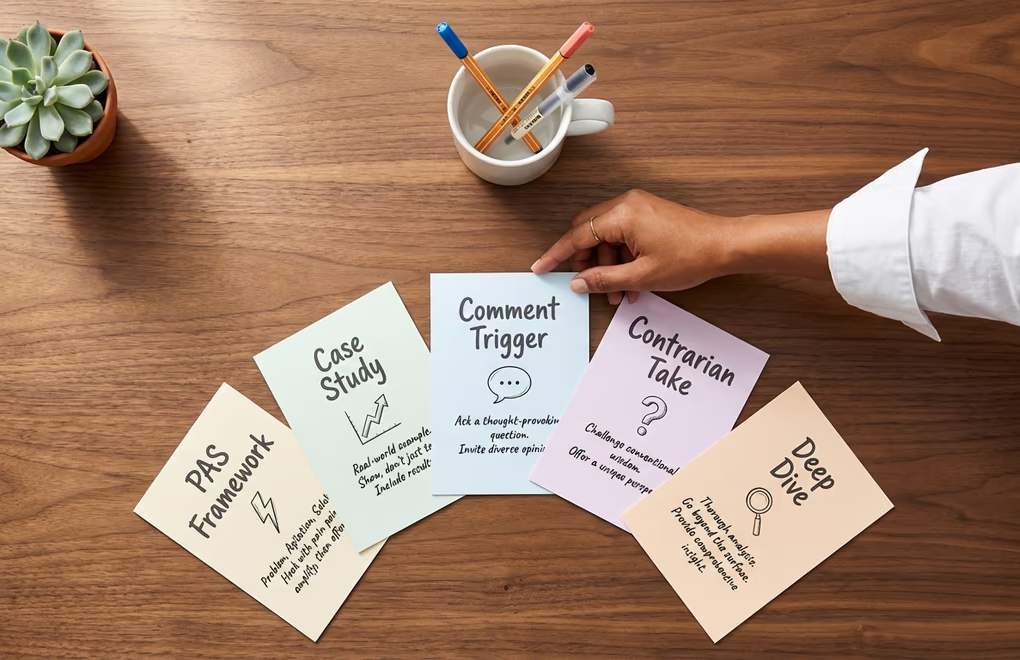
Every effective lead-gen post follows a structure, even when it looks spontaneous. The five frameworks below cover the full range of lead-generation scenarios on LinkedIn, and the most successful creators rotate between them throughout the month to keep their content fresh while maintaining a steady flow of new conversations. If you want fill-in-the-blank starting points for each one, the free LinkedIn post templates library has 10 proven frameworks you can copy and customize in minutes. Most sales-driven creators in this space also compare Taplio alternatives for the lead-gen CRM features bolted on top of content.
1. The Problem-Agitate-Solution Post
PAS is the single most reliable framework for lead generation because it mirrors the psychological journey a prospect takes before reaching out for help. You start by naming a specific problem your ideal customer faces, and specificity matters enormously here. "Struggling to grow on LinkedIn" is too vague, while "spending two hours crafting LinkedIn posts that get 12 likes and zero inbound leads" hits a nerve. The agitation step deepens the pain by exploring the consequences of leaving the problem unsolved - the opportunity cost, the frustration, the competitive disadvantage. Then you present your solution, not as a sales pitch but as a shift in approach that the reader can immediately understand.
The key to making PAS work for lead generation is spending roughly 80% of the post on the problem and agitation and only 20% on the solution. This feels counterintuitive because most people want to lead with their solution, but the longer you spend articulating the problem in language your prospect uses, the stronger the "this person gets me" signal becomes. When someone feels deeply understood, they don't need a hard sell - they reach out on their own.
2. The Case Study Post
Nothing converts like proof. A case study post walks through a real result you achieved for a client or yourself, structured as a story with a clear before-and-after arc. The format is simple: describe the starting situation, explain what you did differently, and share the outcome with specific numbers. "Helped a SaaS founder go from 500 impressions per post to 45,000 in 90 days" is the kind of concrete result that makes ideal clients lean forward in their chairs.
The trick with case study posts is to focus on the insight, not the service. If you turn it into an ad for your business, readers will scroll past and the algorithm will bury it. Instead, share the actual strategy or tactic you used in enough detail that someone could try it themselves. This sounds like you're giving away the farm, but it does the opposite: when someone sees that you know exactly how to solve their problem, they don't think "great, I'll do it myself." They think "I want this person doing this for me."
3. The Comment-Trigger Post
This framework is the 2026 replacement for the old "link in the comments" approach. You create a valuable resource - a checklist, a template, a mini-guide, a tool recommendation list - and offer to share it with anyone who comments a specific keyword. "I put together a 30-day LinkedIn content calendar template. Comment CALENDAR and I'll send it to you" is a classic example. This format routinely generates hundreds of comments because it gives people a low-friction way to raise their hand and say "I'm interested."
The lead-gen magic happens after the comments roll in. Each person who comments is a warm leadwho just told you what they need, and your follow-up DM delivers the resource while opening a natural conversation. The agents from LinkedGrow v2 score exactly these commenters first, because engagement on your own post is the warmest signal there is. Posts with clear CTAs like this can improve click-through rates by up to 285% compared to posts without any call to action, and the comment-trigger format specifically avoids the link penalty because the resource is delivered through DMs rather than a URL in the post. The comments also create a snowball effect with the algorithm, pushing your post to a wider audience while simultaneously building your list of qualified prospects.
4. The Contrarian Take Post
Contrarian posts work for lead generation because they demonstrate expertise through original thinking rather than recycled advice. The format starts with a widely held belief in your industry, then explains why that belief is wrong or incomplete based on your experience. "Everyone says you need to post daily on LinkedIn. I cut my client's posting to twice a week and their leads doubled" is the kind of opening that makes people stop scrolling because it challenges something they assumed was true.
The lead-gen mechanism here is positioning through differentiation. When every other consultant in your space is saying the same thing and you present a well-reasoned alternative viewpoint backed by real results, you immediately stand out as someone who thinks independently rather than parroting conventional wisdom. Prospects who are tired of getting the same generic advice from everyone will gravitate toward the person who offers a genuinely different perspective, and that gravitational pull often shows up as a profile visit followed by a connection request followed by a DM that starts with "I loved your take on..."
5. The Educational Deep-Dive Post
Long-form educational posts that teach something genuinely useful are one of the most effective lead-gen formats because they leverage LinkedIn's Depth Score algorithm perfectly. A post that walks through a complete process, explains a framework step by step, or breaks down a complex topic into clear practical terms keeps readers on the post for 30-60 seconds or more, which sends strong dwell-time signals to the algorithm and extends the post's reach significantly.
The lead-gen angle comes from the depth of your expertise on display. When you write a 1,500-character post that teaches someone how to audit their LinkedIn content strategy, you're not just sharing information - you're demonstrating that you understand the subject at a level most people don't. The right readers will finish that post and think "if the free advice is this good, imagine what working with them would be like." End these posts with a soft CTA that invites further conversation rather than a hard pitch, something along the lines of "what's the biggest content challenge you're facing right now?" to pull prospects into your DMs through a natural exchange rather than a cold approach.
How do you match your CTA to the reader's buying stage?

One of the most common mistakes in LinkedIn lead generation is using the same call to action on every post. "Book a call" at the end of an educational post feels jarring, and "what do you think?" at the end of a case study wastes a conversion opportunity. The fix is to think of your CTAs as a ladder where each rung matches the reader's level of awareness and intent. Your opening hook grabs attention, your content builds trust, and your CTA guides the reader to the exact right next step for where they are in their journey.
Soft CTAs are for awareness-stage content where the reader is encountering you for the first time or doesn't yet know they have a problem you can solve. These look like open-ended questions that invite genuine dialogue: "What's your biggest challenge with LinkedIn content right now?" or "Agree or disagree?" The goal isn't to capture a lead immediately but to start a conversation that reveals whether someone is a potential prospect. When someone responds to a soft CTA with something like "I struggle with consistency and never know what to post," they've just told you exactly how to help them, and your reply can naturally move the conversation toward a deeper discussion.
Medium CTAs are for consideration-stage content where the reader knows they have a problem and is exploring solutions. The comment-trigger format fits perfectly here: "DM me the word FRAMEWORK and I'll send you the complete template." This type of CTA works because the reader has already consumed your content, sees you as credible, and is willing to take a small action to get more value. Each person who responds is a warm lead who has self-identified as interested in what you offer, and the DM conversation that follows is the highest-converting sales environment on LinkedIn because it's private, personal, and initiated by the prospect.
Hard CTAs are reserved for decision-stage content where you've already built trust and credibility, typically through case study posts or after someone has engaged with several of your posts over time. These are direct: "If you want help building a LinkedIn content system that fills your pipeline, the link in my profile has everything you need." Notice that even the hard CTA avoids putting a URL in the post caption to dodge the algorithm penalty. Instead, it directs people to your profile link or featured section, which serves as a permanent landing page that doesn't hurt your post's reach.
The ladder approach works because it respects where each reader is. Pushing a hard CTA on someone who just discovered you feels pushy and erodes trust, while being too soft with someone who's been following you for months and is ready to buy means missing the moment. By varying your CTAs across posts throughout the week, you create multiple entry points for prospects at every stage and guide them down the ladder naturally as they consume more of your content over time.
What content mix keeps LinkedIn leads coming every week?
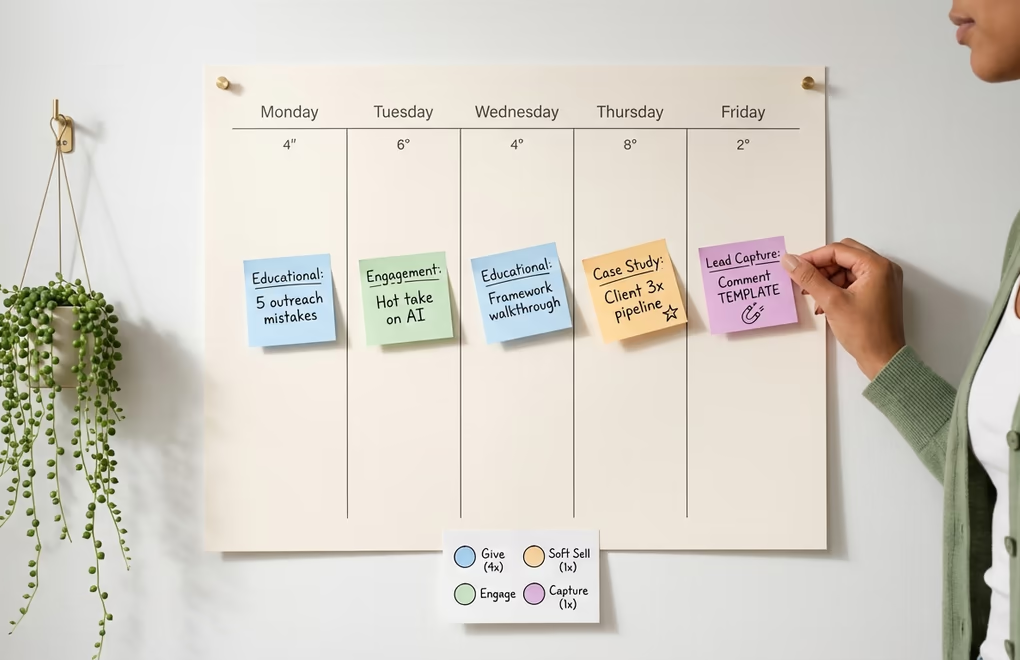
Posting four lead-gen posts in a row is a fast way to exhaust your audience and tank your engagement. The algorithm notices when your content stops generating meaningful interactions, and your followers notice when every post feels like it's trying to sell them something. The solution is a deliberate content mix that balances audience growth with lead capture, and the ratio that consistently works best is known as the 4-1-1 formula.
For every six posts you publish, four should be pure give posts - educational content, industry insights, personal stories with genuine takeaways, and thought-provoking perspectives that provide value with absolutely zero expectation of anything in return. These posts build your reach, attract new followers, and establish the credibility that makes your lead-gen posts effective when they appear. Without the give posts, your lead-gen posts land cold because the audience hasn't built enough trust in you to take action. With them, your audience is primed to respond when you do make an ask because they've already received so much value that reciprocity kicks in naturally.
One post out of every six should be a soft sell - a case study, a client success story, a before-and-after result, or social proof that demonstrates your expertise without explicitly asking for business. These posts do the heavy lifting of converting attention into interest because they show rather than tell. When a prospect sees concrete evidence that you've solved their exact problem for someone else, the mental gap between "interesting person on LinkedIn" and "someone I should work with" closes dramatically.
The final post in every cycle of six is your direct lead-capture post - a comment-trigger, a DM invitation, or a hard CTA that moves people from the feed into your pipeline. Because you've spent the previous five posts building trust and demonstrating expertise, this post doesn't feel salesy - it feels like a natural next step for people who are already interested. If you're posting four times per week, that means roughly two lead-capture posts per month. That might sound like too few, but those two posts will outperform 20 generic pitches because they're backed by a foundation of credibility that makes people actually want to respond.
The timing of your posts matters almost as much as the content itself. Research from 2026 shows that posting three to four times per week on Tuesday through Thursday between 7 and 9 AM in your audience's timezone produces the best results, and responding to comments within the first 15 minutes generates a significant algorithmic boost that extends your post's reach. AI-powered post generation combined with proven hook formulas makes it realistic to maintain this cadence without spending your entire morning staring at a blank screen, which is the point where most lead-gen strategies fail - not because the frameworks don't work, but because the creator runs out of steam trying to execute them manually week after week.
A post that generates a lead is a post somebody engaged with, and that engagement is a signal you can act on the same week rather than waiting for a DM that may never arrive. Reading those signals across your own posts and your competitors’ is what buying signals is for.
How do you go from LinkedIn likes to a full pipeline?
The difference between a LinkedIn profile that gets engagement and one that generates business comes down to intentional structure rather than volume or luck. Every post in your feed should have a clear purpose - build reach, build trust, or capture leads - and the frameworks in this guide give you a repeatable system for doing all three without burning out or alienating your audience. When you combine the right post frameworks with a deliberate CTA ladder and the 4-1-1 content mix, your LinkedIn presence stops being a vanity project and starts becoming a genuine pipeline machine. Pairing that habit with AI lead generation tools turns each post that lands into a named lead you can follow up the same week.
The 2026 algorithm actually makes this easier than ever because it rewards exactly the type of content that drives leads: deep, valuable, conversation-starting posts that keep people on the platform. You don't need to fight the algorithm to generate leads anymore, just align your content strategy with what it already wants to promote. Pairing this content engine with the right B2B lead generation tools keeps the pipeline full even on the weeks a single post underperforms. LinkedGrow gives you everything you need to execute this system consistently, from AI-powered content generation that drafts your posts in your own voice to scheduling tools that ensure you hit the optimal posting window every time. If you're ready to turn your LinkedIn content into a lead-generation engine, create your free account and start writing posts that fill your pipeline instead of just your notification tab.
Frequently Asked Questions
Three to four high-quality posts per week is the sweet spot for lead generation. Posting less than twice a week makes it hard to build momentum, while posting daily can dilute quality. Focus on making each post count rather than filling a quota, and mix educational content with occasional direct lead-capture posts.
Avoid putting links directly in your post caption because LinkedIn reduces reach by up to 60% for posts with external URLs. Instead, use zero-click CTAs like asking readers to comment a keyword for your resource or directing them to the link in your profile. This preserves reach while still driving leads.
The best CTA depends on your funnel stage. For building awareness, ask an open-ended question to drive comments. For capturing leads, use a comment-trigger like asking people to type a keyword. For closing, direct people to book a call via the link in your profile or featured section.
Posts between 1,300 and 1,900 characters consistently outperform shorter content, generating 47% higher engagement. Lead-generation posts need enough space to establish the problem, build credibility, and include a clear call to action, so aim for 1,200 characters at minimum.
AI is excellent for drafting lead-generation posts when you combine it with voice training and proven frameworks. Tools like LinkedGrow let you bring your own AI key and train the model on your writing style, so the output sounds like you rather than generic marketing copy that readers scroll past.
The people you just read about are already on LinkedIn.
LinkedGrow runs an agent that finds the ones who match the customers you already have, sends the invitation in your words, and opens the conversation. You pick it up when somebody answers.
Build my agent free