

Building a LinkedIn marketing strategy for SaaS companies that drives signups is the challenge every B2B founder eventually faces. "We post regularly but it doesn't drive signups." I hear the same complaint every week. The problem is always the same: they are treating LinkedIn like a press release channel instead of what it actually is - the largest professional network where ideal customers already think about the exact problems your product solves. When I built LinkedGrow, I went through this same learning curve. I posted product updates that got crickets, wrote about features nobody cared about, and watched metrics flatline for weeks before I figured out what actually works for SaaS companies on LinkedIn.
The shift happened when I stopped thinking about LinkedIn as a marketing channel and started thinking about it as a trust-building machine. B2B buyers don't sign up for software because they saw a post about its features. They sign up because they've been reading the founder's insights for three months, they trust the person behind the product, and when the problem the software solves becomes urgent enough, that company is already the obvious choice. That trust-first dynamic is what makes LinkedIn uniquely powerful for SaaS, and it's something paid ads simply cannot replicate.
This guide breaks down the complete LinkedIn content strategy for SaaS companies that I've seen work across dozens of B2B products, from early-stage startups to established companies scaling their marketing. You'll learn why LinkedIn outperforms other channels for SaaS, the content pillars that build pipeline instead of vanity metrics, why your founder's personal profile is worth more than your company page, and how to turn LinkedIn impressions into actual product signups. Whether you are a solo founder wearing every hat or a marketing team looking to make LinkedIn your top-of-funnel engine, the playbook ahead gives you exactly what you need to make it happen.
Why does LinkedIn outperform every other channel for B2B SaaS?

If you sell B2B software, your buyers are on LinkedIn. Not casually scrolling the way they might flip through Instagram reels, but actively engaged in professional content about their industry, their challenges, and the tools they use to solve them. That mental state is what separates LinkedIn from every other social platform, and it's the reason LinkedIn generates the overwhelming majority of B2B social media leads while platforms like Facebook and Twitter split what's left between them. When someone encounters your SaaS content on LinkedIn, they are already in the mindset of evaluating professional solutions, which is a fundamentally different starting point than catching them between cat videos.
The conversion math tells an even clearer story. LinkedIn's visitor-to-lead conversion rate runs roughly three to four times higher than what Facebook or Twitter deliver for B2B products, because the audience quality is fundamentally different. A marketing director reading your post about workflow automation on LinkedIn is far more likely to visit your website and start a trial than the same person seeing an ad while scrolling vacation photos on Instagram. The intent gap is enormous, and for SaaS companies where the sales cycle depends on trust and education, that gap makes all the difference between content that generates pipeline and content that generates nothing but vanity metrics.
What makes this even more compelling is that LinkedIn's organic reach is still remarkably generous compared to other platforms. The LinkedIn algorithm in 2026 actively prioritizes knowledge-sharing content, which is exactly the kind of content SaaS companies should be creating anyway. A thoughtful post about a problem your product addresses can reach thousands of relevant decision-makers without spending a dollar on ads. Compare that to Facebook where organic business reach has collapsed to single-digit percentages of your followers, or Twitter where a post's lifespan is measured in minutes rather than days. LinkedIn gives SaaS content legs, and the compounding effect of consistent posting means each month builds on the last in a way that paid channels simply cannot match.
There's another advantage that SaaS companies often overlook: LinkedIn is where buying committees hang out. Enterprise software purchases are rarely made by one person. They involve stakeholders across departments, and those stakeholders are all on LinkedIn, reading content, sharing posts with colleagues, and forming opinions about vendors long before a formal evaluation begins. When multiple people in an organization have seen your founder's content and already respect the thinking behind your product, the sales conversation starts from a completely different place than a cold outbound email ever could.
Which 5 content pillars does every SaaS need on LinkedIn?
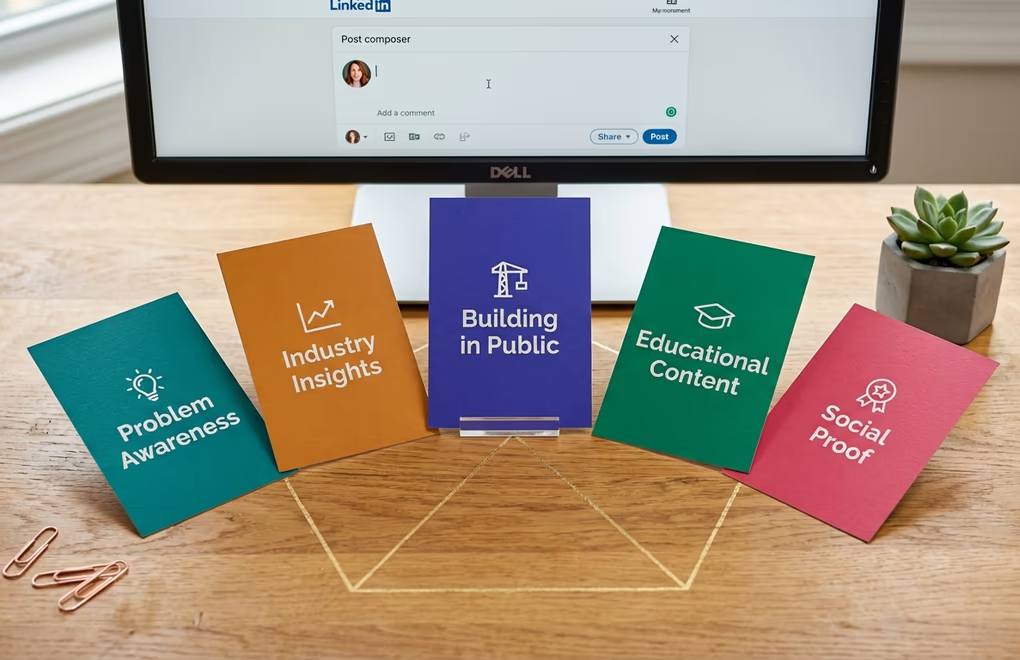
The biggest content mistake SaaS companies make on LinkedIn is posting whatever feels right on any given day. SaaS founders evaluating their LinkedIn stack typically end up comparing Taplio alternatives for the CRM + content combo, but the bigger ROI is usually the founder's profile itself - run yours through the free LinkedIn headline analyzer before you invest in any paid tool. Monday they share a product update, Tuesday a meme, Wednesday a hiring post, and by Thursday they're stuck staring at a blank screen wondering what to write next. That randomness kills your growth because it never builds a coherent narrative about who you are, what you stand for, and why someone should care. What you need instead is a pillar-based content system that gives you clear categories to rotate through, so you never run out of ideas and every post reinforces the others.
The first pillar is problem awareness content. These posts talk about the specific pain points your product solves, but without mentioning your product at all. If you sell a project management tool, you write about the chaos of managing deadlines across Slack threads, email chains, and spreadsheets. If you sell an analytics platform, you write about the hours teams waste building reports that nobody reads. The goal is to make your audience nod and think "this person understands my world," which creates the psychological foundation for everything else you post. These tend to get the highest engagement because they resonate emotionally with people who live these problems every day, and they are the ones that earn you followers who actually match your ideal customer profile.
The second pillar is industry insight content, where you share original thinking about trends, shifts, and patterns in your market. This is where you establish your company as a genuine thought leader rather than just another vendor pushing features. Maybe you have noticed that your customers are increasingly asking for a specific integration, or that a regulatory change is about to reshape how your category operates. These observations, drawn from your unique vantage point as someone building in the space, carry enormous credibility because they come from lived experience rather than secondhand research. A good industry insight post gets shared by exactly the people you want as customers, which expands your reach into new networks organically.
The third pillar is building-in-public content that pulls back the curtain on your SaaS journey. Sharing real metrics, decisions, failures, and wins makes your company relatable in a way that polished marketing never can. When you post that you lost a big customer and what you learned from it, or that your churn rate dropped after a specific product change, people connect with the honesty. Building-in-public content creates a following of people who are emotionally invested in your success, and a surprising number of those followers end up becoming customers, partners, or evangelists because they feel like they already know you personally.
The fourth pillar is educational how-to content where you teach something valuable related to your space. This could be a framework your team uses internally, a process you've optimized, or a lesson from a mistake that others can learn from. The key is making it genuinely useful even to people who never buy your product, because that generosity builds trust at scale and positions you as the expert in your category. Using a tool like LinkedGrow's AI post generator trained on your writing voice can help you turn these ideas into polished posts quickly, so the educational content doesn't take three hours per post to produce.
The fifth pillar is social proof and customer content, where you let your users tell your story for you. Case studies, user quotes, before-and-after transformations, and milestone celebrations all fall here. But the trick is making them feel genuine rather than staged. Instead of a formal case study post that reads like a press release, share a screenshot of a customer's excited Slack message with their permission, or tell the story of how one company went from struggling with the problem to thriving after adopting your approach. Social proof is most powerful when it feels unscripted, and LinkedIn audiences can spot corporate testimonials from a mile away, so keep it real and let the results speak for themselves.
Pillars decide what you say; format decides how far it travels. For SaaS specifically, the formats that consistently earn the most reach are native document carousels, first-person founder stories, and short video under a minute. A carousel that walks through a workflow your product fixes tends to outperform the same idea as plain text, because people save it and forward it to the colleagues who sit on the buying committee. If carousels feel like a production burden, a carousel builder and a set of proven carousel templates cut the design work to minutes, and a plain LinkedIn video of a founder explaining a hard-won lesson often beats a polished graphic. Rotate formats the way you rotate pillars, so the feed never sees the same shape twice in a row.
What is founder-led content and why does it drive SaaS growth?

If there is one thing I could convince every SaaS founder to do, it would be to start posting consistently from their personal LinkedIn profile. Not the company page, not through the marketing team's content calendar, but from their own account, in their own voice, sharing their own perspective on the industry they're building in. The difference in results is not marginal - it's dramatic. Personal profiles on LinkedIn consistently generate multiple times more engagement than company pages posting the same type of content, because the algorithm fundamentally prefers distributing content from people over brands. When your founder posts about a challenge the team overcame, readers process it as wisdom from someone who has been in the trenches, but when your company page posts the same thing, readers process it as marketing.
The most successful SaaS companies on LinkedIn in 2026 all share this pattern: the founder or CEO has become the public face of the brand through consistent, authentic content that mixes business insights with personal vulnerability. Think about the SaaS leaders you follow on LinkedIn. You probably know their names, their stories, their opinions on industry topics. Now try to name five SaaS company pages you actively follow - most people can't, because company pages feel like talking to a logo while personal profiles feel like talking to a human being. That's not a branding failure, it's just how people are wired, and the smartest SaaS companies lean into it instead of fighting it.
The practical advantage of founder-led content goes beyond engagement metrics. When a founder builds a personal audience on LinkedIn, that audience becomes a lead generation engine that compounds over time. Every new follower is a potential customer, partner, investor, or referral source who has already bought into the founder's worldview. Launching a new feature becomes trivially easy when you can share it with thousands of followers who already trust your judgment. Recruiting becomes easier because talented people want to work for leaders they respect. Even fundraising gets smoother because investors follow founders they believe in long before they ever receive a pitch deck.
But here is where most founders stall: they know they should post, but they feel like they don't have time to write content every week on top of running the company. This is where the right tools become crucial. Using an AI writing assistant with voice training capabilities lets you feed in a few of your past posts so the AI learns your specific writing style, your vocabulary, and your rhythm. Then when you need a post, you give it a topic and it produces a draft that already sounds like you, cutting the writing time from forty-five minutes down to about ten. The BYOK model means you're using your own AI API key with no monthly generation limits, so you can create as many drafts as you need for a few dollars a month in API costs. The founder still needs to review, edit, and add those personal touches that make the content uniquely theirs, but the hardest part - staring at a blank screen wondering what to write - is completely eliminated.
How do you build a LinkedIn content engine that scales with your team?

Once you've established your content pillars and your founder is posting consistently, the next step is expanding the effort across your team. A single voice on LinkedIn is powerful, but multiple voices from the same company create something exponentially more valuable: omnipresence in your buyer's feed. When a prospect sees your CEO talking about industry trends, your head of product sharing a behind-the-scenes development story, and your customer success lead highlighting a client win - all within the same week - the cumulative trust effect is massive. It feels like this company is everywhere, which translates directly into "this must be a serious player in the space."
The challenge with employee advocacy on LinkedIn is that most programs die within a few weeks because they put too much burden on individual employees. Asking your engineers or sales reps to write LinkedIn posts from scratch on top of their actual jobs is a recipe for two enthusiastic posts followed by months of silence. The programs that actually survive make content creation almost frictionless for participants. One approach is having a marketing coordinator create a weekly batch of three to five post drafts that employees can personalize and publish from their own profiles, keeping the original voice while removing the blank-page anxiety. Another is using an AI tool trained on each person's voice so they can generate their own drafts quickly without needing to be great writers themselves.
A content calendar becomes essential once you have multiple people posting on behalf of the company. Without one, you end up with three people all writing about the same product launch on the same day while nobody covers the customer story that would have performed twice as well. The calendar doesn't need to be complicated - a shared view that shows who is posting what on which day, organized around the five content pillars, keeps everyone aligned without feeling micromanaged. Scheduling posts in advance during a weekly batch session means the content goes out consistently even when people get pulled into urgent product work or last-minute customer calls that eat the whole afternoon.
For SaaS teams with more than five or six people actively posting, team collaboration features become important for maintaining quality and brand consistency without creating bottlenecks. The ideal workflow gives team members autonomy to write and schedule their own posts while giving a marketing lead visibility into what's going out and the ability to suggest edits before publication. This works better than the traditional "submit content for approval" process because it treats employees like the adults they are, encourages authentic voice over corporate messaging, and removes the friction that kills most advocacy programs before they get off the ground. The best employee advocacy content doesn't sound like it came from the marketing department because it genuinely didn't - it came from real people sharing professional perspectives they actually care about, which is exactly what LinkedIn's algorithm rewards most generously.
Impressions turn into signups faster when somebody actually talks to the people who engaged. For a founder without an SDR to hand it to, LinkedIn outreach automation is the version of that job which fits inside a founder’s week.
How do you turn LinkedIn impressions into product signups?
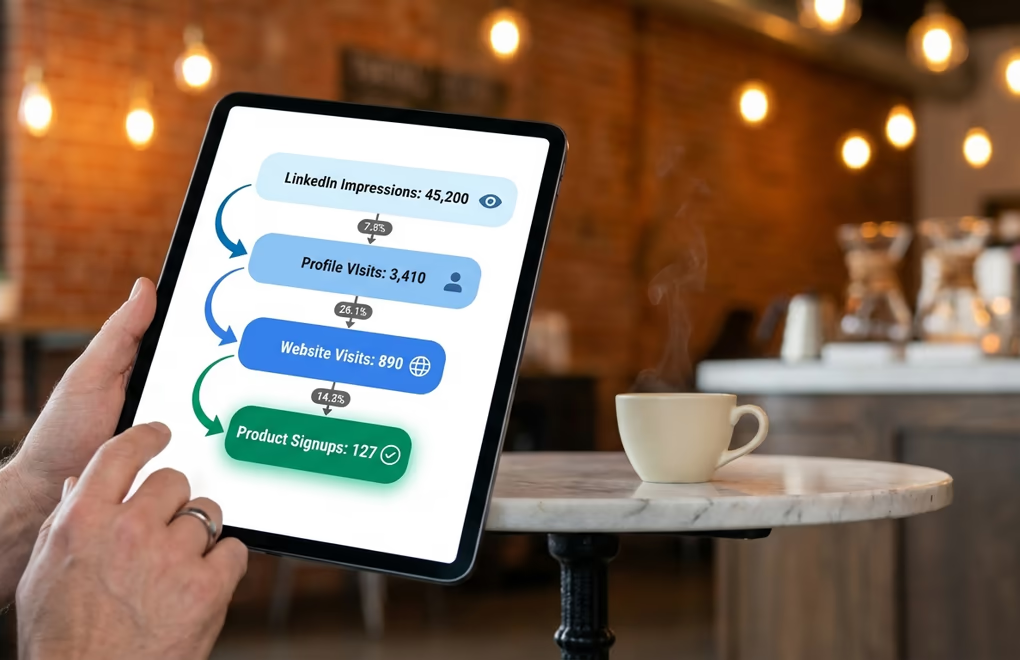
Good content without a conversion strategy is just entertainment, and SaaS companies can't afford to treat LinkedIn as a vanity metrics playground. The real question every marketing team should be asking is not "how many impressions did we get" but "how many of those impressions turned into website visits, and how many of those visits turned into signups?" The path from LinkedIn impression to product signup is longer and less linear than a Google Ad click, but it's also more valuable because the prospect arrives already warmed up, already trusting you, and already understanding the problem your product solves. That pre-education means higher trial-to-paid conversion rates and lower churn down the line.
The conversion journey typically follows a predictable pattern. Someone sees your post in their feed and finds it genuinely useful or interesting. They click on your profile to learn more about who you are. Your LinkedIn profile then needs to clearly communicate what your company does and include a link to your website or product page. If the content resonated enough, they'll visit your site, though they might not sign up immediately. But now they're in your orbit - they'll see your next post, and the one after that, and eventually the combination of accumulated trust and personal timing leads them to try your product. Understanding this multi-touch reality is critical because it means any single post might not show direct ROI, but the cumulative effect of consistent presence absolutely does.
The posts that actually drive the most signups are rarely the ones that feel like marketing. Counterintuitively, a vulnerable story about a mistake you made while building your SaaS product will drive more trial signups than a polished feature announcement, because the story creates an emotional connection that makes people want to root for you and your product. That said, you do need occasional direct posts that clearly explain what your product does and who it's for. The ratio that works for most SaaS companies is roughly eighty percent value-driven content across your five pillars and twenty percent content that directly mentions your product, with the product mentions woven naturally into stories and examples rather than presented as traditional promotions that people instinctively scroll past.
Your LinkedIn profile itself is one of the most underoptimized conversion tools in most SaaS marketing stacks. Every person who clicks your name after reading a post lands on your profile, and if that profile reads like a resume instead of a value proposition, you're losing potential signups before they even get to your website. Your headline should communicate the outcome your product delivers, not just your job title - "Helping B2B teams cut reporting time by 80%" converts far better than "CEO at AnalyticsCo" because it gives visitors a reason to care. Your featured section should include a link to your most compelling landing page or free trial, and your about section should read like a personal brand story that naturally leads readers toward your product.
One conversion tactic that consistently outperforms others for SaaS companies is the "soft CTA in comments" approach. Instead of ending every post with "try our product," end it with a genuine question or discussion prompt that generates comments. Then, in the comment thread, naturally mention your product when it's relevant to the conversation. This works because LinkedIn's algorithm boosts posts with high comment activity, which means more people see it, and the product mention feels organic rather than forced. When someone asks "how do you track that?" and you answer with "we actually built a tool for exactly this," it doesn't feel like selling because it isn't selling - it's answering a genuine question, and the people who click through from that context convert at dramatically higher rates than cold traffic.
Tracking the impact of LinkedIn content on signups requires looking beyond last-click attribution. Most SaaS companies using standard analytics will undercount LinkedIn's contribution because the prospect who signs up today probably first encountered your content three weeks ago, visited your site twice since then, and finally converted after a Google search for your brand name. Adding a "how did you hear about us?" field to your signup form is one of the most reliable ways to measure LinkedIn's true influence, and you'll likely be surprised by how often the answer traces back to a specific post or the founder's profile. The connection between content and lead generation becomes much clearer once you start measuring brand search volume alongside your posting cadence, because consistent LinkedIn activity almost always correlates with increases in people searching for your company by name.
Frequently Asked Questions
Two to three posts per week from your company page, combined with personal posts from two or three team members, creates the best balance of visibility and quality. Consistency matters far more than volume, so find a pace your team can sustain for months without burning out or dropping quality.
Both, but prioritize the personal account. Founder posts consistently generate several times more engagement than company page content because LinkedIn's algorithm favors people over brands. Use the company page for product updates and hiring, but let the founder's profile carry the thought leadership weight.
Behind-the-scenes building stories and honest metric breakdowns generate the most direct signups because they build trust through transparency. Posts that show your product solving a real problem, without being a sales pitch, create curiosity that naturally leads people to your website.
LinkedIn excels at warming up prospects before they even search for your category, which makes it complementary to Google Ads rather than a replacement. LinkedIn content builds brand recognition so when prospects do search, they already know and trust your name, dramatically improving conversion rates on paid channels.
Most SaaS companies see meaningful inbound interest after 60 to 90 days of consistent posting, though some founder-led content can generate spikes earlier. The compounding effect of LinkedIn content means months four through six typically deliver more results than the first three combined.
The people you just read about are already on LinkedIn.
LinkedGrow runs an agent that finds the ones who match the customers you already have, sends the invitation in your words, and opens the conversation. You pick it up when somebody answers.
Build my agent free