
You post on LinkedIn three times a week. You write useful, thoughtful content. You pick the right hashtags, publish at 8 AM, and wait. Some posts get 15,000 impressions and a flood of comments. Others - posts you genuinely thought were better - get 200 views and disappear into nothing. It feels random, almost like flipping a coin. But it is not random at all. There is a system behind every impression, every "see more" click, every time your post shows up in someone's feed. That system is the LinkedIn algorithm, and understanding how it works in 2026 is the difference between building an audience and shouting into the void.
What is the LinkedIn algorithm?
The LinkedIn algorithm is the ranking system that decides which posts each member sees in their feed, in what order, and how widely a given post gets distributed. It is not a single rule but a scoring engine that runs on hundreds of signals - dwell time, comment quality, share velocity, topical relevance, creator authority, and dozens of other inputs the platform tracks in real time.
LinkedIn now has over 1.3 billion members worldwide, with roughly 310 million people actively using the platform every month. That is an enormous amount of content being created, shared, commented on, and ignored every single day. The algorithm's job is to sort through all of it and decide what each person sees in their feed. It is processing billions of posts daily, and it does so using a complex set of signals that most creators never bother to learn. With LinkedGrow, we have spent months studying these signals, testing different approaches, and tracking what actually drives reach and engagement.
LinkedIn algorithm updates in 2026
The biggest shift in 2026 is LinkedIn's move toward a unified ranking model: the platform now scores every candidate post with a large language model called 360Brew rather than separate hand-coded rule sets. The practical effect for creators is that topical relevance and content quality matter more than format tricks, and reach is increasingly tied to how well your post matches the reader's professional interests at that exact moment. (For the full technical breakdown, see our LinkedIn 360Brew algorithm deep-dive.)
Here is something that has changed significantly in 2026: LinkedIn has made a deliberate shift away from viral content. The platform publicly stated that 60% of high-engagement posts in 2025 used tactics that did not actually drive user satisfaction. Think engagement bait, rage posts, generic motivational quotes with no substance. The algorithm now deprioritizes these formats and instead rewards posts that provide genuine professional value. So if your strategy has been to chase virality with hot takes and controversial opinions, it is time to rethink your approach.
Two more shifts are worth watching in 2026. First, LinkedIn is pushing native vertical video harder than any other format: short clips shot in portrait, roughly 15 to 90 seconds, now reach people well outside your own network in a way text and images rarely do. Second, LinkedIn is testing a suggested feed that surfaces posts by topic rather than by who you follow, so a focused post from a solopreneur can land in front of the right buyer even with a small network. Both changes reward demonstrated expertise on one topic over raw follower count, which is exactly what 360Brew was built to measure.
How does LinkedIn decide what shows in your feed?
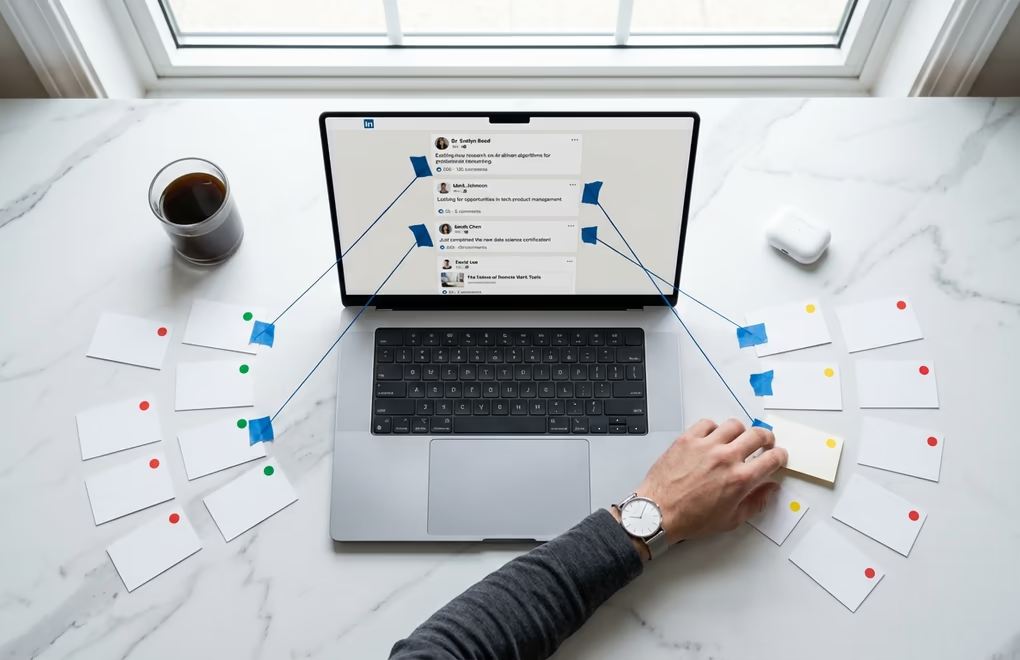
Every time you open LinkedIn, the platform faces a massive challenge: choosing which posts to show you from the thousands of potential options available. Your connections are posting, the accounts you follow are sharing updates, people in your industry are publishing articles, and companies are pushing announcements. The algorithm has to take all of that, sort it, rank it, and present the handful of posts most likely to keep you engaged. And it does this in milliseconds.
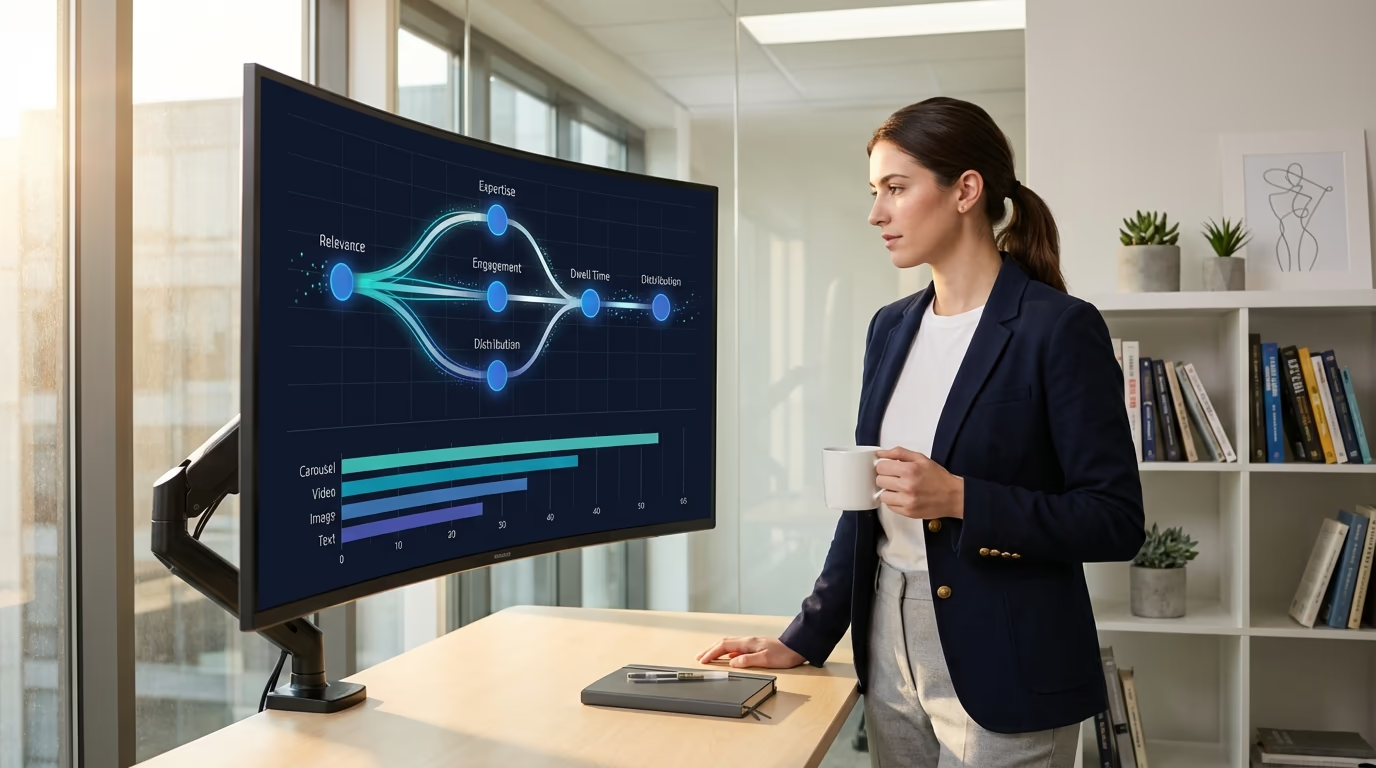
The process starts with a massive pull. LinkedIn's system gathers roughly 1,000 or more candidate posts from your network, accounts you follow, hashtags you have engaged with, and topics related to your industry and job function. From that pool, it needs to whittle down to the 20-30 posts you will actually see in your first scroll session. The algorithm uses over 300 signals to make these decisions, evaluating each post across three core dimensions: relevance, expertise, and engagement.
Relevance means how closely the post's topic matches your professional interests, your job function, and your past behavior on the platform. If you have been reading posts about content marketing all week, the algorithm is more likely to surface another content marketing post for you. Expertise refers to whether the person posting actually knows what they are talking about. LinkedIn has gotten increasingly good at identifying genuine subject matter experts versus people who just post about everything. And engagement measures not just whether people liked the post, but how deeply they interacted with it - did they leave a thoughtful comment, did they share it with a note, or did they just tap a quick thumbs up and keep scrolling?
Why do the first 60 minutes matter most on LinkedIn?
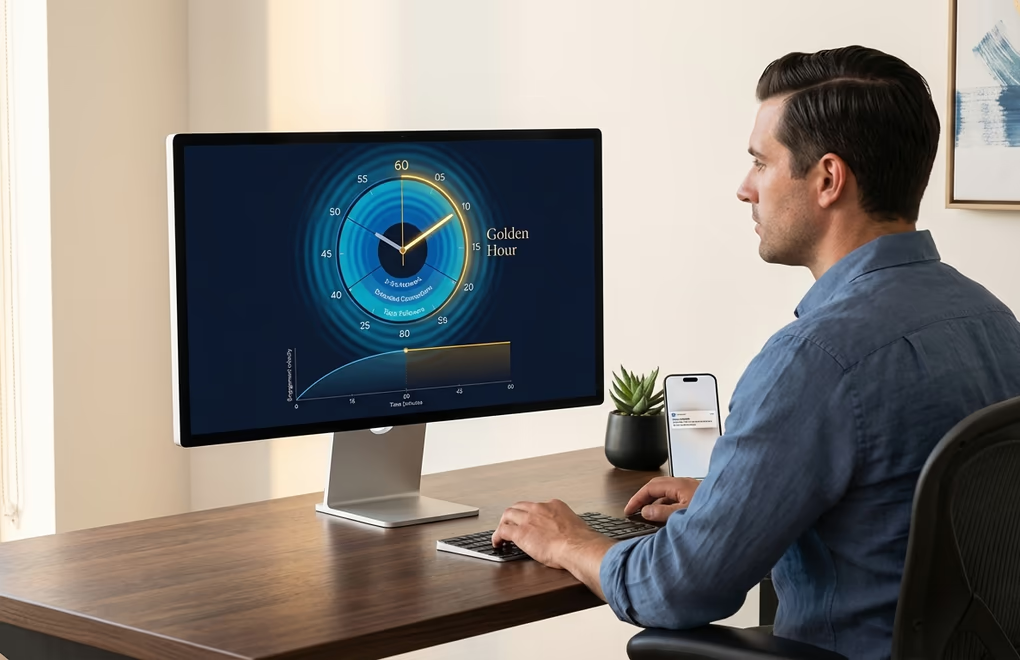
The most important period in the life of any LinkedIn post is the first 60 to 90 minutes after you hit publish. This window is called the "golden hour," and it is when the algorithm makes its most critical decision about your content: does this post deserve to be seen by more people, or should it quietly fade away?
During the golden hour, LinkedIn shows your post to a small sample of your connections - typically just 2 to 5 percent of your network. This is your test audience. The algorithm watches closely to see how they respond. It is not just counting likes. It is measuring dwell time, tracking whether people click "see more," noting the quality and length of comments, and monitoring whether your post sparks conversations where multiple people reply to each other. All of these signals feed into a score that determines your post's next move.
If the initial response is strong, the algorithm starts pushing your content outward. First to more of your first-degree connections, then to second-degree connections (people connected to your connections), and eventually to third-degree connections and followers of topics related to your post. This distribution can continue for 48 to 72 hours if engagement remains strong. In some cases, particularly well-performing posts can resurface in feeds for two to three weeks after publishing, which is one of LinkedIn's unique advantages over platforms like Twitter or Instagram where content has a much shorter shelf life.
But if your test audience ignores the post - low dwell time, no comments, minimal reactions - the algorithm essentially kills it. It stops showing the post to new people, and your content reaches a tiny fraction of its potential audience. This is why posting when your audience is most active is so critical. If you publish at midnight and your connections are asleep, you are wasting your golden hour on empty feeds. Data suggests weekdays between 7 AM and 4 PM tend to produce the best results, though the ideal time depends heavily on your specific audience's timezone and habits. Our free best time to post on LinkedIn tool gives you a personalized timezone-aware heatmap from aggregated 2026 posting data, and LinkedGrow's scheduling feature lets you queue posts for those windows so you never miss your golden hour.
One more thing about the golden hour that most guides miss: your own engagement during this window matters enormously. Responding to comments within the first 15 minutes of receiving them signals to the algorithm that you are actively participating in a conversation, not just broadcasting. This triggers additional distribution. So do not post and walk away. Stay available for at least an hour after publishing, reply to every comment thoughtfully, and ask follow-up questions to keep the discussion going.
What 5 signals drive LinkedIn post reach in 2026?
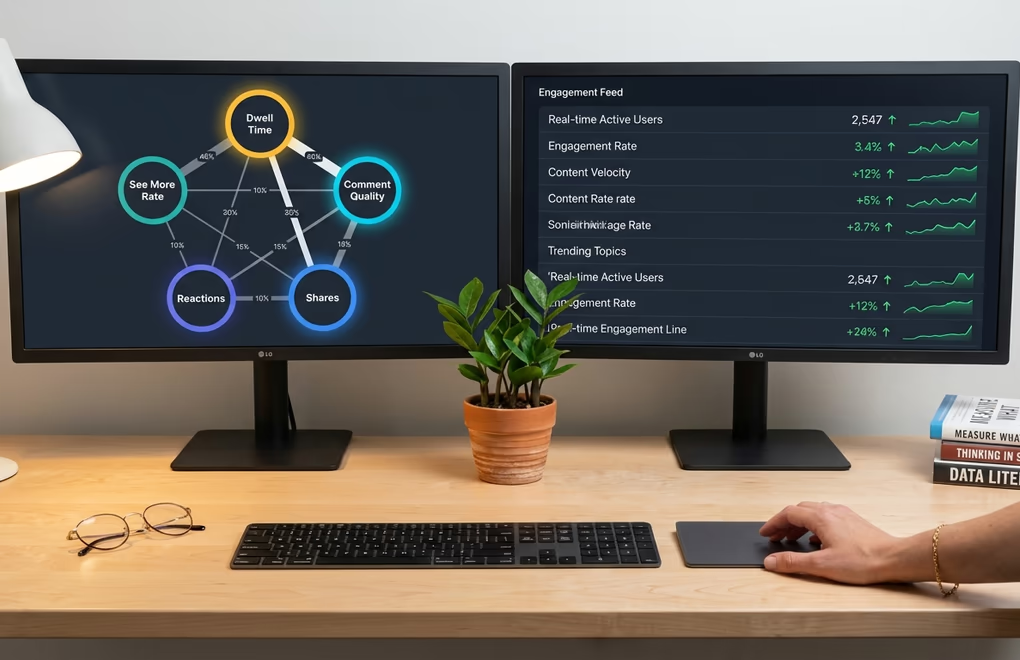
Not all engagement is created equal in LinkedIn's eyes. The algorithm assigns different weights to different types of interactions, and understanding this hierarchy is essential for creating content that actually reaches people. Here are the five signals that carry the most weight in 2026, ranked from most to least impactful.
1. Dwell Time
Dwell time has become the single most important ranking signal on LinkedIn, and for good reason: it is nearly impossible to fake. While you can buy likes or join engagement pods to inflate your comment count, you cannot manufacture the time someone spends reading your post. LinkedIn's engineering team published research explaining that they track two types of dwell time: feed dwell time (how long your post is visible on screen as someone scrolls) and post-click dwell time (how long someone spends reading after clicking "see more"). Both matter, but the combination is what really tells the algorithm your content is worth distributing.
What this means for you in practical terms: write posts worth reading. A well-crafted 1,300 character text post that people actually spend time reading will outperform a shallow 200 character hot take that gets a quick scroll-past every time. The algorithm developed what LinkedIn calls a "skip model" - it calculates the probability that someone will skip your post without engaging. If your content consistently gets skipped, your future posts start with a lower distribution ceiling. If people consistently spend time on your posts, you earn algorithmic trust over time.
2. Comment Quality and Conversation Depth
Comments are the most powerful active engagement signal on LinkedIn, but the algorithm has gotten much smarter about distinguishing genuine conversation from noise. Posts that spark back-and-forth discussions between multiple people receive significantly more amplification than posts with a pile of "Great post!" one-liners. The algorithm specifically looks for threads where different users reply to each other, not just to the original poster. This is why thought-provoking questions and slightly controversial takes tend to generate more reach - they create the conditions for real debate.
Short, one-word replies like "Amazing!" or emoji-only comments are now flagged as low-value signals. Multi-sentence comments that actually engage with the content trigger a meaningful reach multiplier. This is also why strong hooks matter so much - a great opening line doesn't just get people to read, it gets them to feel strongly enough to leave a real comment.
3. Shares and Reposts
When someone shares your post, especially when they add their own commentary, it is one of the strongest endorsements the algorithm can measure. A share tells LinkedIn that your content was valuable enough for someone to put their own reputation behind it by showing it to their network. Shares with original commentary (not just a bare repost) carry significantly more weight because they demonstrate genuine endorsement rather than a reflexive tap. If you want to understand how the repost feature works from the sharer's side and when to add your thoughts versus instant-sharing, that guide covers the full strategy.
4. Reactions (Beyond the Like)
LinkedIn offers multiple reaction types: Like, Celebrate, Support, Funny, Love, and Insightful. While any reaction is better than nothing, there is evidence that diverse reaction types signal broader emotional resonance. A post that receives a mix of "Insightful" and "Celebrate" reactions signals different kinds of value to the algorithm compared to one that only gets "Like" reactions. That said, reactions still carry less weight than comments or shares - they are quick to give and require minimal engagement.
5. "See More" Expansion Rate
This is one of LinkedIn's quiet power signals, and most creators do not even think about it. When someone clicks "see more" to expand your post, it tells the algorithm two things: your hook was compelling enough to earn a click, and the reader is willing to invest time in your content. A high "see more" rate combined with high dwell time after the click is one of the strongest possible signal combinations. This is why your opening lines are so critical - and why LinkedGrow's Hook Generator can give your reach such an edge.
What kills LinkedIn post reach (without you realizing it)?
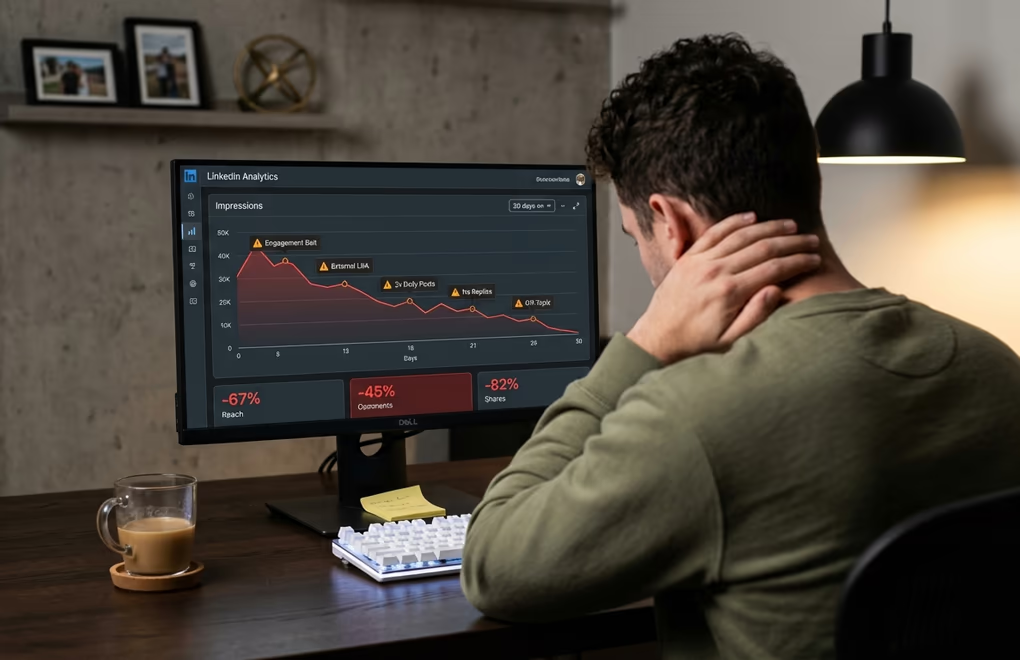
Understanding what the algorithm rewards is only half the picture. You also need to know what it penalizes, because some of the most common LinkedIn practices are actively working against you. Here are the reach killers that trip up even experienced creators.
Engagement Bait
"Like this post if you agree." "Comment YES if you want the template." "Share this to your network if you found it useful." These tactics used to work incredibly well on LinkedIn. In 2026, they are one of the fastest ways to get your post suppressed. LinkedIn has explicitly stated that it is deprioritizing engagement bait, and the algorithm is now sophisticated enough to detect it even in subtler forms. If your call to action feels manipulative rather than genuine, the algorithm will notice and limit your distribution. Ask questions that invite real opinions instead. "What has been your experience with this?" works. "Type 'GUIDE' in the comments to get my free PDF" does not.
External Links in the Post Body
LinkedIn wants to keep users on the platform. Posts with external links in the body consistently see reduced reach because the algorithm knows that clicking a link takes the user away from LinkedIn. This does not mean you can never share links. It means you should share the value first and put the link in the comments, or use LinkedIn's native article format if you have longer content to share. Some creators have found success adding links in the first comment immediately after posting, though even this approach has diminishing returns as the algorithm evolves.
Posting More Than Once Per Day
There is a persistent myth that posting more often equals more reach. In reality, posting multiple times per day typically hurts your per-post performance because your posts end up competing against each other in the feed. Consistent testing across creators shows that 2 to 5 posts per week is the sweet spot. Beyond that, you start seeing diminishing returns. Quality will always beat quantity on LinkedIn, and the algorithm is increasingly designed to reward depth over frequency.
Ignoring Comments on Your Posts
When someone takes the time to leave a comment on your post and you do not respond, you are leaving algorithmic value on the table. Every reply you make counts as additional engagement, which signals to the algorithm that your post is generating an active conversation. Beyond the algorithmic benefit, people who comment and get ignored are far less likely to comment on your posts in the future. Over time, this creates a compounding problem where your audience learns that engaging with your content is a one-way street, and they stop trying. Reply to comments quickly, especially during that golden hour.
Being a Generalist in Your Content
LinkedIn's algorithm has gotten much better at identifying focused experts versus people who post about everything. If your feed is a random mix of marketing tips on Monday, personal development on Wednesday, and cryptocurrency on Friday, the algorithm does not know what audience to show your content to. Niche content gets distributed to the right people far more effectively than broad content. Pick your lane, go deep, and build your reputation in one or two specific topics. Building a focused LinkedIn content strategy around those topics is the most reliable way to earn that consistency. The algorithm will reward it by connecting you with the exact audience that cares about what you have to say.
How do you optimize every LinkedIn post for maximum reach?
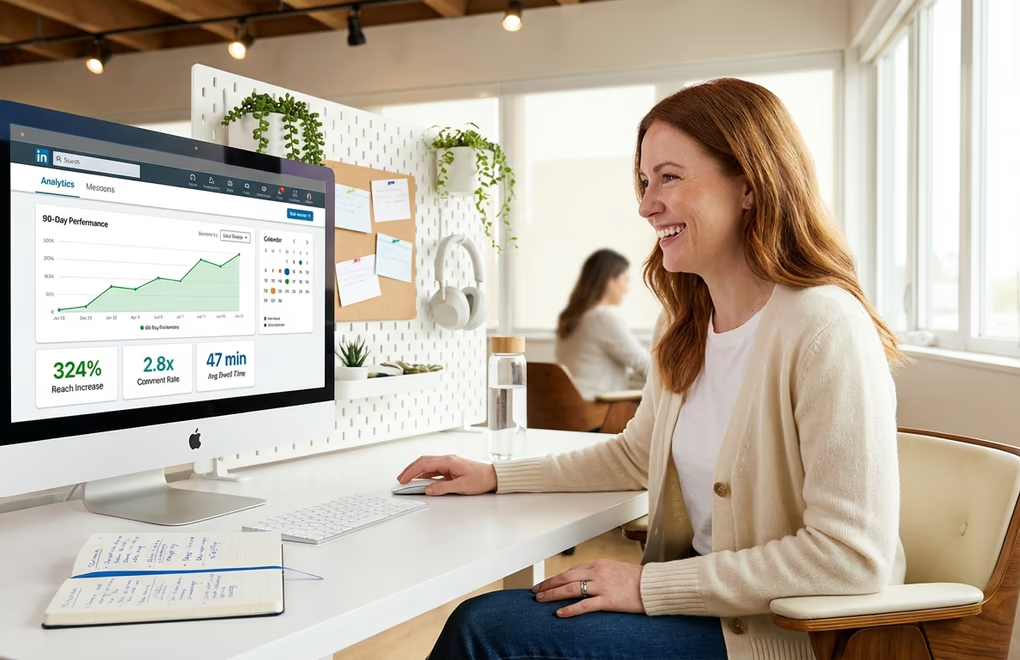
Now that you understand how the algorithm scores your content and what mistakes to avoid, let us put it all together into a practical framework you can use for every post you publish. These are not theoretical tips - they are the strategies that consistently produce results based on how the algorithm actually works.
Start with a hook that earns the click. Everything begins with your first line. You need to create enough curiosity, emotion, or surprise in those initial characters to make people click "see more." The "see more" click is where the algorithm starts paying serious attention. If you are struggling with hooks, we wrote an entire guide to LinkedIn hooks that go viral that covers 15 proven formulas you can start using today. Spend 50% of your writing time on the first two lines. They are that important. For a full breakdown of what earns extra reach today, see our guide on how to go viral on LinkedIn.
Write for dwell time, not just reactions. After the hook, your post needs to deliver enough value to keep people reading. This means substance over fluff. Share specific experiences, real numbers, genuine lessons, and practical frameworks. Longer posts tend to generate more dwell time, but length alone is not enough. Every paragraph needs to give the reader a reason to keep going. A 1,300 character post that rambles will perform worse than a focused 800 character post where every sentence carries weight - keep an eye on your draft with the free LinkedIn character counter so you can see exactly where the "see more" cutoff lands. Use LinkedGrow's AI post generator to draft content that is trained on high-performing post structures, then edit it to match your authentic voice.
End with a genuine conversation starter. The last line of your post should invite thoughtful responses, not empty engagement. Instead of "Do you agree?" try asking a specific question that requires people to share their own experience. "What is the biggest misconception about [your topic] that you had to unlearn?" gets much richer responses than a generic prompt. The goal is to trigger multi-comment threads where people respond to each other, which sends the strongest possible signal to the algorithm.
Choose the right content format. Different formats perform differently in 2026. Carousel posts continue to dominate, generating roughly 6 times more engagement than text-only posts. Video posts earn about 5 times more engagement than static content. But here is the nuance: the best format is the one that serves your specific message. A quick lesson or personal story works great as text. A step-by-step process shines as a carousel. A product demo or behind-the-scenes look belongs in video. Do not force your content into a format just because that format generally performs well. Match format to message, and the engagement will follow.
Stay for the golden hour. This might be the simplest but most overlooked optimization. After you hit publish, be present for the next 60 to 90 minutes. Reply to every comment within minutes. Ask follow-up questions. Thank people for sharing their perspective. This active engagement during the golden hour does two things: it boosts your post's algorithmic score because the algorithm sees an active conversation, and it encourages more people to comment because they see you actually respond. It is a positive feedback loop that compounds quickly. Use LinkedGrow's content calendar to plan your posts so you always have time blocked for this engagement window.
Track, learn, and iterate. The algorithm is constantly evolving, and what works best for your specific audience may differ from general best practices. Track your post performance consistently. Note which hooks got the most "see more" clicks, which topics generated the longest comment threads, and which formats earned the highest dwell time. LinkedGrow's analytics dashboard gives you a clear picture of these metrics so you can make data-driven decisions instead of guessing. The creators who win on LinkedIn are not necessarily the best writers - they are the ones who pay attention to what works and do more of it.
How do you work with the LinkedIn algorithm instead of fighting it?
The LinkedIn algorithm in 2026 is not your enemy. It is a system designed to surface genuinely valuable professional content to the people who will find it most useful. If you create content that demonstrates real expertise, earns dwell time, sparks meaningful conversations, and lands in front of the right audience at the right time, the algorithm will amplify your reach naturally.
The creators who struggle on LinkedIn are usually fighting against the algorithm's design rather than working with it. They chase virality instead of building authority. They optimize for likes instead of conversations. They post inconsistently and then wonder why their reach has dropped. Now you know better. You understand the golden hour, the ranking signals, the common mistakes, and the strategies that actually earn reach.
If you want to put all of this into practice without spending hours on every post, LinkedGrow's AI post generator creates algorithm-optimized content trained on your unique writing voice. Combined with smart scheduling, hook generation, and real-time analytics, it gives you everything you need to consistently reach and grow your audience on LinkedIn. Start your 7-day trial and see the difference that working with the algorithm makes.
Frequently Asked Questions
LinkedIn first shows your post to a small sample of your connections, typically 2-5% of your network. Based on how those people engage during the first 60-90 minutes, the algorithm decides whether to push it further to second and third-degree connections.
Dwell time measures how long someone spends looking at your post before scrolling past. LinkedIn tracks both feed dwell time and post-click dwell time. It matters because it is one of the hardest signals to fake and directly influences how widely your content gets distributed.
Consistent testing across creators points to posting 2 to 5 times per week for the best balance of impressions and engagement. Posting more than once per day can actually hurt your per-post reach because you end up competing with yourself in the feed.
Hashtags still help with topic categorization but their impact on reach has declined sharply since LinkedIn removed hashtag following in 2024. The algorithm now relies on AI-based content matching rather than a hashtag feed. Stick to 3 to 5 relevant hashtags per post and put your energy into writing strong content instead.
Carousel posts consistently outperform other formats, generating roughly 6 times more engagement than text-only posts. Video posts get about 5 times more engagement than static posts. But content quality matters more than format - a well-written text post will beat a mediocre carousel every time.
The post you keep meaning to write takes four minutes here.
LinkedGrow turns a link, a video or a rough idea into a LinkedIn post written in your own voice, then puts it in the calendar for the morning your audience is awake.
Start free for 7 days