
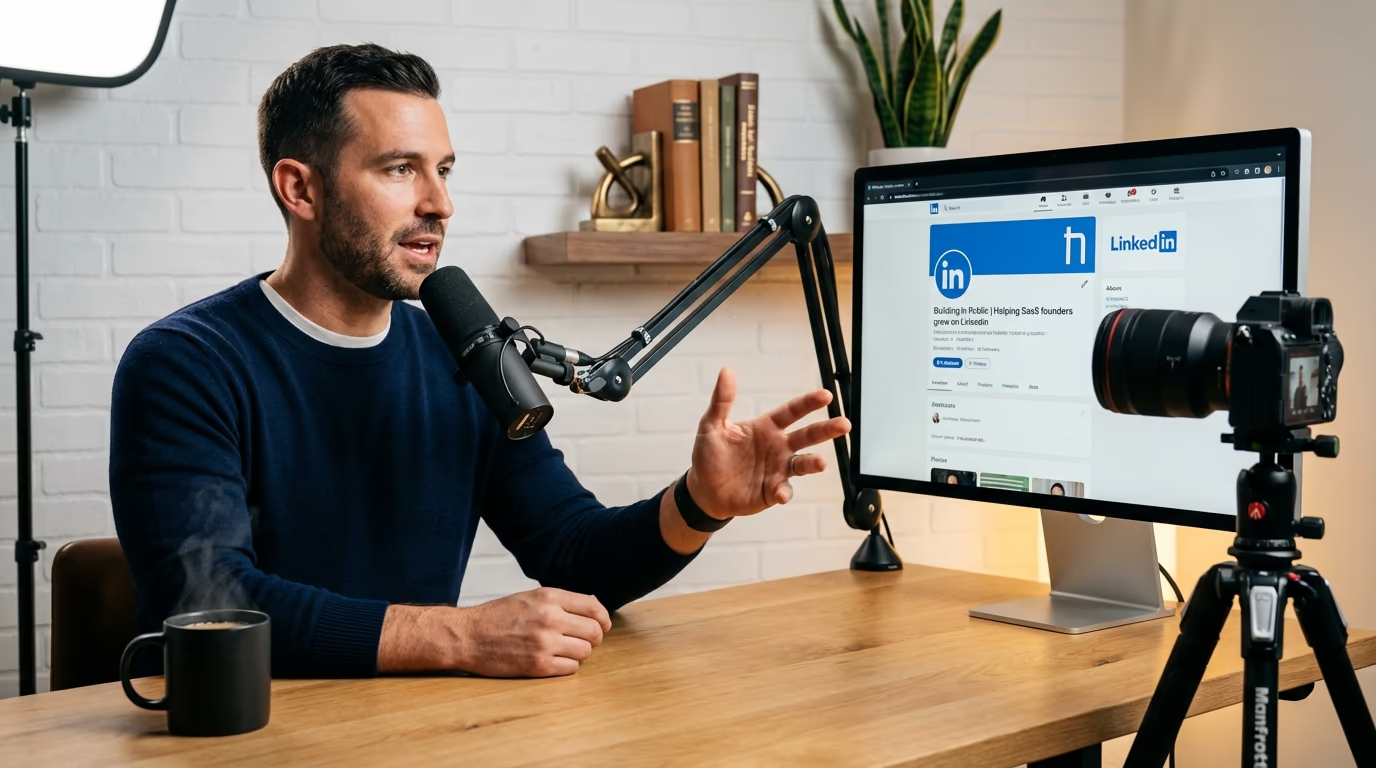
There is another factor that makes LinkedIn uniquely powerful for personal branding: the trust signal. When someone sees your name pop up in their feed week after week, sharing insights about your field, they start to associate you with that expertise. Over time, that association becomes your brand. People start introducing you as "the person who knows about X." Recruiters save your profile. Potential clients bookmark your posts. That kind of compounding credibility simply does not happen on platforms built around entertainment. A verified badge reinforces it at a glance, so it is worth learning how to get verified on LinkedIn early. Three years ago, I was invisible on LinkedIn. I had a decent profile, a solid career in web development, and absolutely zero presence in anyone's feed. My posts got maybe 15 impressions. My connection requests went ignored by the people I actually wanted to reach. Then I watched a colleague with half my experience land a dream client because the founder had been following her LinkedIn posts for months. That was the moment I realized: it doesn't matter how good you are if nobody knows you exist. LinkedIn personal branding changed everything for me, and in this guide, I am going to show you how to build yours from scratch.
Personal branding on LinkedIn is not about becoming an influencer or posting motivational quotes every morning. It is about becoming the person people think of when they need someone in your field. It is the difference between chasing opportunities and having them land in your inbox. With over 1 billion registered users on LinkedIn and only a tiny fraction creating content regularly, the opportunity to stand out has never been bigger. Most professionals set up a profile, add their job titles, and then wonder why nothing happens. The ones who win are the ones who treat LinkedIn like a stage, not a filing cabinet.
This guide covers the entire process of building a personal brand on LinkedIn in 2026. You will learn how to define your brand positioning, optimize your profile so it does the selling for you, develop a content strategy that builds authority without burning you out, and use tools like LinkedGrow to stay consistent even on the busiest weeks. Whether you are a solopreneur building credibility, a coach attracting clients, or a founder positioning yourself as a category leader, this framework works. Let us get into it.
Why is LinkedIn the best platform for personal branding in 2026?

There are dozens of social platforms where you could try to build a personal brand. Instagram rewards aesthetics. Twitter rewards hot takes. TikTok rewards entertainment. But LinkedIn rewards something different: professional expertise and genuine helpfulness. That makes it uniquely powerful for anyone whose career depends on being seen as credible and knowledgeable.
Consider the audience. When someone scrolls LinkedIn, they are in a professional mindset. They are thinking about their career, their business, their industry. They are actively looking for people who can help them solve problems, learn something new, or make better decisions. That is a fundamentally different mindset than someone watching dance videos or looking at vacation photos. When you publish something valuable on LinkedIn, it reaches people who are primed to take it seriously.
The numbers back this up. Only about 3% of LinkedIn's members post content more than once per week. That means 97% of the platform is passive - reading, scrolling, lurking. For anyone willing to show up consistently, the competition for attention is remarkably low compared to other platforms. You don't need to go viral or build a massive following. You just need to be visible to the right people in your niche, and LinkedIn's algorithm is specifically designed to surface relevant content to relevant audiences.
There is another factor that makes LinkedIn uniquely powerful for personal branding: the trust signal. When someone sees your name pop up in their feed week after week, sharing insights about your field, they start to associate you with that expertise. Over time, that association becomes your brand. People start introducing you as "the person who knows about X." Recruiters save your profile. Potential clients bookmark your posts. That kind of compounding credibility simply does not happen on platforms built around entertainment.
And here is the practical reality: LinkedIn personal branding directly impacts your bottom line. Employers increasingly value a candidate's online presence when making hiring decisions. For coaches and consultants, a strong LinkedIn presence is often the difference between chasing leads and having leads chase you. For founders, it builds the kind of trust that makes sales conversations easier before they even start. No other platform delivers that kind of professional ROI.
How do you define your LinkedIn brand before posting?
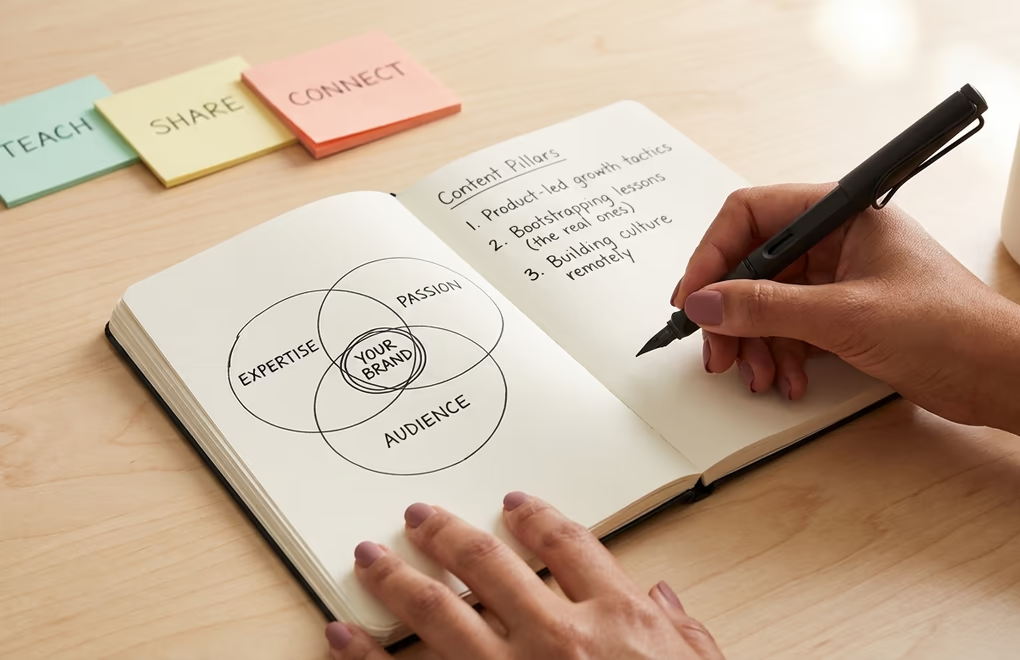
The biggest mistake people make with LinkedIn personal branding is jumping straight to content. They hear "you need to post on LinkedIn" and immediately start sharing random thoughts, industry news, or worse, reposting other people's content without adding anything. This approach almost never works because it lacks a clear point of view and a defined audience. Before you write a single post, you need to answer three questions that will shape everything else.
Question one: Who specifically are you trying to reach? "Everyone" is not an answer. The best personal brands on LinkedIn are precise about their audience. Instead of "business professionals," think "B2B SaaS founders in the $1M-$10M ARR range who are hiring their first marketing person." The narrower your target, the stronger your content resonates. It feels counterintuitive, but speaking directly to 500 people creates a louder signal than whispering to 50,000.
Question two: What do you want to be known for? Pick three to five topics that sit at the intersection of your expertise, your passion, and what your audience actually cares about. These become your content pillars - the themes you will return to again and again. If you are a leadership coach, your pillars might be team communication, first-time manager mistakes, and hiring culture. If you are a SaaS founder, maybe it is product-led growth, bootstrapping, and building in public. Writing down your pillars keeps you focused and prevents the "what should I post today" paralysis that kills most LinkedIn strategies before they start.
Question three: What makes your perspective different? This is the hardest question but also the most important. There are thousands of people talking about marketing, leadership, AI, sales, or whatever your field is. Your personal brand needs a differentiator - something that makes your take unique. Maybe it is your background. Maybe it is your methodology. Maybe it is your willingness to share failures, not just wins. The point is that your brand is not your job title. It is the unique lens through which you see and explain things.
Once you have answered these three questions, write them down somewhere you will see them regularly. They become your brand filter. Every time you sit down to create content, ask: "Does this serve my audience? Does it fit my pillars? Does it reflect my unique point of view?" If the answer is no to any of these, skip it. Discipline in what you don't post is just as important as consistency in what you do post. The strongest personal brands on LinkedIn are not the ones who post the most. They are the ones who stay relentlessly on-message.
How do you optimize your LinkedIn profile to convert visitors?
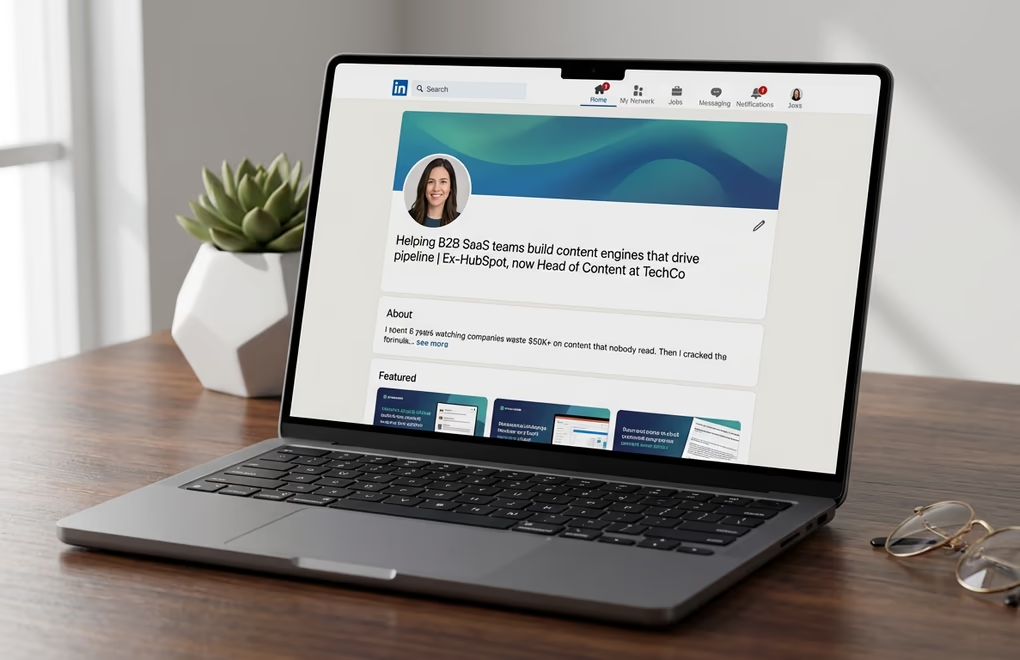
Your LinkedIn profile is your landing page. Every time someone sees your post in their feed and thinks "who is this person?", they click through to your profile. What happens in the next five seconds determines whether they follow you, connect with you, or click away forever. Most LinkedIn profiles are basically online resumes - a list of job titles and dates that tell people what you did but not why they should care. In 2026, a strong personal brand requires a profile that functions like a sales page for your expertise.
Start with your headline. You get 220 characters, and most people waste them on their job title. "Marketing Manager at Company X" tells people nothing useful. Instead, lead with value: who you help and what outcome you deliver. Something like "Helping B2B startups build content engines that drive pipeline | Former HubSpot, now building at [Company]" immediately communicates your expertise and your audience. Run a draft through the free LinkedIn headline analyzer to score it on length, keywords, and value proposition before you publish, or use the headline generator to get 10 options tailored to your role and goals. Your headline follows you everywhere on LinkedIn - in search results, comments, post attributions - so make every character count. Many creators in this space also evaluate AuthoredUp alternatives for deeper profile analytics; the right pick depends on whether you want analytics-only or analytics plus AI content.
Your banner image is prime real estate that most people ignore. Don't use the default blue gradient. Create a banner that reinforces your brand message. It could include your tagline, the name of your newsletter or podcast, a key achievement, or simply a clean design with your content pillars. Tools like Canva make this easy even if you are not a designer. Think of the banner as a billboard for your brand that sits at the top of every profile visit.
Your About section is where most people drop the ball completely. They either leave it blank or paste their resume. Instead, write it like a story. Open with a hook that grabs attention. Explain who you help and how. Share a brief origin story that shows why you care about your work. Include social proof if you have it - numbers, outcomes, recognizable client names, or LinkedIn recommendations that vouch for your work. End with a clear call to action, whether that is "DM me about X" or "Check out my newsletter." Write in first person, keep paragraphs short, and use line breaks generously. Nobody reads a wall of text.
The Featured section is another underused goldmine. Pin your best-performing posts, a link to your website, a lead magnet, or a case study. When visitors land on your profile, the Featured section gives them a curated sample of your best work without making them scroll through months of posts. Update it regularly with your most relevant and impressive content. Think of it as a portfolio highlight reel. The combination of a magnetic headline, an intentional banner, a compelling About section, and a curated Featured section transforms your profile from a passive resume into an active trust-building machine.
What content strategy builds real LinkedIn authority?
Alright, your brand is defined and your profile is sharp. Now comes the part that actually builds your reputation over time: creating content that demonstrates your expertise. This is not about going viral. It is about showing up in the feeds of the right people with the right message, consistently enough that they start to see you as someone worth paying attention to.
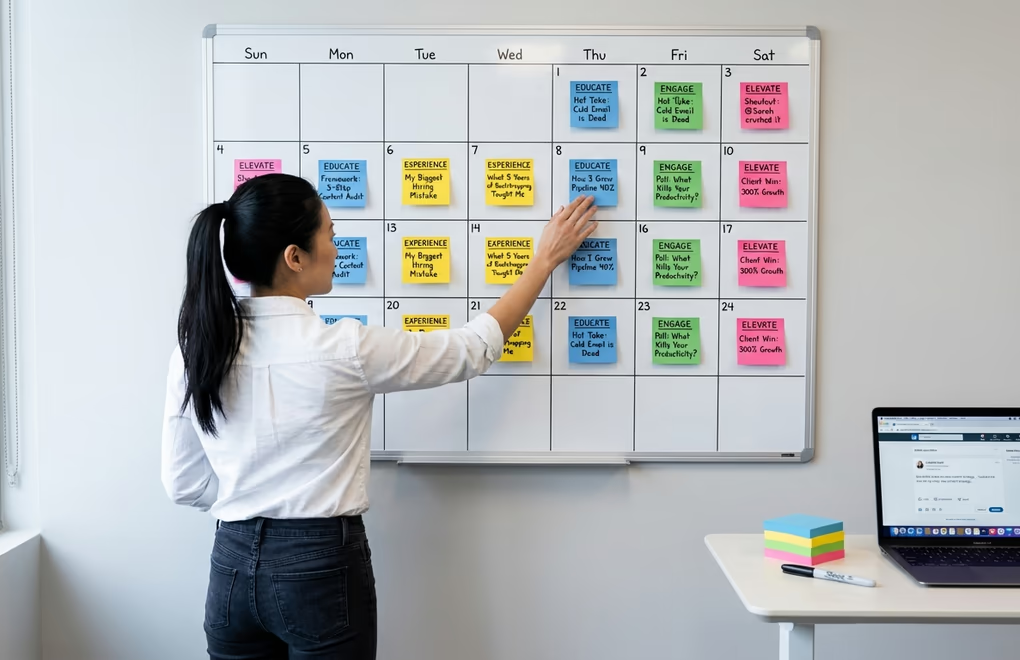
Let me introduce you to a framework I call the 4E Content Mix: Educate, Experience, Engage, Elevate. These four content types work together to build a well-rounded personal brand, and rotating between them keeps your feed from feeling one-dimensional. Educate posts teach your audience something specific and practical - a framework, a tactic, a step-by-step process. These are your authority-builders. Experience posts share your personal stories, failures, behind-the-scenes moments, and lessons learned. These humanize your brand and create emotional connection. Engage posts ask questions, run polls, or take a bold stance that invites conversation. These boost your reach by generating comments. Elevate posts celebrate others, share client wins, or spotlight someone in your network. These build goodwill and expand your reach through reciprocity.
Every single post you write needs to start with a strong opening line. We covered this in depth in our guide to LinkedIn hooks, but the short version is this: your first line determines whether anyone reads the rest. A hook that creates curiosity, challenges a belief, or makes a surprising claim will get people to click "see more," and that click tells the algorithm your content is worth distributing to a wider audience. Think of your hook as the headline of a newspaper article. If it doesn't grab attention, the brilliant paragraphs below it don't matter.
When it comes to format, image posts tend to outperform other types on average. Text-only posts work well for storytelling and bold opinions. Carousels are fantastic for step-by-step tutorials and frameworks because people swipe through them, which boosts engagement signals. Video works if you are comfortable on camera, but don't force it - a poorly produced video hurts your brand more than a well-written text post helps it. The best approach is to experiment with different formats while keeping your messaging consistent. What you say matters more than how you package it.
One mistake I see constantly: people post only about their professional wins. "Excited to announce" posts are the vanilla ice cream of LinkedIn - safe, forgettable, and everyone has them. The posts that build the strongest personal brands are the honest ones. The "I messed this up and here is what I learned" posts. The "here is a counterintuitive opinion I hold" posts. The "everyone says X but I think Y" posts. Vulnerability and authenticity are not weaknesses on LinkedIn in 2026. They are your strongest differentiation in a sea of polished corporate content.
Timing matters too. Research consistently shows that posting during peak business hours - typically Tuesday through Thursday between 8am and 11am in your audience's timezone - generates the most initial engagement. But don't obsess over timing. A great post at a mediocre time will still outperform a mediocre post at the perfect time. Focus your energy on the quality of your content first, and then optimize the logistics once you have a groove.
How do you stay consistent on LinkedIn without burning out?
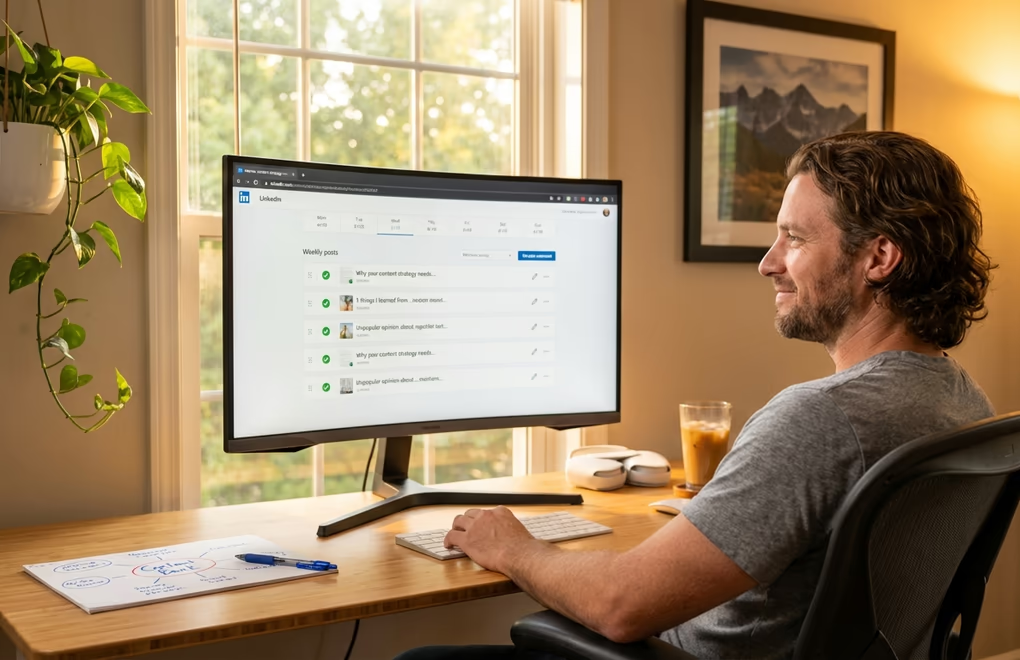
Here is the truth nobody wants to hear about LinkedIn personal branding: the strategy that works is the one you actually stick with. I have seen people create brilliant content plans, post three times in one week, and then go silent for two months. That pattern kills your momentum faster than not starting at all, because the algorithm rewards consistency and your audience forgets you even faster than you might think.
The secret to staying consistent is not discipline or motivation. It is systems. Start by batch-creating content. Instead of staring at a blank screen every morning, set aside two hours once a week to draft your posts for the entire week ahead. Monday morning you are fresh and focused. By Wednesday evening you are tired and will skip posting if you haven't already written something. Batching removes the daily decision fatigue that is the number one killer of LinkedIn consistency.
Build a content bank - a simple document or spreadsheet where you capture ideas throughout the week. Something interesting happens at work? Write it down. A client asks a great question? That is a post. You disagree with something you read? Note the counterargument. You hear a great podcast interview? Jot down the insight that surprised you. Most professionals have five to ten content-worthy moments every single week. They just let them pass because they don't have a system for capturing them. Your content bank turns everyday experiences into a library of ideas you can pull from whenever you sit down to write.
This is also where AI can become a genuine game-changer for your personal brand. The biggest barrier to consistent posting is not having ideas - it is turning those ideas into polished posts when you are exhausted after a long day. Using AI to write LinkedIn posts without sounding robotic is a real skill, and the key is choosing tools that learn your voice instead of producing generic content. LinkedGrow's voice training analyzes your past posts and writing style, so when you feed it an idea from your content bank, the draft already sounds like you. It is not about replacing your voice. It is about removing the friction between having an idea and publishing it.
Schedule your posts in advance. If you are batch-creating on Monday, schedule your posts for Tuesday, Thursday, and Saturday (or whatever rhythm works for you). This way, your personal brand keeps building even during weeks when you are buried in client work, traveling, or just not feeling creative. The professionals who grow fastest on LinkedIn are not the ones working hardest on content every single day. They are the ones with systems that make consistency effortless.
One more thing about consistency: engagement is half the equation. Posting without engaging is like showing up to a networking event and only talking about yourself. Spend 15 minutes a day leaving thoughtful comments on other people's posts in your niche. Not "Great post!" comments - real, substantive comments that add value or share a different perspective. This does two things. First, the person you commented on notices you, and they often check out your profile and start engaging with your content. Second, your comment is visible to their entire audience, which expands your reach to people who have never seen your name before. Strategic commenting is the most underrated growth tactic on LinkedIn.
How do you start your LinkedIn personal brand today?
Building a personal brand on LinkedIn is not a project with a finish line. It is an ongoing practice - a daily choice to show up, share what you know, and be genuinely helpful to the people you want to reach. The framework is straightforward: define your brand, optimize your profile, create content that mixes education with personal stories, and build systems that keep you consistent. If you want a quick benchmark for how your brand-building activity compares, check your LinkedIn Social Selling Index - the "Establish Your Professional Brand" pillar directly measures how well your profile and content position you as an authority. None of this requires special talent. It requires commitment and a willingness to be visible in a world where most professionals stay silent.
The professionals who will dominate LinkedIn in 2026 are not the ones with the most connections or the fanciest titles. They are the ones who started creating content today while everyone else was still overthinking it. Your personal brand is being formed whether you participate or not - every time someone searches your name, they form an opinion based on what they find. The question is whether you are going to shape that opinion intentionally or leave it to chance.
If the idea of creating content consistently feels overwhelming, start small. One post a week. A genuine observation about your work. A lesson from a recent project. A question you have been wrestling with. Building thought leadership does not start with a viral post. It starts with the decision to stop being invisible. And tools like LinkedGrow exist specifically to make that process smoother, faster, and more sustainable, so you can focus on the expertise that makes your brand worth following in the first place.
Frequently Asked Questions
Most people start seeing real traction after 90 days of consistent posting. You will notice profile views and connection requests increasing within the first month, but meaningful authority and inbound opportunities typically take three to six months of steady effort.
Two to three posts per week is the sweet spot for most professionals. Consistency matters far more than volume. Posting once a week every week beats posting five times one week and then disappearing for a month.
Yes, though it takes longer. Your writing voice, expertise, and unique perspective can carry your brand without constant selfies. A professional headshot on your profile is still important, but your content itself does not need to feature photos of you.
Personal branding is how people perceive you overall, including your expertise, personality, and values. Thought leadership is a subset focused on sharing original insights and forward-thinking perspectives in your field. Strong personal brands often include thought leadership, but they also show personality.
AI tools can help you maintain posting consistency and overcome writer's block, but the key is using AI that adapts to your voice. Tools like LinkedGrow train on your writing style so generated content sounds like you, not a generic chatbot. Always edit AI drafts to add personal anecdotes.
The people you just read about are already on LinkedIn.
LinkedGrow runs an agent that finds the ones who match the customers you already have, sends the invitation in your words, and opens the conversation. You pick it up when somebody answers.
Build my agent free