

If you want to know how to build a LinkedIn employee advocacy program step by step, you are probably already feeling the pain of declining company page reach. Fewer people are seeing your posts, engagement is slipping, and it feels like you are shouting into an increasingly empty room. You are not imagining things. LinkedIn has been steadily dialing down organic reach for company pages, pushing brands toward paid advertising while simultaneously rewarding personal profiles with better distribution. The LinkedIn algorithm in 2026 heavily favors content from real people over brand accounts, and that gap keeps widening every quarter.
Employee advocacy is the antidote to this decline. Instead of funneling all your LinkedIn efforts through a single company page that reaches a shrinking slice of your followers, you tap into the combined networks of the people who actually work at your company. Every employee has their own connections, their own credibility, and their own reach on LinkedIn, and when they share genuine insights about their work, their industry, or their professional journey, those posts land in front of audiences your company page could never touch. The collective reach of your employees' personal networks dwarfs your company page audience in almost every case, often by a factor of five to ten.
There is a deeper reason this works so well beyond just algorithmic preference. People trust other people far more than they trust brand accounts. When your head of engineering writes about a technical challenge the team overcame, or your VP of sales shares a lesson from a recent deal, those posts carry a weight of authenticity that no corporate marketing message can match. Your company page is a logo. Your employees are real humans with real perspectives, and LinkedIn audiences in 2026 are overwhelmingly drawn to content that feels genuine rather than polished.
This playbook walks you through building an employee advocacy program that people actually want to participate in. Not the kind where you email a company update and beg people to share it, but a structured system where employees post because it benefits their own careers and professional reputation as much as it benefits the company. You will learn why personal posts crush company pages, how to build the program without it becoming a burden on anyone, what kind of content employees genuinely enjoy sharing, and how to measure the impact in terms your leadership team actually cares about.
Why do personal posts crush company pages on LinkedIn?
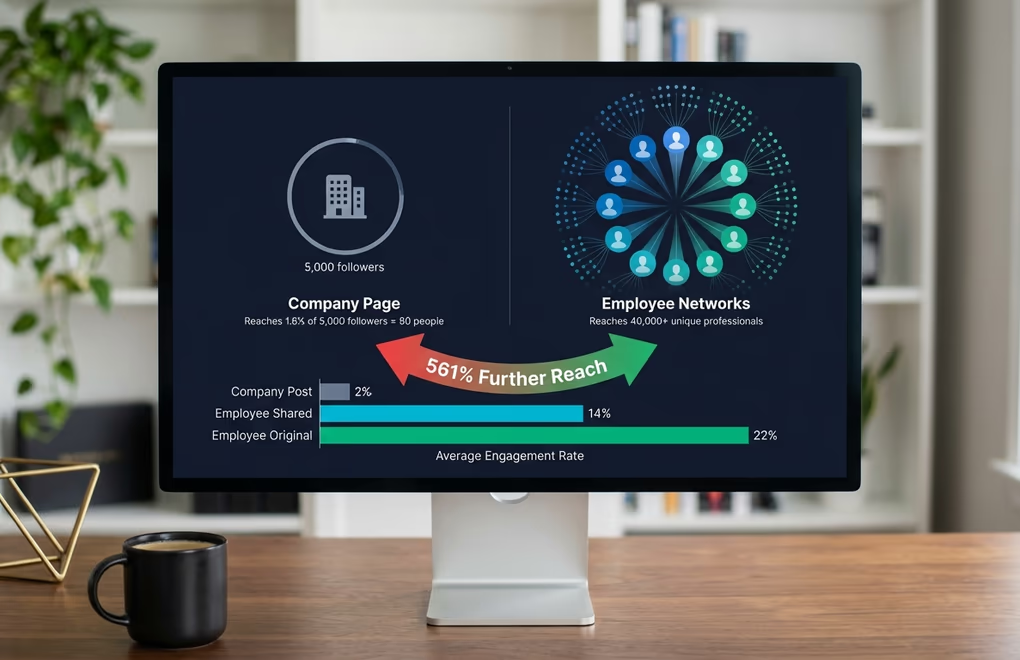
Think about how you personally use LinkedIn for a moment. When you are scrolling your feed, do you stop and read posts from company pages, or do you engage with posts from people you know, people you respect, or people who share interesting personal takes on their industry? Almost everyone answers the same way, and that instinct is exactly what the LinkedIn algorithm has learned to optimize for. Personal profiles get dramatically better distribution than company pages because LinkedIn knows its users prefer hearing from real humans. The platform makes more money when people stay on it longer, and people stay longer when they are reading content from other people rather than brand announcements.
The reach difference becomes obvious when you think about the raw network math. Say your company has 50 employees and a company page with 5,000 followers. If each employee has an average of 800 LinkedIn connections, your team's combined network is 40,000 professionals, most of whom have never seen a single post from your company page. Your employees already have access to an audience that is many times larger than your company's follower count, and the algorithm actually wants to show their content to those connections because it knows personal posts generate more engagement, more comments, and more time spent on the platform.
There is also a trust dynamic at play that makes employee content fundamentally more valuable than brand content. When a prospect sees your company page post about how great your product is, they process it the same way they process any ad. When that same prospect sees one of your engineers write about a technical problem they solved, or your customer success lead share advice that helped a client, the reaction is completely different. The content feels like expertise rather than marketing, and the person sharing it has their own reputation on the line, which makes the whole thing feel more honest and more credible.
The good news for anyone thinking about starting an advocacy program is that you do not need your entire workforce posting daily to see significant results. Even a small group of five to ten committed advocates posting two or three times a week will generate more qualified visibility for your company than most paid LinkedIn campaigns, because the reach is organic, the engagement is genuine, and the trust transfer from employee to brand is something money simply cannot buy. Ten people who genuinely care about sharing their professional knowledge on LinkedIn will move the needle more than a hundred people who reluctantly copy-paste a corporate message once a month.
How do you build an employee advocacy program from scratch?
The biggest mistake companies make with employee advocacy is treating it like a broadcast channel. They draft corporate messages, blast them to employees via email or Slack, and ask everyone to copy-paste them to their LinkedIn profiles. This approach fails almost immediately, and it fails for an obvious reason that most program managers overlook. Nobody's LinkedIn connections want to see fifteen identical posts from the same company on the same day. It looks inauthentic, it kills engagement, and the employees who participated feel embarrassed rather than empowered. A huge number of companies technically have advocacy programs on paper, but only a small fraction have formalized them with real structure, clear goals, and a system that does not rely on nagging people.
Start by securing genuine executive buy-in, and genuine means the executives actually participate rather than just approving a budget line item. If the CEO, CTO, or VP of Sales is actively posting on LinkedIn, it sends a clear signal to the rest of the organization that this is valued behavior rather than an optional side project someone in marketing dreamed up. Your executives do not need to become full-time LinkedIn creators. Even one thoughtful post a week from a senior leader sets the cultural tone and makes employees feel like they have permission to post about their work publicly. Leadership participation is the single most important predictor of whether an advocacy program survives past the first quarter.
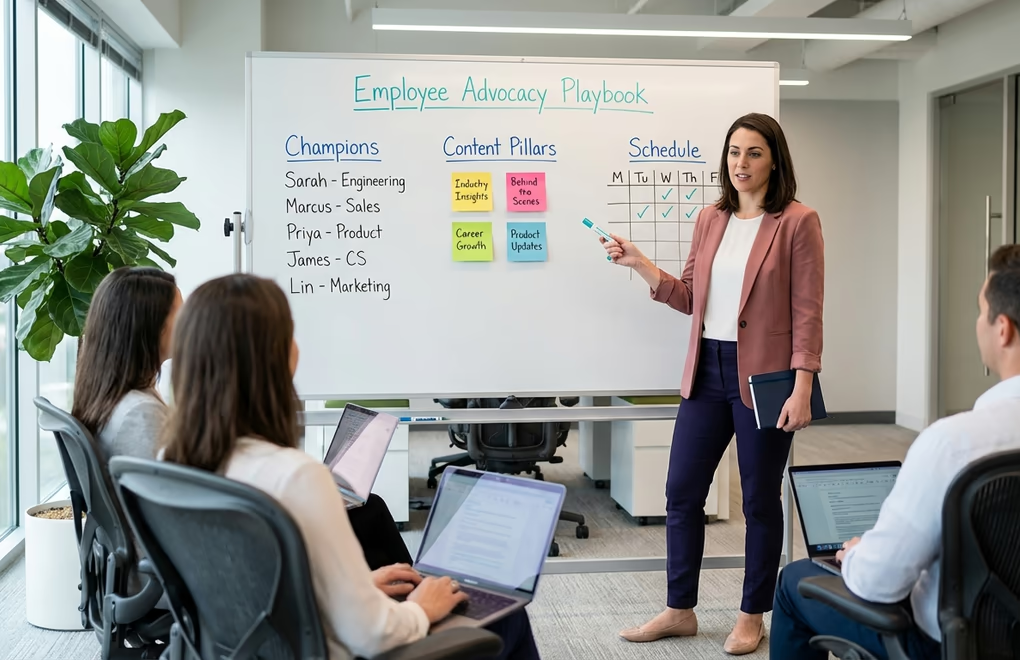
Next, identify your initial champions, and look for people who already show signs of enjoying LinkedIn rather than people you think should be on LinkedIn. You want employees who occasionally post or comment, who are genuinely enthusiastic about their industry, and who have the kind of professional credibility that makes their perspectives worth reading. Start with five to ten people across different departments, because diversity of perspective is what makes advocacy programs genuinely interesting. A post from an engineer about your product architecture reaches a completely different audience than a post from a sales leader about buyer behavior, and both amplify the company brand in ways the company page never could.
Create simple, clear guidelines that focus more on what employees should do than what they should avoid. Cover the topic areas that align with the company's expertise, basic do's and don'ts for representing the brand publicly, and most importantly, a clear statement that personal voice and authenticity are more valued than corporate messaging. Keep the guidelines to a single page at most. If your advocacy guidelines end up longer than your vacation policy, you have already lost the participation battle before it started.
Finally, set up the operational infrastructure that makes the whole thing work without becoming a second job for anyone. Your advocates need a way to find content ideas, draft posts efficiently, and schedule them on their own terms. Team collaboration tools that let a program manager curate content suggestions while employees personalize and post on their own schedule remove the biggest friction point, which is the time and mental energy required to create a post from scratch every time. Manual coordination through email and Slack messages simply does not scale past the first month, and the programs that survive long-term are almost always the ones that invested in proper tooling from the beginning.
What content will employees actually want to share?

The content question is where most advocacy programs either thrive or quietly die within a few months. Give employees fill-in-the-blank starting points from the free LinkedIn post templates library so participation does not depend on writing from scratch, and evaluate Hootsuite alternatives for the team-publishing layer. If the only thing you give employees to share is corporate press releases and product announcements, participation will crater within weeks because nobody wants to be the person whose LinkedIn feed reads like a company newsletter. Their connections will unfollow or mute them, engagement will tank, and the employees who tried will feel like they damaged their personal reputation for nothing. The programs that sustain high participation over time are the ones that give employees content that makes them look smart, helpful, or interesting to their own professional network, not content that makes the company look good at the employee's expense. The same principles that make one person's post spread apply to every advocate, and our guide to how to go viral on LinkedIn breaks down the hooks and formats that earn shares.
Industry insights and trend commentary are the easiest win because they position employees as knowledgeable professionals rather than corporate mouthpieces. When your company publishes original research, lands a notable client, or notices a shift in the market, package that into a short briefing that employees can adapt in their own words. A data analyst might share a surprising finding from a recent project without revealing client details, while a customer success manager could talk about a common challenge they help clients solve every week. The key is providing the raw material and context, then letting each person add their own perspective, experience, and professional spin, because that personalization is what transforms a corporate talking point into a genuinely engaging LinkedIn post.
Behind-the-scenes content consistently outperforms polished marketing material because it feels real in a way that corporate content simply cannot. Photos from team offsites, the story behind how your team solved a difficult problem under pressure, lessons learned from a product launch that almost went sideways - these are the kinds of posts that LinkedIn audiences genuinely engage with because they offer something other than the usual self-promotional noise. The broader trend in professional content right now is a massive shift toward authentic, human-generated storytelling, and employee advocacy taps directly into that demand. Voice training tools can help employees who feel unsure about their writing style by analyzing their natural tone and ensuring AI-assisted drafts still sound like them rather than a generic marketing department output.
Career growth content is the secret weapon that benefits both the company and the individual in equal measure. When your engineers write about what they learned shipping a feature under a tight deadline, when your sales team shares negotiation tactics that actually work in the field, or when your HR lead discusses what they look for when hiring, they build personal authority that naturally reflects well on the employer brand. Employees who post regularly on LinkedIn overwhelmingly report that it has helped their careers through new connections, speaking invitations, and professional opportunities, which means the intrinsic motivation for participation is already there if you frame advocacy as professional development rather than a corporate obligation.
Create a content calendar that mixes these themes throughout the month so employee feeds stay interesting and varied. One week might focus on industry trends, the next on behind-the-scenes stories, followed by thought leadership takes and then a company update. Using a content calendar to plan and distribute these themes across your advocate group ensures consistent coverage without overwhelming anyone with too many requests in a single week, and it prevents the common failure mode where every employee posts about the same topic on the same day.
How do you make employee participation easy and sustainable?
The number one reason employee advocacy programs fail is not lack of interest or lack of willingness. It is friction. Employees are busy people with demanding jobs, and if sharing a LinkedIn post requires more than a few minutes of effort each time, it will always lose to the next meeting, the next email, or the next deadline breathing down their neck. Your job as the program manager is to make participation so effortless that choosing a post from the queue and personalizing it feels like less work than deciding what to have for lunch.
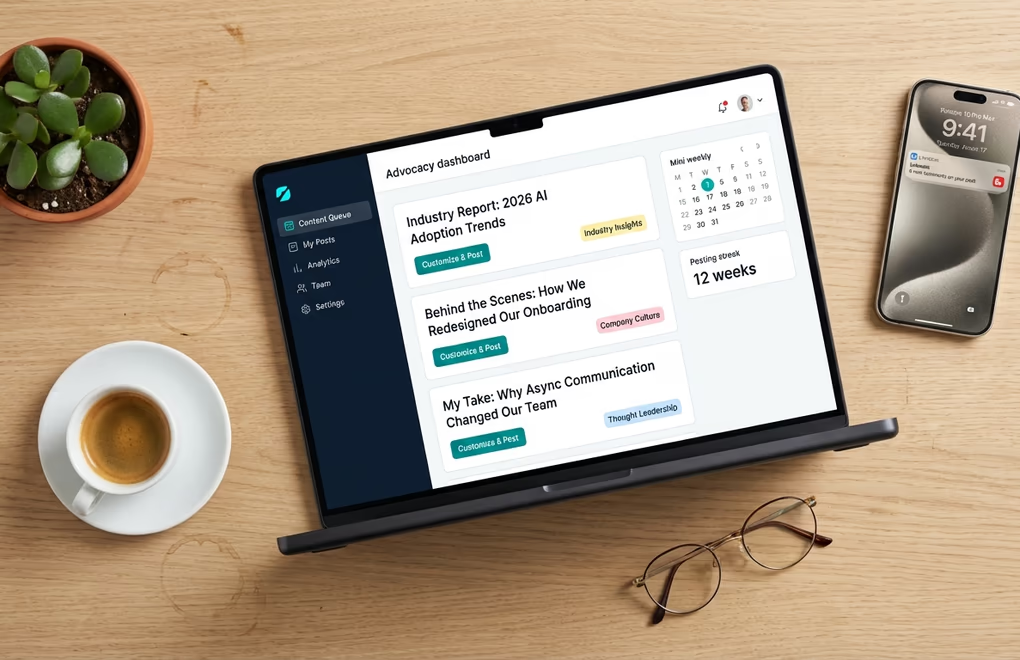
The most effective approach is a content queue system where someone on the marketing or comms team curates a selection of post ideas, draft captions, and supporting context each week. Employees can browse the queue at their convenience, pick the posts that resonate with their expertise and interests, personalize the language to match their own voice, and schedule them for the days ahead. This takes the hardest part of LinkedIn posting off their plate, coming up with what to write about from a blank page, and replaces it with the much easier task of editing and adding their personal perspective to existing content. LinkedIn tools built for teams make this workflow seamless by letting managers distribute content suggestions directly to team members who can then customize and post without switching between multiple apps.
Timing matters more than most program managers realize. Asking employees to post during their busiest hours guarantees low participation, so instead provide scheduling capabilities that let them draft posts when they have a spare moment, maybe on a quiet Friday afternoon or over their morning coffee, and publish them at optimal times automatically. The research on the best times to post on LinkedIn shows that Tuesday through Thursday mornings consistently drive the highest engagement, andLinkedIn scheduling tools can ensure every advocate's posts land during those windows regardless of when they actually sat down to write them.
Recognition programs keep momentum alive well beyond the initial burst of enthusiasm. Highlight top advocates in company all-hands meetings, share their best-performing posts in an internal channel so everyone can see what good looks like, and celebrate milestones like a first viral post or a connection request from a major industry figure. Setting up network notifications helps program managers track when team members publish and engage, which makes recognition timely rather than relying on manual spot-checks. Some companies offer non-monetary rewards like conference tickets, extra learning budgets, or even just a dedicated shout-out from the CEO, and those small investments create a culture where posting on LinkedIn is seen as a valued contribution rather than something you squeeze in if you happen to have time.
Set realistic expectations from the very beginning. Asking employees to post every single day will burn them out within a month and make the whole program feel like a chore rather than an opportunity. Two to three posts per week is the sweet spot for most advocacy programs because it keeps the company visible across employee networks without making participation feel like a second job. Some advocates will naturally start posting more often as they see the results, more connection requests, more profile views, more conversations with interesting people in their industry, and that organic growth in activity is much healthier and more sustainable than mandated daily quotas that nobody can keep up with.
What KPIs prove employee advocacy works?

Proving the value of an advocacy program to your leadership team requires connecting social activity to business outcomes they actually care about, and the good news is that this connection is much easier to make than most marketers assume. The mistake most programs make is reporting exclusively on vanity metrics like total impressions or the number of employee posts published that month. Those numbers tell you the program is active, which is useful for internal management, but they do not answer the question your CFO is going to ask at the next quarterly review, which is whether any of this is actually generating revenue or saving the company money.
Earned media value is the most compelling metric for executive buy-in because it translates social reach into a dollar figure that everyone understands. The concept is straightforward: take the reach and engagement your employee posts generated, calculate what it would have cost to achieve the same results through LinkedIn ads, and the difference is your earned media value. Companies with mature advocacy programs routinely report that their employee-generated reach costs a fraction of what equivalent LinkedIn advertising would run, sometimes as much as 80-90% less per click. When you can walk into a budget meeting and show that your advocacy program delivered hundreds of thousands of dollars in equivalent advertising value at essentially zero media spend, the conversation about whether to continue funding the program becomes very short.
Website traffic from employee-shared links gives you a clear picture of how advocacy drives top-of-funnel interest. Tag all shared links with UTM parameters that identify the source as employee advocacy, the medium as social, and the campaign as the specific content piece, so you can track not just visits but also what happens after the click, including pages viewed, time on site, and whether visitors convert into leads or sign-ups. Enterprise-grade analytics that connect LinkedIn activity to downstream business metrics make this tracking seamless rather than requiring someone to manually reconcile spreadsheets every month.
Lead quality from social referrals is where advocacy truly shines compared to other acquisition channels. A prospect who discovers your company through a thoughtful LinkedIn post written by one of your engineers has already built a certain level of trust and familiarity before they ever visit your website. They arrive warmer, more informed about what you do, and more inclined to take the next step than someone who clicked on a cold LinkedIn ad or stumbled onto your site through a generic Google search. Companies that track this closely tend to find that leads originating from employee social content convert at significantly higher rates than leads from virtually any other channel, which makes sense when you consider the trust dynamic baked into the whole process.
Keep an eye on participation metrics alongside business outcomes so you can catch problems before they become crises. Monitor how many advocates are actively posting each week, how frequently they post, and which types of content generate the most engagement from their networks. If participation starts dropping, that is an early warning sign that the program needs attention, whether the content suggestions have gone stale, people need more recognition, or the expected posting frequency is simply too high for what employees can realistically maintain alongside their day jobs. The best programs also pay attention to talent acquisition effects, since companies whose employees are visibly active and engaged on LinkedIn naturally attract stronger job applicants who want to work somewhere that values professional growth and public expertise.
How do you scale beyond your first advocacy champions?
Once your initial group of five to ten advocates is posting consistently and you can see the impact in your analytics, the natural question is how to expand the program without losing the quality and authenticity that made it work in the first place. Scaling employee advocacy is less about aggressively recruiting more people and more about building systems and a culture that maintain the personal touch as participation grows organically.
Use your early champions as internal ambassadors who recruit and mentor new advocates within their own departments. When a colleague watches someone on their team get 10,000 impressions on a LinkedIn post and then receive connection requests from well-known people in their industry, they become curious rather than skeptical. Peer influence is far more powerful than any top-down directive from marketing. Your marketing team telling employees to post on LinkedIn carries one kind of weight, but an engineer showing a colleague how their LinkedIn post led to a podcast invitation or a speaking gig carries an entirely different kind of credibility that you cannot manufacture.
As you grow, create department-specific content tracks so that employees in different roles receive post suggestions relevant to their expertise and their audience. Your sales team needs very different content from your product team, and your recruiters need different angles from your executives. A single shared content queue works when you have ten advocates who all know each other, but at fifty or a hundred, you need segmentation to keep things relevant. This is where having proper team collaboration features with role-based access becomes essential, because a program manager distributing different content to different groups through fifty individual messages is not a sustainable workflow.
Training is the bridge between willing participants and effective advocates. Run monthly workshops that cover the basics of writing compelling hooks, understanding what the algorithm rewards, and building a personal brand on LinkedIn that complements the company brand rather than competing with it. Share the best-performing posts from the previous month and break down what made them work, because when employees understand the principles behind great LinkedIn content rather than just following a template, they produce posts that feel genuine and perform well without constant oversight from the program manager.
The most important thing to protect as you scale is authenticity, because an advocacy program where a hundred employees post identical or near-identical content is actually worse than having no program at all. Every employee's post should reflect their own voice, perspective, and professional expertise, and the program manager's role naturally shifts from content creator to content curator and coach as the program matures. AI writing assistants with voice training capabilities help employees draft posts faster while maintaining their individual writing style, which hits the ideal balance between operational efficiency and the authenticity that makes employee advocacy so powerful in the first place.
Plan for the long game, because the companies that extract the most value from employee advocacy are the ones that treat it as a permanent part of their growth strategy rather than a campaign with a start and end date. The employee advocacy space is growing rapidly as more companies recognize that organic reach from personal profiles is one of the few remaining channels where you can build genuine trust at scale without paying for every impression. Your competitors are building their programs right now, and the longer you wait to start yours, the harder it becomes to close the gap in collective brand visibility that their employees are creating every single week.
Frequently Asked Questions
You can start with as few as five to ten engaged employees who are already somewhat active on LinkedIn. A small group of committed advocates who genuinely enjoy posting will always outperform a large group of reluctant participants who only share when reminded.
Fear of saying the wrong thing is the most common barrier. Provide clear guidelines that explain what is encouraged and what to avoid, share examples of successful posts from colleagues, and reassure employees that the company supports their personal voice rather than expecting corporate messaging.
A mix of both works best. Pre-written content gives employees an easy starting point when they are short on time, while original posts in their own voice tend to get higher engagement. Most successful programs lean toward more original content over time as employees gain confidence.
Calculate earned media value by comparing what equivalent reach would cost in LinkedIn ads, monitor website traffic from employee-shared links using UTM parameters, and measure lead quality from social referrals. Connecting your CRM lets you trace the journey from employee post to customer.
Small companies often see even better results because every employee has a personal network the company page cannot reach. Ten employees with 500 connections each give you access to 5,000 unique professionals, which likely exceeds your company page followers by a wide margin.
The post you keep meaning to write takes four minutes here.
LinkedGrow turns a link, a video or a rough idea into a LinkedIn post written in your own voice, then puts it in the calendar for the morning your audience is awake.
Start free for 7 days