

Choosing the best tools and workflow for LinkedIn ghostwriters in 2026 is what separates the ones making a very good living from the ones drowning in manual work. Most of LinkedIn's audience has no idea these professionals exist. They are LinkedIn ghostwriters - writers who specialize in capturing someone else's voice and turning their ideas into posts that build authority, generate leads, and grow audiences. The demand for this service has exploded over the past two years as executives, founders, and thought leaders have realized that LinkedIn is too important to ignore and too time-consuming to do themselves.
The math is straightforward. A CEO who posts three times a week on LinkedIn needs to invest roughly five to eight hours every week on ideation, drafting, editing, and engagement. That is time they do not have. But they also know that their personal LinkedIn presence generates more trust and pipeline than the company page ever could, because people on LinkedIn follow people, not logos. So they hire someone to do it for them, and the ones who get the best results hire a dedicated ghostwriter rather than handing it off to a junior marketing coordinator who is already juggling five other platforms.
Whether you are already ghostwriting for a few clients and want to professionalize your operation, or you are considering this as a career path, this guide covers everything you need. We will walk through the tools that make the job efficient, the voice-matching techniques that separate great ghostwriters from mediocre ones, the weekly workflow that keeps content flowing without chaos, and the pricing strategies that turn ghostwriting into a sustainable business. If you already run an agency managing LinkedIn accounts, you will find plenty of overlap with your existing systems, but the ghostwriter's approach is more intimate, more voice-dependent, and in many ways more challenging than standard content management.
Why is LinkedIn ghostwriting a legitimate career path in 2026?

Five years ago, if you told someone you wrote LinkedIn posts for a living, they would have looked at you like you just said you were a professional tweet writer. The perception has shifted dramatically. LinkedIn ghostwriting is now a recognized professional service with established pricing, clear deliverables, and a growing client base that includes some of the most recognizable names in tech, finance, and consulting. The shift happened because LinkedIn itself changed from a resume database into the dominant platform for B2B influence and professional thought leadership.
The reason executives pay premium rates for this service comes down to trust and reach. According to LinkedIn's own B2B marketing research, three in four decision-makers consider thought leadership content more trustworthy than traditional marketing materials when evaluating a company's capabilities. That means a CEO's LinkedIn post about an industry challenge carries more weight with potential buyers than the company's entire advertising budget. Executives are not buying ghostwriting because they are lazy - they are buying it because the ROI on their personal LinkedIn presence is enormous and they need someone who can maintain it consistently while they run the business.
The other driver is consistency. Everyone knows they should post regularly on LinkedIn, but knowing and doing are very different things. A founder might post enthusiastically for two weeks after attending a conference, then go silent for a month when product launches and board meetings take over. That inconsistency is devastating for LinkedIn reach because the algorithm rewards people who show up predictably. A ghostwriter solves this by building a content pipeline that runs regardless of whether the client is in a strategy meeting, on vacation, or closing a funding round.
What makes this career path especially attractive right now is the economics. Solo ghostwriters who specialize in LinkedIn are building businesses that generate $8,000 to $15,000 in monthly recurring revenue with just three to five clients. The overhead is minimal because the primary tools are your brain and a laptop, and the retention rates are excellent because clients who see results from consistent posting are terrified to lose the person responsible for it. Your value increases the longer you work with someone, because your ability to match their voice gets sharper with every post you write.
What tools do LinkedIn ghostwriters need in 2026?

The difference between a ghostwriter who struggles to deliver three posts a week and one who comfortably manages twelve comes down to their toolkit. You do not need dozens of expensive subscriptions, but you do need the right tool for each stage of the content production process. Think of your toolkit in five layers: research, drafting, editing, scheduling, and analytics. Each layer handles a distinct part of the workflow, and having gaps in any of them creates bottlenecks that slow you down and reduce content quality.
Your research stack is where every good post begins. You need a way to stay current on your clients' industries without spending hours reading news every morning. Set up Google Alerts for each client's key topics, subscribe to two or three industry newsletters per client, and use a tool like Perplexity or Google's AI overviews for quick research when a trending topic emerges. The best ghostwriters also keep a running ideas document for each client - a simple Notion page or Google Doc where they dump article links, podcast quotes, industry observations, and random thoughts that could become posts later. This ideas bank is what keeps you from staring at a blank screen on drafting day.
For drafting, an AI post generator that supports voice training is the single most impactful tool you can add to your workflow. Generic AI tools produce output that sounds like generic AI, which is exactly what you do not want when your job is to sound like a specific human being. Tools that let you train on a client's writing samples produce first drafts that already carry the right tone, sentence rhythm, and vocabulary. Your job then shifts from writing from scratch to editing and elevating, which is dramatically faster and lets you handle more clients without sacrificing quality. Most agencies in this space evaluate Taplio alternatives and AuthoredUp alternatives before settling on a stack - the difference is whether the tool understands your client's voice or just pastes generic AI output.
The scheduling and organization layer ties everything together. You need a content calendar that gives you a visual overview of what is going out for each client, when, and what stage each post is in. Without this, you will inevitably double-post for one client and miss a day for another. Two free utilities save time across every client: the LinkedIn character counter for catching the "see more" cutoff before you publish, and the LinkedIn headline analyzer when a client asks you to optimize their profile in addition to writing their posts. For analytics, LinkedIn's native creator dashboard gives you the basics, but dedicated tools like Shield or Inlytics provide deeper insights into which content types, topics, and posting times perform best for each client account.
One more thing that most ghostwriting guides overlook: your client communication system is just as important as your content tools. Create a shared workspace for each client that includes their voice profile, approved topics, content pipeline status, and a feedback thread. This prevents the chaos of hunting through email chains and Slack messages for that one piece of feedback the client gave three weeks ago about never mentioning a specific competitor. A clean communication system saves you more time per week than any fancy AI tool ever will.
How do you capture a client's voice as a ghostwriter?
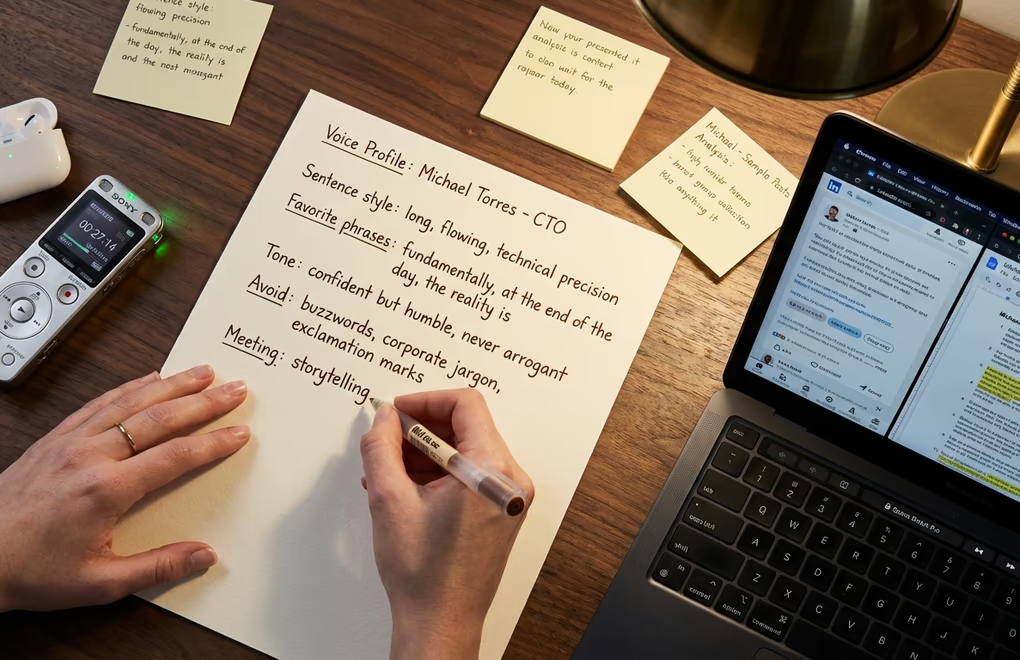
If there is one skill that separates professional LinkedIn ghostwriters from people who just write generic posts with someone else's name on them, it is voice matching. This is the ability to write something that sounds so much like your client that their own colleagues cannot tell they did not write it themselves. It is incredibly hard to do well, it takes time to develop for each new client, and it is the single biggest reason clients stay with a ghostwriter for years instead of months.
The process starts during onboarding, and you should never rush it. Before writing a single post, ask your client to share 10 to 20 examples of their existing content. This includes LinkedIn posts they have written themselves, emails they are proud of, presentations they have given, podcast appearances, and even long Slack messages where they were explaining something they care about. You are not reading these for the ideas - you are reading them to understand how this person constructs thoughts. Do they start with a question or a bold statement? Do they use short declarative sentences or longer flowing ones? Do they lean on analogies and metaphors, or do they prefer concrete examples and numbers? Do they keep everything buttoned up and professional, or does their personality come through with humor and casual language?
After analyzing their writing samples, build a voice profile document. This is a one-page reference that captures the essence of how this client communicates. Include their typical sentence length, their favorite phrases and expressions, topics they love talking about, topics they explicitly want to avoid, the level of formality they default to, and whether they tend to be optimistic, skeptical, irreverent, or earnest. AI-powered voice training tools can accelerate this process significantly by analyzing writing samples and identifying patterns that even a careful human reader might miss, like consistent use of certain transition phrases or a habit of ending paragraphs with a reflective question.
The real magic happens in the regular conversations you have with your client. The best ghostwriters schedule a 30-minute call every two weeks where the client just talks about what is on their mind - wins, frustrations, industry observations, opinions about recent news, and stories from their week. Record these calls and transcribe them, because your client's speaking voice is the most authentic source of their communication style. When you need to write a post about a topic your client cares deeply about, you can pull exact phrases and perspectives from these recordings instead of guessing what they would say. These conversations also surface the kind of personal details and real-world anecdotes that make LinkedIn posts feel human rather than corporate.
Voice capture is not a one-time activity. Your understanding of a client's voice should sharpen with every post you write and every conversation you have. After three months, you should be able to write in their voice almost automatically. After six months, you should be catching nuances that even the client does not realize are part of their style. This deepening relationship is exactly why ghostwriting clients tend to stick around - replacing a ghostwriter who truly knows your voice means starting the entire calibration process over from scratch, and nobody wants to go through that when the current relationship is working.
What does a week look like for a LinkedIn ghostwriter?
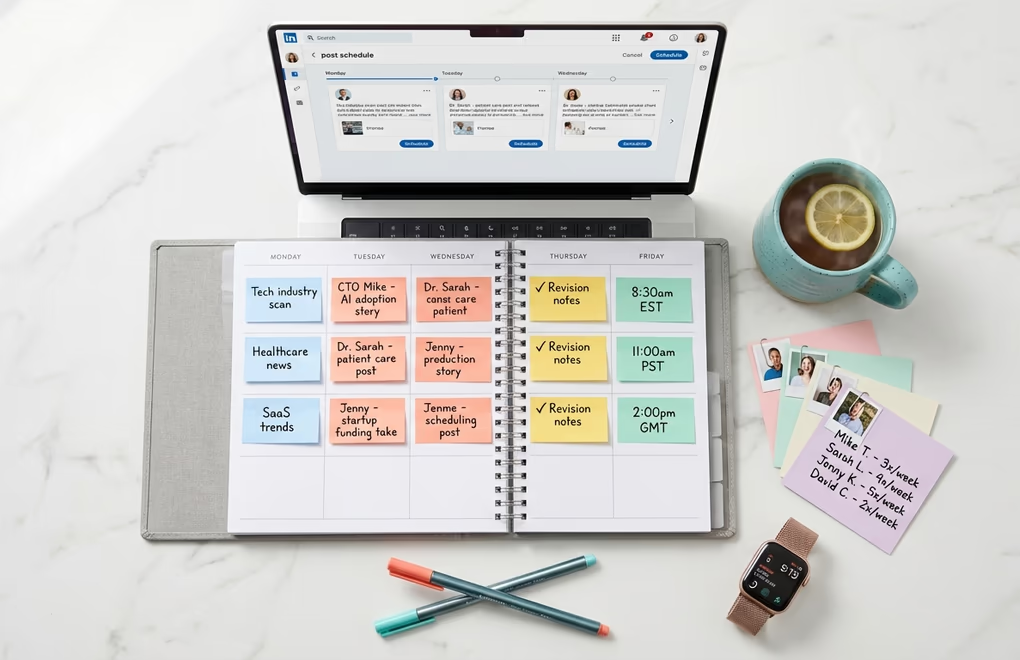
Every ghostwriter develops their own rhythm over time, but there is a weekly workflow pattern that most experienced professionals converge on because it balances creative energy, client feedback cycles, and platform timing. The key insight is that batching similar tasks together is dramatically more efficient than switching between clients and task types throughout the day. When you are in research mode, research for all your clients at once. When you are in drafting mode, write everything in a single focused session. Context-switching between a healthcare executive's voice and a SaaS founder's voice ten times a day is a recipe for voice contamination and mental exhaustion.
Monday is for research and topic mining. Spend the morning scanning industry news, checking what topics are trending on LinkedIn, reviewing your clients' industries for anything noteworthy, and pulling from the ideas backlog you have been building throughout the previous week. By Monday afternoon, you should have a clear list of topics for each client for the coming week. If you manage three clients at three posts each, that is nine topics pinned down before you write a single word. This upfront planning eliminates the worst part of the ghostwriting process, which is sitting down to draft with no idea what you are going to write about.
Tuesday and Wednesday are for drafting. This is where your toolkit pays for itself. Load each client's voice profile into your AI writing assistant and generate first drafts, then spend your editing energy making each post sound unmistakably like the person whose name will be on it. Add personal anecdotes from your recent client calls, incorporate timely references that AI would not know about, and sharpen the hooks until they grab attention in the first line. A good ghostwriter can produce a polished post in 20 to 30 minutes using this hybrid approach, which means nine posts across three clients takes roughly four to five hours of focused work spread over two days.
Thursday is for revisions and client feedback. Send all drafted posts to clients with a 48-hour turnaround window and limit revisions to two rounds per post. Most clients approve what you send with minor tweaks, which is a sign that your voice matching is working well. Define the revision policy in your contract from day one, otherwise you will find yourself endlessly reworking posts based on vague feedback like "make it more punchy" without any additional context about what that actually means.
Friday is for scheduling approved posts and reviewing analytics from the previous week's content. Look at what performed well for each client, note any patterns in topic or format that are resonating, and use those insights to inform next week's topic selection on Monday. This weekly analytics review is also valuable material for your monthly client reports, where you demonstrate the tangible growth their LinkedIn presence is experiencing under your management.
How do you manage multiple ghostwriting clients without losing quality?

There is a sweet spot for solo ghostwriters, and it usually sits between three and five active clients. Below three, your income is probably not sustainable enough to make ghostwriting your full-time focus. Above five, the voice-switching becomes mentally exhausting and the risk of cross-contamination - accidentally using one client's pet phrases in another client's posts - goes up significantly. The ghostwriters who earn the most are not the ones with the most clients; they are the ones with the right number of clients at the right price point.
If you want to grow beyond five clients, you need to build systems that make the work repeatable without making the content generic. This starts with standardizing everything that can be standardized while protecting everything that must stay unique. Your onboarding process, your weekly workflow, your feedback collection method, your analytics reporting template - all of these should be documented and consistent across every client. But the voice profiles, the topic ideas, the drafting style, and the personal anecdotes must remain completely individualized. If you have read the agency guide to managing LinkedIn content for multiple clients, you will recognize the same principle at work: systematize the process, personalize the output.
At the point where you are managing six or more accounts, team collaboration tools become essential rather than optional. You might bring on a junior writer to handle first drafts while you focus on voice calibration and client relationships. Or you might partner with another ghostwriter and split clients based on industry expertise. Either way, you need a system where multiple people can work on content without stepping on each other's toes, where client approvals are tracked in one place, and where nobody has to ask "did this post already get published?" because the answer is visible in the shared calendar.
The biggest risk when scaling is not operational - it is creative. Every time you add a new client, your brain has to hold one more voice in its working memory. The ghostwriters who scale successfully develop what I think of as a voice-switching ritual. Before drafting for a client, they spend five minutes re-reading that client's last three posts and scanning their voice profile. This mental warm-up reactivates the right language patterns and dramatically reduces the chance of writing something that accidentally sounds like the client you were just working on instead of the one you are working on now.
How do LinkedIn ghostwriters set rates and structure packages?
Pricing is where many ghostwriters leave money on the table, usually because they think of themselves as writers charging per piece of content rather than strategists charging for business outcomes. The shift from per-post pricing to monthly retainers is the single most important business decision you will make as a ghostwriter. Per-post pricing incentivizes your clients to order fewer posts, creates unpredictable income for you, and makes every conversation about cost rather than value. Monthly retainers create stability for both sides and let you focus on delivering results instead of counting deliverables.
The market in 2026 has settled into fairly clear tiers. Entry-level ghostwriters who are building their portfolio typically charge $800 to $1,500 per month for a package of four to eight posts. Mid-tier professionals with a track record of growing client accounts charge $1,500 to $3,500 per month and include strategic services like topic planning, engagement coaching, and monthly performance reviews alongside the content creation. Senior ghostwriters and established specialists command $3,500 to $6,000 or more per month for premium packages that include content strategy, profile optimization, comment engagement management, and direct access for reactive posts when industry news breaks.
Your package should clearly define what is included and what costs extra. The core deliverable is always the posts themselves - a set number of text posts per week with one or two revision rounds. Add-ons that justify higher pricing include engagement management where you respond to comments on your client's behalf, carousel or newsletter creation, LinkedIn profile optimization, and monthly strategy calls where you present analytics and recommend content direction adjustments. Be explicit about scope boundaries in your contract. Define how many revision rounds are included, what the turnaround time is for feedback, and what happens when a client sends you a last-minute request that falls outside the agreed scope.
One smart strategy for keeping your margins healthy is using BYOK AI tools where you bring your own API keys instead of paying for expensive subscription-based software. When you are managing multiple clients, the per-seat costs of most LinkedIn tools add up fast and eat directly into your profit. With a BYOK approach, your AI writing assistance might cost $2 to $4 per month per client rather than $40 to $65 per seat, which makes a meaningful difference when you are running three to five accounts. That savings either flows straight to your bottom line or lets you price more competitively against ghostwriters burdened with higher tool costs.
What gives a LinkedIn ghostwriter their competitive edge?
Tools will continue getting better. AI will keep producing more impressive first drafts. Scheduling platforms will add more automation. But the ghostwriters who build lasting careers are the ones who develop an exceptional ear for voice - the ability to read ten words and know exactly which client it should sound like. That ear is not something AI can replicate, and it is not something your competitors can copy. It is built through hundreds of conversations, thousands of posts, and a genuine curiosity about how different people think and communicate. The tools in your toolkit are amplifiers, but your ability to disappear into someone else's voice is the real product you are selling.
Frequently Asked Questions
LinkedIn ghostwriting rates vary by experience and scope. Entry-level ghostwriters charge $800 to $1,500 per month for 4 to 8 posts. Mid-tier professionals charge $1,500 to $3,500 per month including strategy work. Senior ghostwriters with proven track records command $3,500 to $6,000 or more per month for full-service packages.
Most ghostwriters rely on a stack of research tools for topic discovery, AI writing assistants for first drafts, scheduling platforms for content calendars, and analytics dashboards for tracking performance. Organization tools like Notion or Google Docs handle client briefs, voice guides, and approval workflows across multiple accounts.
Professional ghostwriters start with a deep-dive onboarding interview, then analyze 10 to 20 samples of the client's past writing and speaking. They build a voice profile documenting sentence patterns, vocabulary preferences, tone markers, and topics the client avoids. AI voice training tools can accelerate this by identifying patterns automatically.
Most solo ghostwriters comfortably handle 3 to 5 active clients producing 3 to 4 posts per client per week. Beyond five clients, quality typically drops unless you have efficient systems, AI-assisted drafting, and strong voice profiles. Ghostwriters managing more than five accounts usually bring on a writing partner or assistant.
AI is transforming the ghostwriting workflow but not replacing human ghostwriters. AI handles first drafts and pattern matching, while humans provide voice authenticity, personal anecdotes, strategic thinking, and the creative judgment that turns a generic post into something that sounds genuinely like the client. The best ghostwriters use AI as an accelerator.
The people you just read about are already on LinkedIn.
LinkedGrow runs an agent that finds the ones who match the customers you already have, sends the invitation in your words, and opens the conversation. You pick it up when somebody answers.
Build my agent free