Everyone wants to know the best time to post on LinkedIn, and you have probably seen the same advice everywhere: "Hit publish at 9 AM on Tuesday for maximum reach." You follow it religiously, posting at exactly the right minute. And then nothing happens. Your post gets 40 impressions while someone else publishes at 3 PM on a Wednesday and racks up thousands of views. What is going on?
The truth about LinkedIn timing is more nuanced than any single "best time" recommendation can capture. Yes, there are windows when more people are online. Yes, certain days consistently outperform others. But the best posting time for a solopreneur in Austin is not the same as the best time for a B2B SaaS company targeting European decision-makers. The data matters, but context matters more. With LinkedGrow, we have dug into the largest engagement studies available to pull out the patterns that actually hold up across industries and audiences, so you can build a LinkedIn scheduling strategy based on evidence rather than guesswork.
This guide covers the data-backed best times to post on LinkedIn in 2026, drawn from studies analyzing billions of engagements across hundreds of thousands of profiles. You will learn which days and hours consistently drive the most engagement, how time zones change the equation, what the data says for different industries, and how to build a posting schedule that fits your real life. We will also look at why timing alone is not enough and what else the LinkedIn algorithm weighs when deciding who sees your content.
Whether you are a creator posting daily or a busy founder trying to squeeze in two posts a week, this is everything you need to stop guessing and start posting at the right time.
The Best Days to Post on LinkedIn in 2026
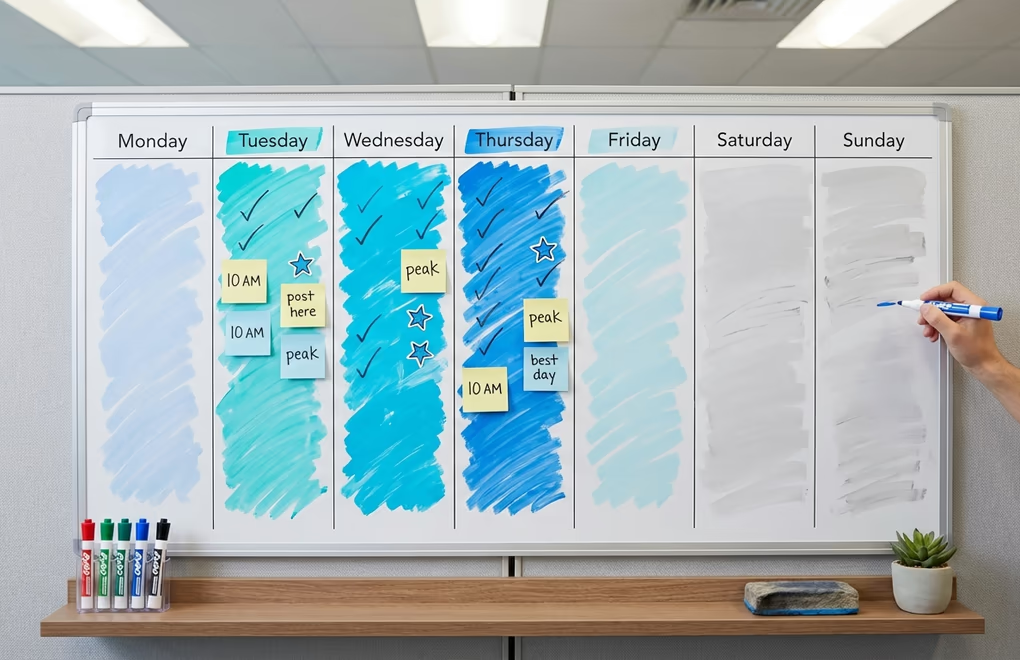
Every major study on LinkedIn timing agrees on one thing: midweek is king. Sprout Social's analysis of 2.7 billion engagements across 436,000 profiles found that Tuesday through Thursday consistently produces the highest engagement for company pages. Buffer's separate study of over one million LinkedIn posts came to a similar conclusion, with Thursday taking the top spot, followed closely by Wednesday and Tuesday.
This makes intuitive sense when you think about how professionals use LinkedIn. Monday is catch-up day. People are clearing weekend emails, sitting in kickoff meetings, and mentally ramping back up. They are not spending much time browsing their LinkedIn feed. By Tuesday, the week has settled into a rhythm, and people start taking breaks between tasks to scroll through content. This midweek engagement window stays strong through Thursday before tapering off on Friday, when many people are mentally checking out for the weekend.
Friday is an interesting case. It is not terrible, but it is noticeably weaker than the Tuesday-through-Thursday peak. Sprout Social's data shows reasonable engagement on Friday mornings, particularly between 7 AM and 2 PM, but the afternoon drops off sharply. If you have a lighter, more conversational post, Friday morning can work. But save your heavy-hitting thought leadership pieces for midweek when people are more likely to invest the time to read and comment.
Weekends are a different story entirely. Both Sprout Social and Buffer found that Saturday and Sunday engagement is significantly lower than weekdays. LinkedIn is, at its core, a professional platform, and most people step away from work-related content on weekends. That said, there is a small but dedicated audience that scrolls on Saturday and Sunday mornings. If you are targeting founders, startup people, or anyone who blurs the line between work and life, a Saturday morning post might actually stand out because there is far less competition in the feed. Just do not expect the same reach as a midweek post.
The bottom line: if you can only post three times a week, aim for Tuesday, Wednesday, and Thursday. If you post more frequently, add Monday and Friday mornings. Save weekends for experiments or lighter content you are less invested in.
The Best Hours to Post on LinkedIn
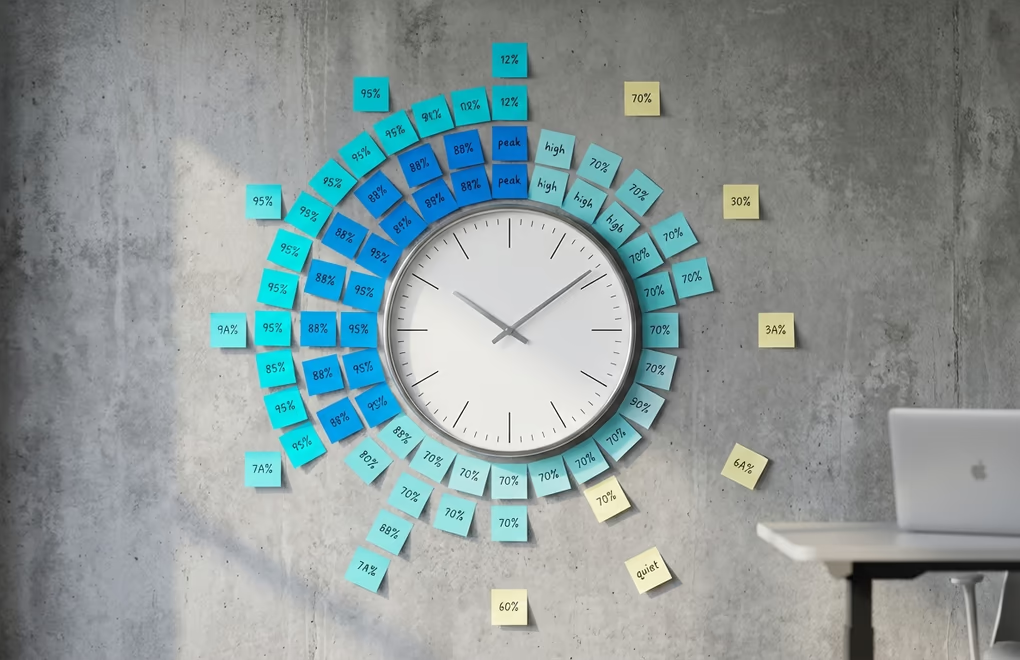
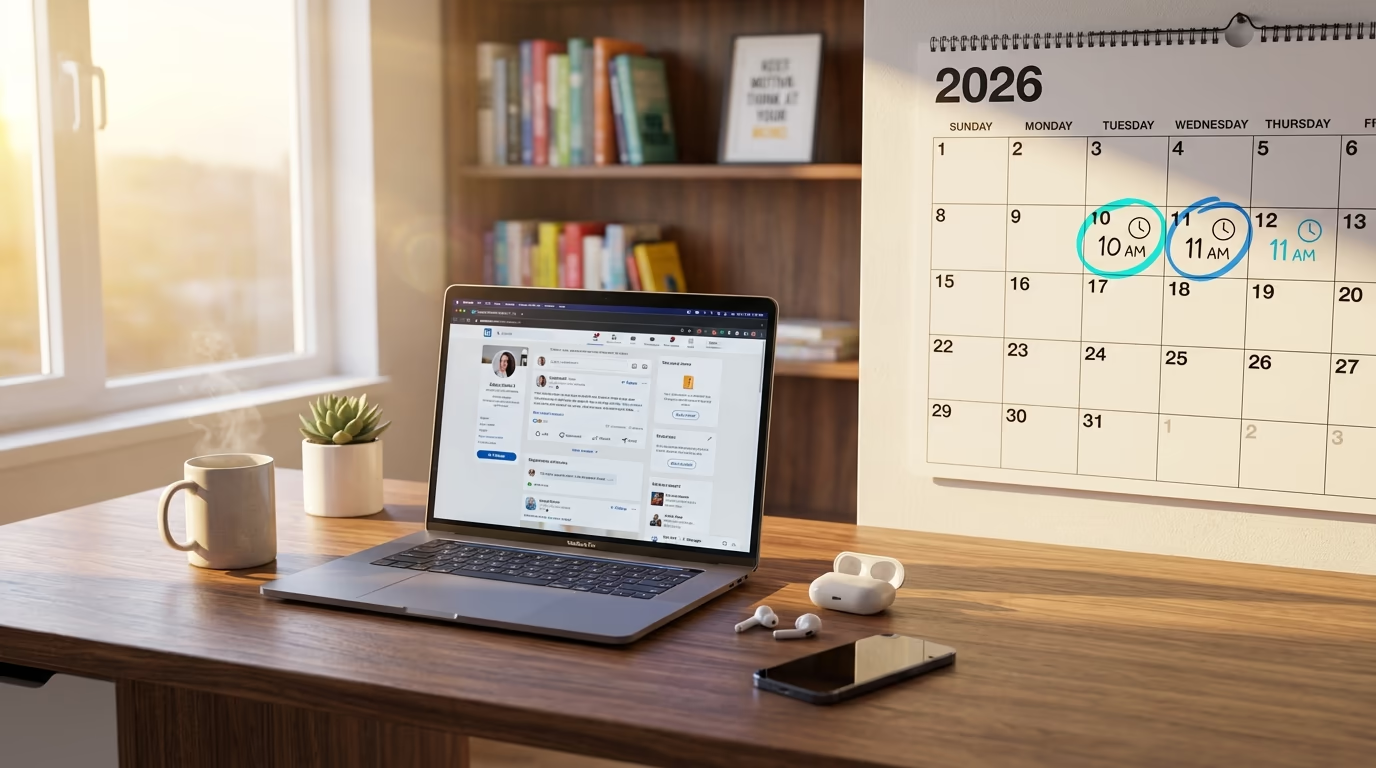
Picking the right day is step one. Picking the right hour is where things get interesting. The general window that every study agrees on is between 7 AM and 4 PM on weekdays, with two clear peaks: mid-morning around 10 to 11 AM and lunchtime around noon. These windows align with natural breaks in the workday when people are most likely to check their feeds.
Sprout Social's data breaks it down by day. On Tuesday, the sweet spot stretches from 8 AM all the way to 2 PM, making it the most forgiving day for timing. Wednesday and Thursday both show strong engagement at 8 AM and again around noon. Monday is tighter, with the best window being 11 AM to noon. Friday opens early, with engagement starting at 7 AM and holding through 2 PM, likely because people are in a more relaxed browsing mode before the weekend.
Buffer's analysis of over a million posts tells a similar story but with some added nuance. Their data found that 10 AM is the single most consistent high-engagement hour across all weekdays. On Wednesday, they spotted a surprising afternoon spike at 3 PM, which goes against the conventional wisdom that mornings are always best. This might be related to people checking LinkedIn during their afternoon energy dip, looking for inspiration or distraction before the end of the workday.
Here is what most guides miss though: these times are all based on aggregated global data. If your audience is mostly in the US Eastern timezone but you are posting based on Pacific time, you are publishing an hour after the engagement window has already peaked. The numbers only work if you are thinking about when your audience is online, not when you happen to be sitting at your desk. More on that in the timezone section below.
One practical tip: do not post at exactly the top of the hour. Everyone else is scheduling their posts for 10:00 AM sharp, which means the feed gets flooded at that exact moment. Publishing at 9:47 AM or 10:12 AM gives your post a few minutes to breathe before the rush. It is a small edge, but small edges compound over time. LinkedGrow's post scheduling feature lets you set these precise times so you are not competing with every other scheduled post hitting the feed at the same second.
How Time Zones Change the Equation
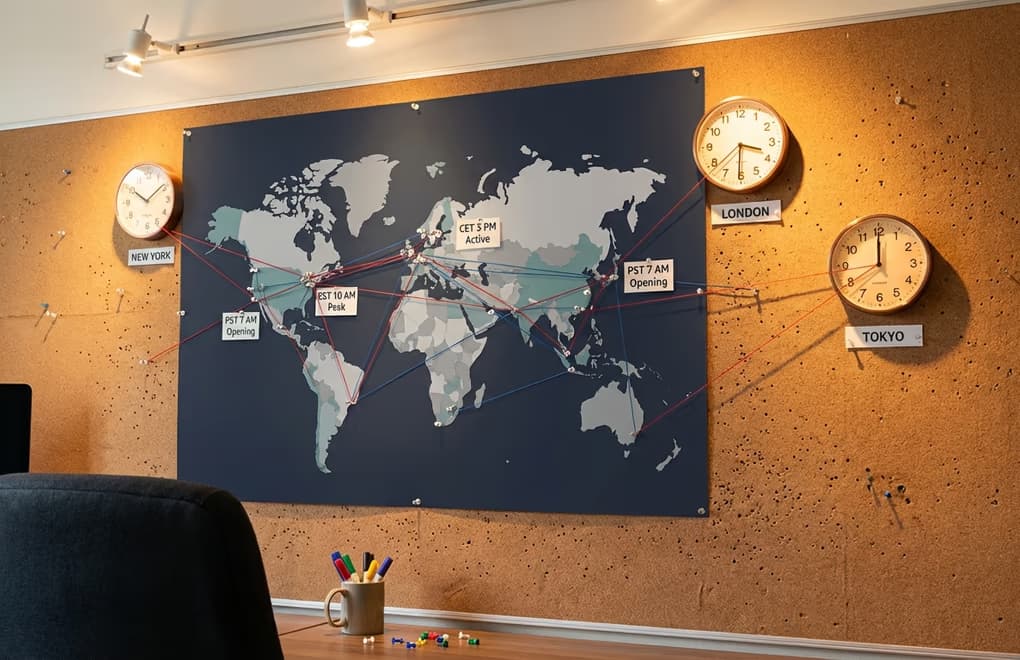
This is the part that most LinkedIn timing guides gloss over, and it might be the most important factor of all. When research says "post at 10 AM," they usually mean 10 AM in your audience's primary timezone, not yours. If you are based in London but most of your connections are in New York, 10 AM your time means 5 AM theirs, which is basically publishing into a void.
The first step is figuring out where your audience actually lives. LinkedIn does not make this easy in the free analytics, but you can get a rough idea by looking at who engages with your posts most. Check the profiles of your most active commenters and see where they are based. If you notice that the majority of your engaged audience is in one timezone, optimize for that timezone first.
For people with audiences spread across multiple time zones, the strategy gets trickier. The good news is that LinkedIn's algorithm does not just show your post in the first hour. A strong post will continue to be served for 24 to 48 hours if it gets early engagement. So you do not need to perfectly time it for every timezone. Instead, aim for the overlap window where the largest portion of your audience is awake and active.
For US-based audiences spanning Eastern to Pacific, posting between 10 and 11 AM Eastern (7 to 8 AM Pacific) catches East Coast workers during their mid-morning break and West Coast professionals just starting their day. For audiences split between the US and Europe, early morning US time (7 to 8 AM Eastern, which is noon to 1 PM in Central Europe) hits both groups during active hours.
If you are a solopreneur or small business owner targeting a local market, the timezone question is simpler. Post when your local audience is on their mid-morning or lunch break. For international audiences, consider posting twice a day at different times to catch different regions. Just make sure you are not publishing two posts within three hours of each other, as LinkedIn tends to suppress the second post in favor of the first.
The real unlock here is tracking your own data over time. After two to three weeks of posting at different times, you will start to see clear patterns in when your specific audience engages most. Those patterns are worth far more than any generic best-time study.
Industry-Specific Timing That Actually Matters

The general best-time data is useful as a starting point, but different industries have different patterns. A healthcare professional does not use LinkedIn the same way a SaaS marketer does, and their browsing habits reflect that. Sprout Social's study includes industry-specific breakdowns that reveal some interesting differences.
For B2B tech, SaaS, and marketing professionals, the standard midweek, mid-morning window holds strong. These audiences tend to be heavy LinkedIn users who check the platform regularly as part of their workflow. Tuesday through Thursday between 9 AM and noon is the sweet spot. These folks are also more likely to engage with longer content during work hours because reading industry content is part of their job.
Financial services professionals show a slightly different pattern. Sprout Social's data suggests they are most active earlier in the morning, around 8 AM, likely checking LinkedIn alongside their morning market review. Engagement drops during the busy middle of the day and picks back up briefly in the late afternoon. If you are targeting bankers, financial advisors, or fintech professionals, try posting earlier than the standard 10 AM recommendation.
Healthcare workers present a unique challenge because their schedules are so unpredictable. Nurses and doctors do not have the luxury of a predictable 9-to-5 browsing window. The data shows more scattered engagement throughout the day, with small peaks during shift transitions. For healthcare-focused content, early morning (6 to 7 AM) and late afternoon (4 to 5 PM) can catch professionals at the beginning and end of their shifts.
Education professionals tend to engage most before the school day starts and during planning periods. The data suggests morning posts around 7 to 8 AM perform best in this sector, before teachers and administrators get absorbed in their day. Summer months also show different patterns since schedules change dramatically.
For coaches, consultants, and agencies, the situation is a bit different because your audience is often other business owners. These people tend to use LinkedIn more flexibly throughout the day. They browse between client calls, check notifications during lunch, and often engage with content in the evening after the workday wraps up. The mid-morning peak still applies, but you might find a surprising amount of engagement on posts published between 4 and 6 PM when these professionals are winding down.
The key takeaway: use the general data as your starting point, then refine based on what you know about your specific audience's daily rhythms. The more specific your audience, the more your optimal times will deviate from the averages.
How to Build a Posting Schedule That Sticks
Knowing the best times is useless if you cannot actually stick to a schedule. This is where most people fall off. They learn the optimal windows, post consistently for two weeks, and then life gets in the way. A client emergency on Tuesday morning. A forgotten deadline on Wednesday. Before long, they have gone ten days without posting and lost all the momentum they had been building.
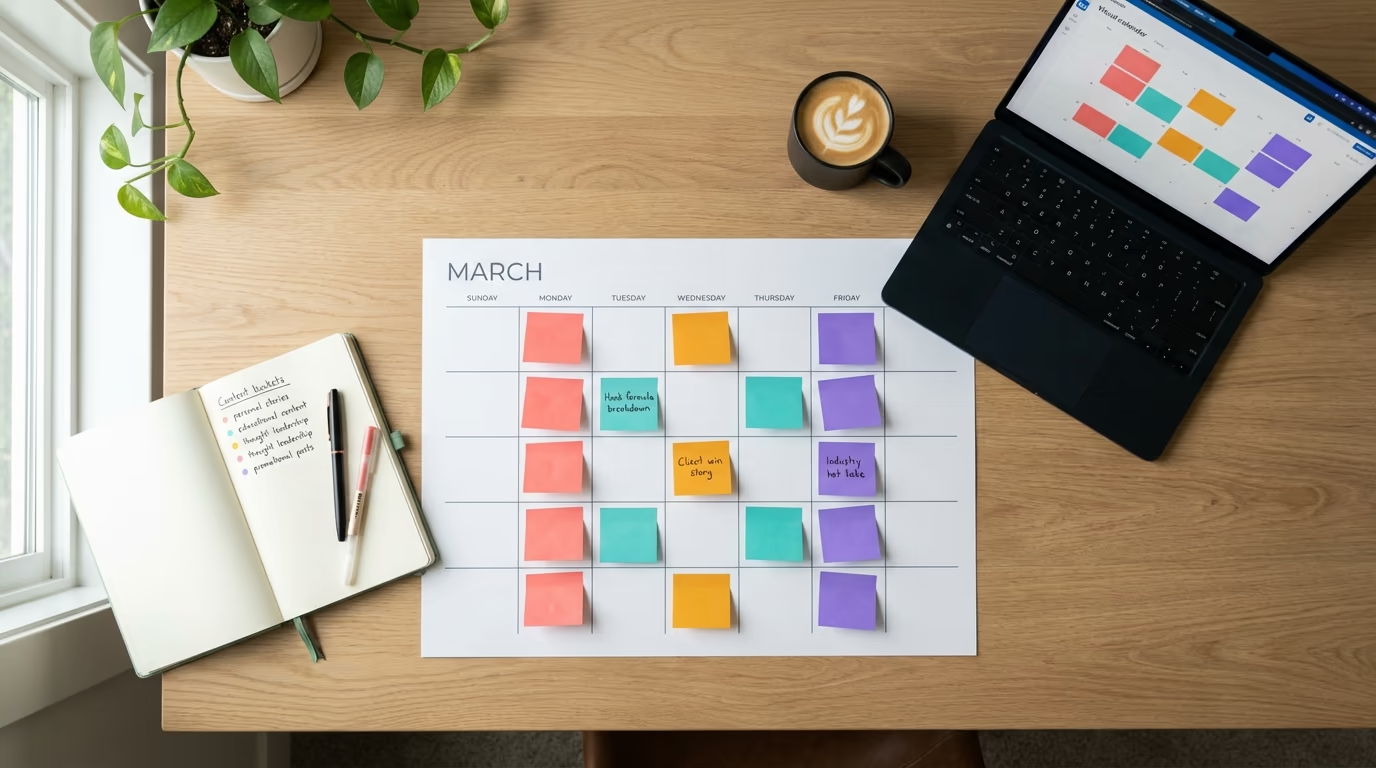
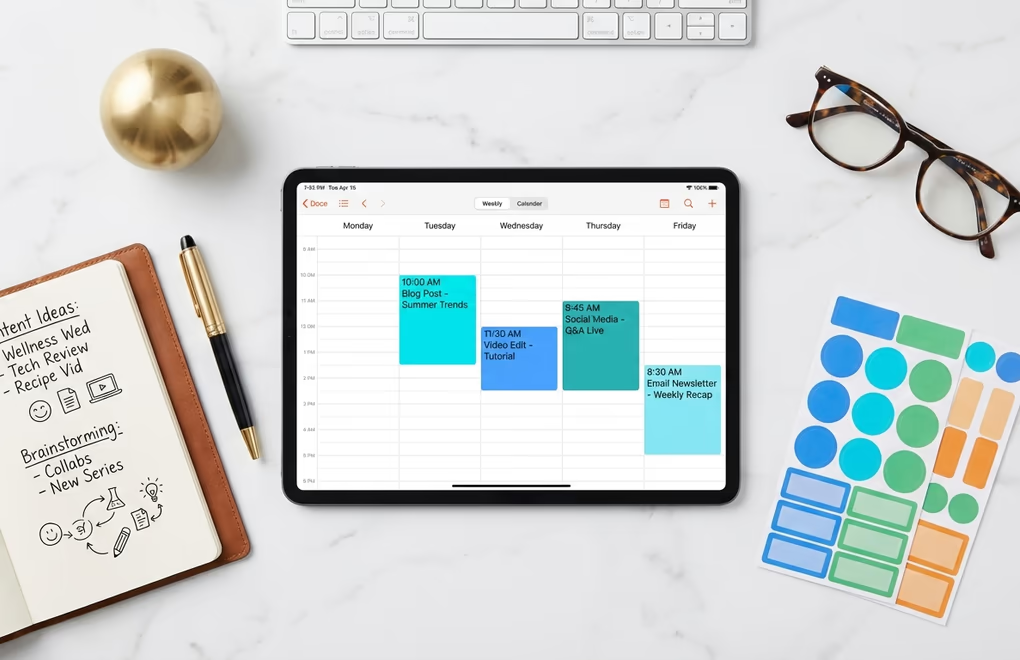
The solution is batching and scheduling. Instead of writing and publishing in the same moment, separate the two activities completely. Set aside one or two hours per week to create your content for the entire week. Some people prefer Sunday evenings. Others like Friday afternoons when the week's events are fresh in their mind. The specific day does not matter as much as making it a consistent habit. LinkedGrow's content calendar makes this visual and easy to manage, so you can see your entire week at a glance.
Here is a practical weekly schedule based on the data we have covered. This is a starting template. Adjust the times based on your audience's timezone and the industry patterns we discussed.
| Day | Post Time | Content Type |
|---|---|---|
| Tuesday | 10:00 AM | Thought leadership or personal story |
| Wednesday | 11:30 AM | How-to or tactical advice |
| Thursday | 9:45 AM | Carousel, poll, or visual content |
| Friday | 8:30 AM | Lighter content - question, observation, or weekend reflection |
Notice the staggered times. This is intentional. By varying your posting times slightly each day, you avoid always competing with the same batch of scheduled posts. You also start to build data on which specific times work best for your audience, which becomes invaluable over the coming weeks.
The frequency question matters too. Buffer's data suggests 2 to 5 posts per week is the sweet spot for most creators. Posting once a day can work if you have enough quality content, but more than once per day tends to hurt you. LinkedIn's algorithm generally does not show multiple posts from the same person in a short window, so your second post often gets suppressed in favor of the first. Better to space things out and give each post room to breathe.
One thing that dramatically improves your schedule's effectiveness: stay online for 30 to 60 minutes after publishing. This is the golden hour we covered in our LinkedIn algorithm guide. The algorithm watches for early engagement signals, and replying to comments quickly boosts your post's distribution. Buffer's research found that replying to comments increases overall engagement by approximately 30 percent. So when you schedule your posts, also schedule yourself to be available for that engagement window. If you publish at 10 AM, block 10 to 11 AM for responding to comments.
Why Timing Is Only Half the Battle

Let me be honest about something: posting at the perfect time will not save bad content. Timing amplifies what is already good. It does not create engagement from nothing. A mediocre post published at 10 AM on Wednesday will still be mediocre. A genuinely insightful post published at a slightly off-peak time will still find its audience because the algorithm keeps distributing strong content for 24 to 48 hours after publication.
The reason timing matters is that it gives your post the best possible start. Remember the golden hour concept from the algorithm breakdown: LinkedIn shows your post to a small test audience first, and if they engage, the algorithm shows it to more people. If you post when your audience is asleep, your test audience is smaller and less representative, which means even a great post might not get the early engagement it needs to break through.
This is why the combination of great content and smart timing is so powerful. A compelling hook that stops the scroll, published when your audience is most active, gives the algorithm the strongest possible signals in the shortest amount of time. It is not one or the other. It is both working together.
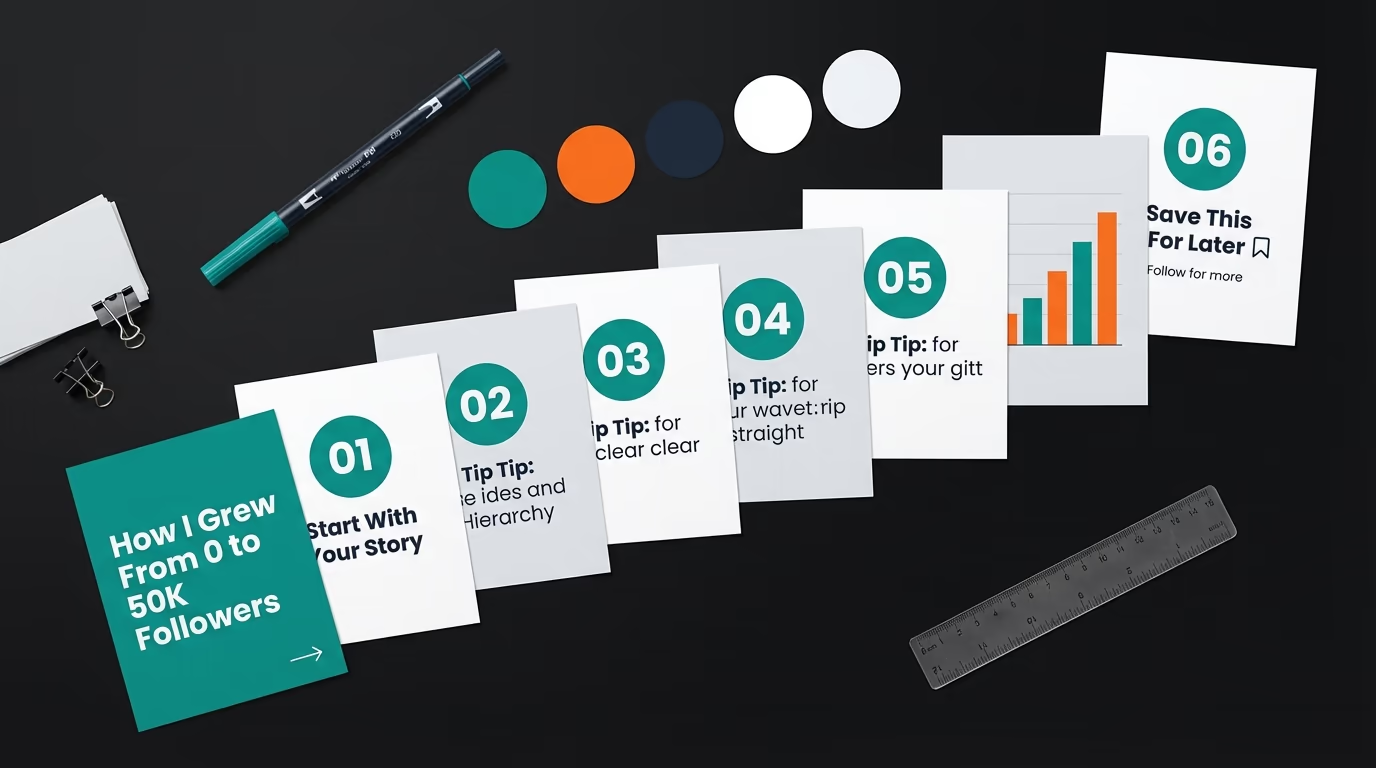
Content format also interacts with timing in ways that most guides ignore. Buffer's data shows that carousels generate 278 percent more engagement than video and 596 percent more than plain text posts. But carousels take more time to consume, which means posting them during the mid-morning peak when people have a few minutes to swipe through slides makes more sense than posting them at 4 PM when people are rushing to wrap up their day. Similarly, a quick poll or question might work perfectly at lunchtime when people want a low-effort way to engage.
The creators who consistently grow on LinkedIn are not obsessing over the perfect minute to publish. They are building a system: solid content, smart timing, consistent engagement, and continuous improvement. LinkedGrow's AI post generator helps with the content creation side, and the scheduling tools handle the timing. That combination frees you up to focus on what actually moves the needle: engaging with your audience and building real relationships.
Your Personal Posting Playbook
Here is your action plan. Start with the midweek, mid-morning window: Tuesday through Thursday between 9 and 11 AM in your audience's timezone. Post 3 to 4 times per week. Stay online for 30 to 60 minutes after publishing to respond to comments. Track your results for three weeks.
After those three weeks, look at your data. Which posts got the most impressions? Which ones generated the most comments? Did any off-peak posts surprise you? Use that information to refine your schedule. The generic best times are just the starting line. Your personal best times, based on your audience, your content, and your industry, are where the real advantage lives.
If you want to take the guesswork out of scheduling entirely, LinkedGrow's scheduling tools let you plan your week in minutes, publish at optimal times automatically, and track performance from a single dashboard. Combined with AI-powered content generation and a visual content calendar, you get a complete system for consistent LinkedIn growth without the daily scramble. Try it free and see how much easier a data-driven schedule makes everything.
Want personalized recommendations for your audience? Try our free LinkedIn best time to post tool to find the optimal posting schedule based on your industry and timezone.
Frequently Asked Questions
Based on aggregate data from multiple studies analyzing millions of posts, Tuesday through Thursday between 10 AM and noon in your audience's local timezone consistently produces the highest engagement. However, the true best time depends on your specific audience, industry, and content type. Use your own analytics to refine this starting point.
Most research suggests 2 to 5 posts per week is the sweet spot. Posting once a day can work if you have enough quality content, but posting multiple times per day tends to cannibalize your own reach. Consistency matters more than frequency - three solid posts every week will outperform seven mediocre ones.
Weekend engagement is significantly lower than weekdays on LinkedIn, typically 30 to 50 percent less. But that does not mean you should never post on weekends. Competition is also lower, so a strong post on Saturday morning can still perform well. If you only have time for 3 posts per week, stick to Tuesday through Thursday.
Yes. Long-form thought leadership content tends to perform better in the early morning when people have time to read. Quick polls and questions work well around lunch. Carousel posts and visual content perform strongly mid-morning when engagement peaks. Experiment with matching your content format to the time slot.
LinkedIn does not penalize scheduled posts. The algorithm treats scheduled posts the same as manually published ones. The key advantage of scheduling is consistency - you can batch-create content when you are in a creative flow and publish at optimal times every week without needing to be online at that exact moment.