You hear the same advice from every LinkedIn growth account: post every day, stay consistent, more content equals more growth. So you commit to daily posting for a month, burn through your best ideas in two weeks, start publishing filler to keep the streak alive, and watch your engagement quietly flatline while you wonder what went wrong. The problem is not that consistency does not matter - it does, enormously. The problem is that nobody told you how often should you post on LinkedIn for best results in a way that accounts for quality, audience size, and the way the algorithm actually rewards or punishes frequency. LinkedGrow helps you plan and schedule posts at the cadence that works for you, but the right cadence is not the same for everyone.
This is a fundamentally different question from when to post, which is about the specific days and hours that maximize reach for a single post. Frequency is about how many times per week you should publish before you start seeing diminishing returns, how the algorithm treats accounts that post too much versus too little, and where the real sweet spot is between staying visible in the feed and running out of things worth saying. The answer turns out to be more nuanced than "post every day" - and for most people, posting less often with better content actually produces faster growth than daily posting with filler.
This guide covers the data on optimal posting frequency broken down by account size, what happens when you cross the line into over-posting, why weekends might be the most underused opportunity in your content strategy, and how to find the minimum effective dose that keeps your audience growing without burning you out.
What is the optimal LinkedIn posting frequency by account size?
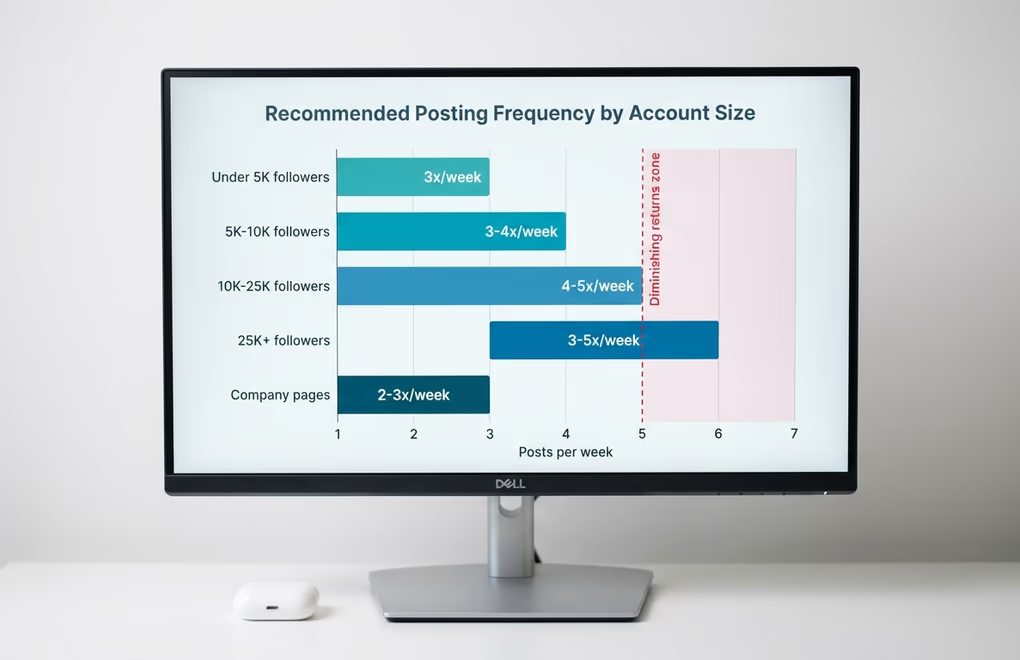
The biggest study on LinkedIn posting frequency analyzed over 1.8 million posts and found that the answer to "how often should I post?" depends heavily on how large your existing audience is. This makes sense when you think about it - a creator with 50,000 followers has a fundamentally different relationship with the algorithm than someone with 500 connections. The distribution mechanics, the competition for feed space, and the expectations of the audience are all different, and the optimal cadence shifts accordingly.
If you have fewer than 5,000 followers, three posts per week is the sweet spot. This gives each post enough breathing room to run its full distribution cycle - which typically lasts 48 to 72 hours for content that performs well - without your newer posts cannibalizing the reach of older ones. At this stage, your audience is small enough that each post reaches a meaningful percentage of your network, and the quality of each individual post matters more than the volume. Posting more than three times per week at this level often leads to content fatigue, where you start publishing weaker posts just to maintain a cadence, and those weaker posts actively train the algorithm to show your content to fewer people.
For accounts between 5,000 and 25,000 followers, four to five posts per week delivers the best reach growth. At this size, your content is starting to break out of your immediate network more regularly, and the algorithm has enough data about your topics and audience to distribute your posts efficiently. The extra post or two per week gives you more chances to appear in second and third-degree feeds, and your follower base is large enough to sustain the engagement velocity needed across multiple posts. This is also the stage where content variety becomes more important - mixing formats between text posts, carousels, native video, and image posts keeps your audience from tuning out repetitive formats.
Accounts above 25,000 followers can sustain three to five posts per week but the per-post engagement rate will naturally decrease as the audience grows. This is not a sign of declining content quality - it is a mathematical reality of larger distribution. A post that reaches 50,000 people will always have a lower percentage of active engagers than one that reaches 2,000 highly interested connections. At this level, what matters most is not frequency but topic consistency. Creators who build a recognized expertise in a specific domain over 60 or more days see their content categorized as topically authoritative by the algorithm, which gives every post a distribution boost regardless of frequency.
Why does over-posting on LinkedIn hurt your reach?
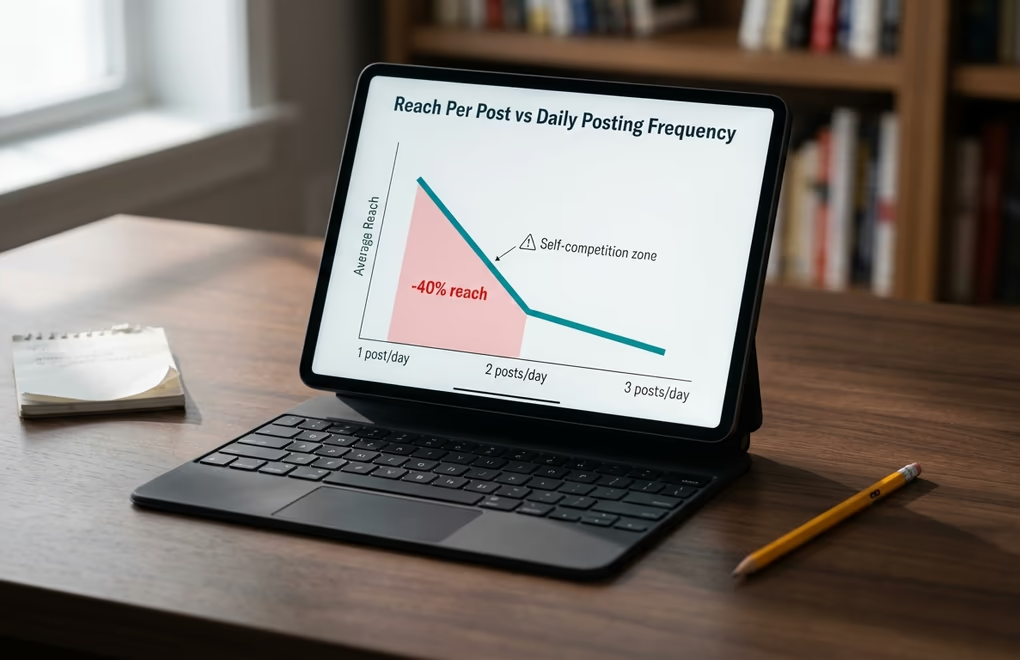
Here is the part that the "post every day" crowd never mentions: the LinkedIn algorithm 2026 deliberately avoids showing two posts from the same person to the same user within a short window. This is a feed diversity mechanism - LinkedIn wants its users to see content from a wide range of connections, not a stream of posts from one person. When you publish twice in the same day, your posts compete directly against each other for the same audience, and both end up with less reach than a single post would have received on its own.
The data backs this up clearly. Accounts that publish two or more posts in the same day see a median reach drop of over 40 percent per post compared to their single-post days. That is not a small penalty - you are doing twice the work for less total reach than you would get from one well-crafted post. Even worse, publishing new content prematurely cuts off the distribution of your previous post. A strong LinkedIn post can continue reaching new people for 48 to 72 hours after publishing, but that distribution window closes the moment you push a new post into the feed and the algorithm shifts its attention.
There is a content quality dimension to this too. The algorithm has gotten significantly better at detecting low-effort and recycled content, and it penalizes it harder than it used to. Recycled or reformatted content achieves dramatically less reach than original posts, and the gap has widened substantially over the past two years. When you force yourself to post daily without enough original ideas to sustain it, you inevitably start repackaging old content, rephrasing things you have already said, or publishing posts that do not meet the quality bar your audience expects. Each of those underperforming posts teaches the algorithm that your content is becoming less valuable, which suppresses distribution on your future posts even when the quality bounces back.
The practical takeaway is straightforward: the minimum gap between posts should be 24 hours, and 48 hours is even better for most creators. This gives each post its full lifecycle of algorithmic testing, initial distribution, engagement accumulation, and extended reach. If you have five great post ideas this week, space them across five days rather than publishing two on your most productive morning. LinkedGrow's content calendar makes it easy to see your posting gaps at a glance and spread your content evenly across the week.
Should you post on LinkedIn during the weekend?
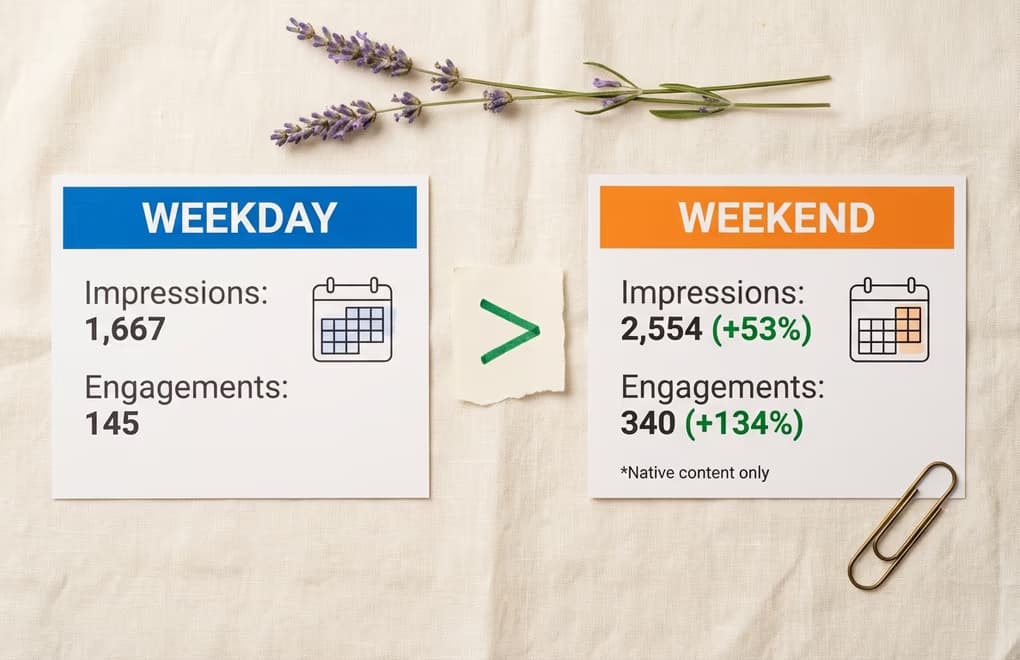
Conventional wisdom says LinkedIn is a weekday platform and weekends are a dead zone. The data tells a more interesting story. A study of over 9,000 LinkedIn posts found that native content published on weekends earns more than 50 percent higher impressions and roughly double the engagement compared to the same content types posted on weekdays. The reason is simple supply and demand: only about 4 percent of LinkedIn posts are published on weekends, which means dramatically less competition for feed space while a surprisingly large number of professionals are still casually scrolling.
But there is an important catch. The weekend advantage only applies to native content - posts without external links. When you share a link to a blog post, landing page, or any external URL on the weekend, click-through rates actually drop compared to weekdays. This makes sense intuitively: people browsing LinkedIn on a Saturday afternoon are in leisure mode, happy to read a thoughtful post in their feed but not inclined to click through to a website. They are scrolling for entertainment and insight, not for work. Save your link-heavy content for Tuesday through Thursday and use weekends for personal stories, reflections, questions, lessons learned, and conversational posts that invite engagement without asking people to leave the platform.
The best weekend window appears to be Sunday evening, when the "Sunday scaries" effect kicks in and professionals start mentally preparing for the week ahead. A thoughtful post about Monday morning productivity, a career reflection, or a preview of what you are working on next week hits people at exactly the right moment of professional mindset, while still benefiting from the low competition of weekend publishing. If you are currently posting only on weekdays and looking for an easy way to boost your weekly reach, adding one native weekend post is probably the highest-return change you can make to your cadence.
Why does quality beat quantity on LinkedIn in 2026?

The LinkedIn algorithm has shifted so aggressively toward rewarding genuine expertise that the old volume-based growth playbook is not just ineffective - it is actively counterproductive. Posts that demonstrate deep knowledge in a specific domain earn roughly 3.7 times more reach than generalized content, which means one excellent post from a person who clearly knows their subject will outperform four generic posts on trending topics. The algorithm has gotten remarkably good at distinguishing between someone sharing original insight from experience and someone rearranging commonly available advice into a new format. Tracking quality means tracking engagement per post - the free LinkedIn engagement rate calculator shows you how your posts compare against industry benchmarks so you can tell whether your quality is actually trending up or just your post count.
This has major implications for your posting frequency. If you can genuinely produce five pieces of original, expertise-driven content per week, then post five times. But if your authentic output is three posts per week before you start scraping the bottom of your idea barrel, then three is your number and trying to force it to five will hurt you. The minimum effective dose for LinkedIn growth is the highest frequency you can sustain without compromising quality. For most solopreneurs and professionals with full-time jobs, that is two to three posts per week. For full-time creators and agencies, it is four to five. For almost nobody is it seven.
There is a practical technique that helps you maintain quality at higher frequencies without burning out: separate content creation from content publishing. Batch-create your posts in one focused session per week, then spread them across your publishing days using LinkedGrow's scheduling feature. When you sit down to write three or four posts at once, you enter a creative flow state that makes each post better than it would have been if you had tried to write it in isolation on a random Tuesday morning. You also gain the perspective to see your posts as a portfolio for the week, ensuring you are not repeating yourself or hitting the same topic angle twice. This same batching principle works perfectly for LinkedIn newsletters too - write your issue once per week and benefit from a direct channel to your engaged subscribers.
LinkedGrow's AI post generator can help you get to a first draft faster when you have the idea but not the energy to write the full post, and the hook generator can unstick you when you know what you want to say but cannot find the opening line. The goal is not to have AI write your posts for you - it is to reduce the friction between having a good idea and having a publishable post, so you can maintain your quality bar at whatever frequency you choose.
How does consistency compound LinkedIn growth?
The single most important thing about your posting frequency is not what number you choose - it is whether you can sustain it. The algorithm builds a profile of your publishing behavior over time, and accounts that post at a steady, predictable cadence receive a distribution advantage over accounts that post sporadically. When you publish three times a week for eight consecutive weeks, the algorithm develops confidence that you are a reliable content source and gives your posts a wider initial test audience during the critical first hour. When you go silent for a week and then post five times the next week to compensate, that inconsistency actually works against you.
The compounding effect goes beyond algorithmic distribution. Your audience develops a rhythm around your content too. If people know you post thoughtful leadership content every Tuesday and Thursday morning, they start looking for it. They open LinkedIn expecting your post to be there, which means they find it faster, engage with it earlier in the golden hour, and send all the right signals for the algorithm to push it further. This audience-side consistency is invisible in your analytics but it is one of the most powerful growth factors on the platform, and it only develops when you show up reliably over months, not days.
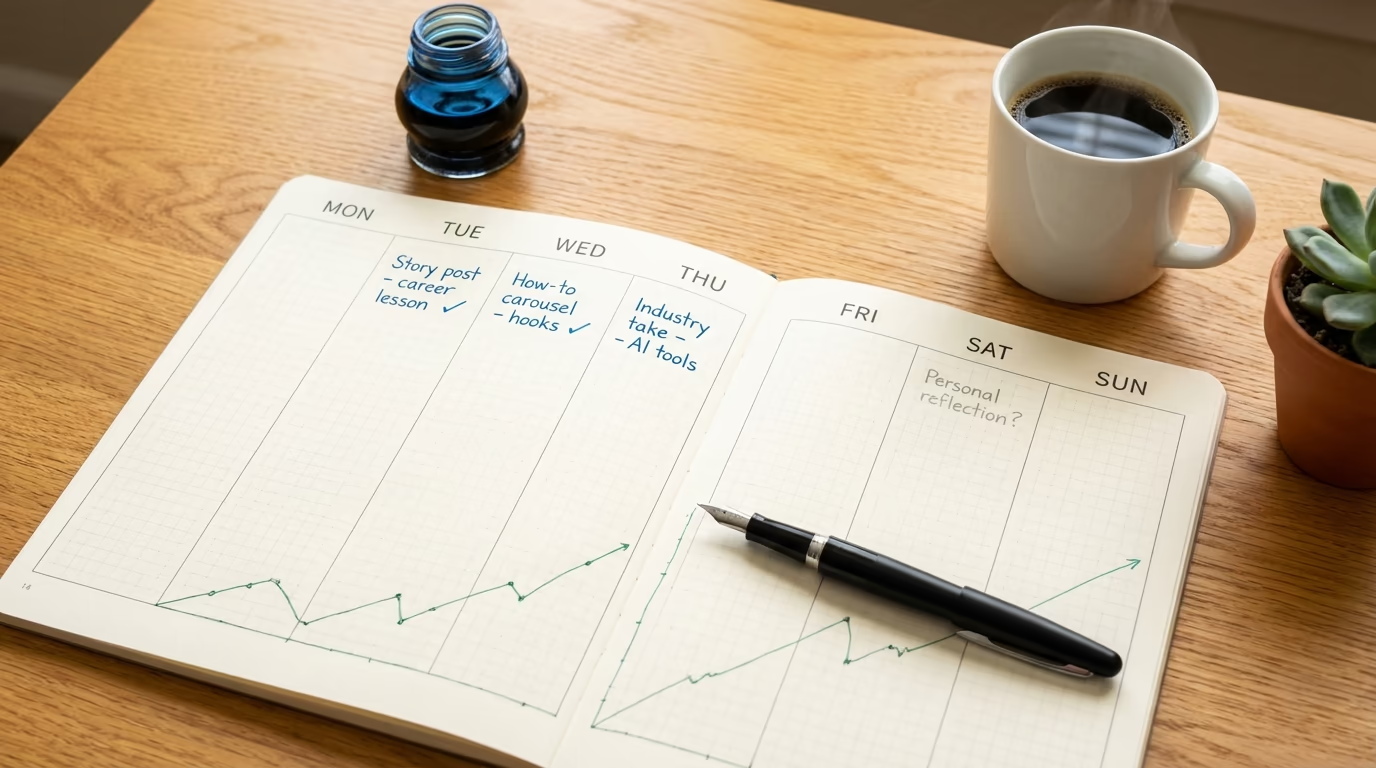
The practical way to protect your consistency is to always have a buffer. Use optimal posting times as your publishing schedule and keep two to three posts queued ahead of your current publishing day at all times. When a busy week hits or life interrupts your content creation session, the buffer keeps your publishing cadence intact without you needing to scramble. If you write three posts every Sunday and schedule them for Tuesday, Wednesday, and Thursday, you only need to protect one hour per week to maintain a three-post cadence indefinitely. That is a more realistic commitment than finding 30 minutes every single morning to write and publish in real time, and it produces better content because you are writing in a focused batch session rather than under daily time pressure.
Finding Your Number and Sticking With It
The best posting frequency for LinkedIn is the one you can maintain with quality content for the next six months without it feeling like a burden. For most people, that is three posts per week. For full-time creators, it is four to five. For busy executives and founders, even two posts per week done consistently will grow your audience faster than five posts per week done for three weeks and then abandoned. Start at the lower end of your range, build the habit, and only increase when the cadence feels easy rather than achievable. The creators who grow the fastest on LinkedIn are rarely the ones who post the most - they are the ones who never skip a week.
If you take one thing from this guide, let it be this: consistency at a sustainable frequency beats ambition at an unsustainable one, every single time. Set your cadence, batch your content, schedule it with a LinkedIn scheduling tool, and focus your creative energy on making every post count rather than making every day a posting day. The algorithm will reward you for showing up reliably, and your audience will reward you for never wasting their attention.
Frequently Asked Questions
Three to five times per week is the optimal range for most LinkedIn users based on analysis of over 1.8 million posts. Accounts under 5,000 followers tend to do well with three posts per week, while larger accounts with engaged audiences can benefit from four to five. Consistency matters more than hitting a specific number.
Yes. Publishing two or more posts within the same 24-hour window typically reduces reach per post because the algorithm avoids showing multiple posts from the same creator to the same user. Your second post competes directly with your first for distribution, and both end up with less reach than a single well-timed post would have earned.
Weekends can work well for native content like personal stories, reflections, and conversational posts because far fewer people publish on Saturday and Sunday, reducing competition for feed space. Avoid sharing external links on weekends since click-through rates drop significantly when people are in leisure browsing mode rather than work mode.
Taking a break of a week or more typically results in lower initial reach on your first post back because the algorithm builds momentum based on consistent publishing. It usually takes two to three consistent posts to rebuild your distribution baseline. The longer the gap, the more posts it takes to recover.
Yes. The algorithm now penalizes recycled or low-effort content more heavily than ever, and a single excellent post outperforms three mediocre ones in total reach and engagement. Focus on publishing only when you have something genuinely valuable to share and your overall growth will be stronger than if you chase a daily posting target with filler content.
The post you keep meaning to write takes four minutes here.
LinkedGrow turns a link, a video or a rough idea into a LinkedIn post written in your own voice, then puts it in the calendar for the morning your audience is awake.
Start free for 7 days