

Sales prospecting techniques are the repeatable ways you find people who might buy from you, reach them, and work out which ones deserve your time. The methods that still work in 2026 share one trait. They put relevance and timing ahead of volume, because buyers now tune out anything that reads like a mass message. Gartner found that 73% of B2B buyers actively avoid suppliers whose outreach feels irrelevant, so the seller who researches a shorter list and messages it well gets more replies than the one who blasts a longer one nearly every time.
LinkedGrow is a lead generation platform for founders, freelancers, consultants, and small teams who want a steady flow of client conversations from LinkedIn. Prospecting is the engine underneath that flow, the daily work of finding the right people and starting a conversation before they ever fill in a contact form. Get the techniques right and your pipeline stays full through a slow month. Get them wrong and you burn a week messaging people who were never going to answer.
This guide walks through the prospecting techniques that earn replies in 2026: how to build a target list off real buying signals, how to write outreach people actually answer, how prospecting works on LinkedIn specifically, when an AI agent can run the routine work for you, and how to tell whether any of it is paying off. Every section ends on something you can use this week, whether you prospect by hand or hand the grind to software.
What is sales prospecting, and what changed in 2026?
Sales prospecting is the work of finding potential buyers and starting a conversation with them before they raise a hand. It sits right at the top of the sales process, ahead of qualifying, pitching, and closing. A lead is anyone whose details you have. A prospect is a lead you've checked against who you actually sell to, so prospecting is really the act of turning a raw name into someone worth a real message.

What changed in 2026 is the buyer's patience. People research on their own now, and they resent being interrupted by a stranger who clearly knows nothing about them. Gartner's 2026 survey found that 67% of B2B buyers would rather buy without a sales rep in the room at all, up from the year before. That does not kill prospecting, but it kills the old volume game where you sent 500 identical emails and hoped 3 landed. The reply now goes to the seller who gives a reason worth answering.
So the techniques that survive are the ones built on relevance. You reach out because something specific happened, tied to a real problem you can solve, and you say so in the first line. Buyers are also using AI to filter their own inbox now, which means a generic opener gets binned faster than ever. The good news is that the bar for standing out is low. A message that proves you looked before you wrote already puts you ahead of most of the noise a prospect wades through each day.
How do you find the right prospects to target?
You find the right prospects by starting from a sharp ideal customer profile and a list of buying signals, not from a giant database of contacts. The profile names the role, company size, and industry you close most easily, so you stop chasing people who were never a fit. The signals tell you which of those people are worth reaching this week rather than someday, because timing is half of why a message gets a reply.

A buying signal is any recent event that suggests a company is more likely to need what you sell right now. A new hire reshapes a team's priorities and opens the door to new tools, a funding round frees up a budget that was frozen a month earlier, and a public post about the exact problem you fix is about as close to an invitation as prospecting gets. When you reach out in the days after one of these lands, the person is already thinking about the thing you help with, so your timing does the persuading for you. Here are the signals worth watching, and the ones you can spot for free on LinkedIn.
Someone stepping into a role you sell to has 90 days to prove themselves and is open to new tools. A job change is one of the strongest reasons to reach out early.
Fresh money or a new office usually means new spend and new gaps to fill. A company in growth mode buys more readily than one holding steady, so time your outreach to the news.
When a prospect writes publicly about a frustration you solve, they have told you both the pain and the moment. Reply to the substance first, then take it to a message.
People commenting on a competitor's post or content are actively shopping the category. That interest is a quiet signal you can act on without waiting for them to come to you.
The mistake most sellers make here is building the list once and working it for months. Signals go stale fast, so the list has to refresh as new events land. If you want a fuller view of where these prospects come from and how the channels stack up, our guide to B2B lead generation strategies ranks them by budget, and LinkedGrow's buying signals feature watches your market so you don't have to scroll for them by hand.
How do you reach prospects so they actually reply?
You reach prospects by leading with a reason and a bit of value, then following up on a real schedule instead of once. The first message is not a pitch. It names why you reached out, ties it to something specific about the person, and asks one easy question, so answering costs them almost nothing. The pitch comes later, once they have shown they want to keep talking.

Personalization is the technique that carries the rest, and it has to be real to work. Referencing a company name is not personal, since a mail merge can do that. Referencing the post someone wrote last Tuesday about missing their pipeline target is personal, because only a human who read it could write that line. You don't need a paragraph either, because one true sentence about their situation, followed by a short reason you can help, does more than a page of polished copy that could have gone to anyone.
The follow up is where most pipeline is won or lost. Most replies arrive after the first message rather than on it, so a single attempt leaves the majority of your list untouched. A sensible cadence runs 4 to 7 touches over 2 to 3 weeks, and each touch adds something useful rather than nagging. Our guide to building a sales cadence gives you a full schedule, and the cold outreach guide goes deeper on the openers that earn a first reply.
How do you prospect on LinkedIn specifically?
LinkedIn prospecting works best when you warm the ground before you send a request. You comment on a prospect's posts, share useful content of your own so your profile looks worth accepting, then send a connection request with a short honest note about why. LinkedIn caps most accounts at roughly 100 connection requests a week, so a smaller, well chosen list matters more here than on any other channel.

That weekly cap is the number every LinkedIn technique has to respect. Most accounts get around 100 invitations a week, sometimes up to 200 with a long, healthy account history, while newer accounts sit lower at roughly 50 to 80. It resets on a rolling basis, so the safe habit is to space requests to about 20 to 30 a day rather than firing them all at once. Acceptance rate feeds the limit too, which means a targeted list that people recognize keeps your allowance high, and a spray of requests to strangers drags it down.
Once a request is accepted, the message that follows should read like it came from the feed, not from a script. The reason you noticed someone is usually right there in what they posted, so use it, then ask rather than pitch. Our full guide to prospecting on LinkedIn covers the search and targeting side, and our LinkedIn outreach message templates give you openers and follow ups you can adapt to your own voice.
Can an AI agent do sales prospecting for you?
Yes, an AI sales agent can now run the repeatable steps of prospecting: building the list, watching for buying signals, sending connection requests, and drafting a first message from what a person actually posted. What it should not do is replace your judgment on which conversations to take, because a warm reply from a real buyer still deserves a human. The right split is machine for the grind, you for the talk that could turn into money.
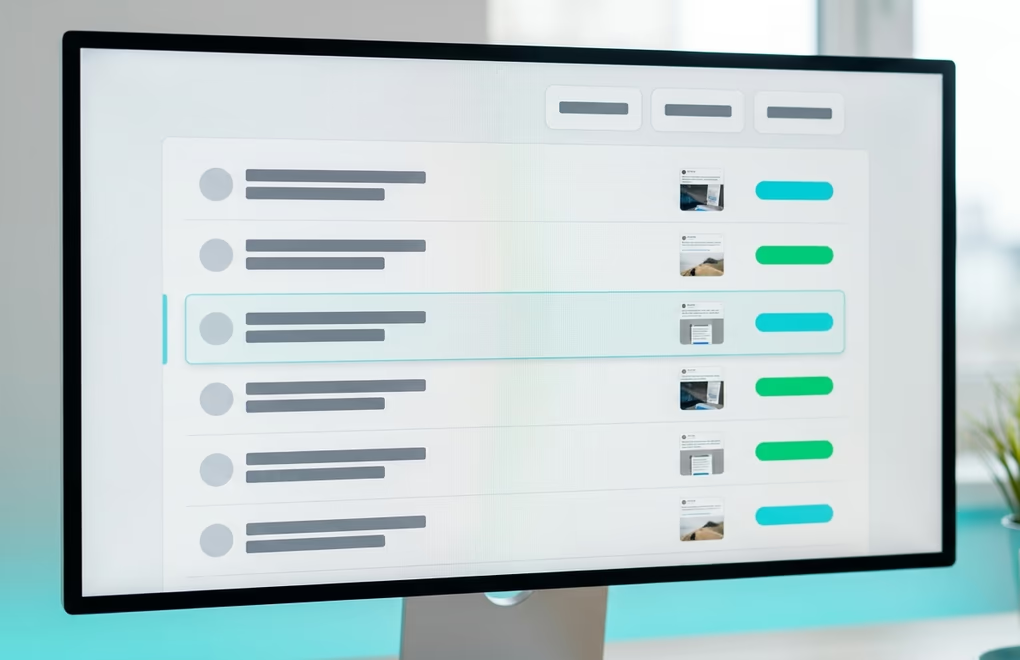
Here is how it runs in practice with LinkedGrow. You give it your website, and it reads what you sell, names the audience, and picks the buying signals worth chasing. It then works your own LinkedIn account on an address reserved for it, moving at a human pace, and writes each message from what that person posted rather than from a template. Every lead it surfaces is linked back to the post it came from, so you can see why it reached out. When someone is worth a real reply, it hands the conversation to you and steps back.
The technique that a human rarely keeps up is honest measurement of what works. The agent scores every source on the replies and meetings it produced, then drops the angles that go nowhere, which is the discipline most sellers abandon after a busy fortnight. Automation is not a fit for everything, though. If your deals need a warm introduction from a mutual contact, or the buyer expects to hear from you personally, keep that by hand. You can see the full workflow on the AI SDR software page.
How do you measure and improve your prospecting?
You measure prospecting with three numbers: your reply rate, the meetings you book, and the cost of each lead. Reply rate tells you whether your targeting and message are landing. Meetings booked tells you whether those replies are real interest or polite noise. Cost per lead tells you whether the whole effort is worth repeating, and it keeps you honest when a channel feels busy but produces nothing.

Two habits improve those numbers faster than any clever opener. The first is disqualifying bad prospects quickly, because chasing a poor fit costs the same hours as chasing a great one and returns far less. If a prospect fails your ideal customer profile or shows no timing signal, let them go and reinvest the time. Our guide to lead qualification shows how to score a prospect before you sink real effort into them.
The second habit is protecting prospecting time and tracking results by source, so you learn which channel and which signal actually feed your pipeline. Block the same hour each day for it, then review what came back once a week and pour more into whatever produced meetings. If you want the money side of that math, our cost per lead calculator turns your effort and spend into a number you can compare across channels.
Turn these techniques into a repeatable system
The prospecting techniques that work in 2026 are not complicated, but they are relentless. Build a tight list off real buying signals, reach out with a reason the person can see is true, follow up on a schedule, keep the LinkedIn limits in mind, and measure by source so you double down on what pays. None of that takes special talent. It takes doing the same honest work every day, which is exactly why so many sellers drop it the moment they get busy.
That daily grind is the piece worth handing to software once you have the technique down. An AI SDR on the LinkedGrow Pro plan runs this outreach for $59 a month and starts with a 7 day trial you can cancel any time before day 7, so you can watch it surface warm conversations before you commit. You can also book a demo to see how it hands you a lead the moment someone is worth a real reply, and keep prospecting from ever going quiet again.
Frequently asked questions about sales prospecting techniques
Sales prospecting is the work of finding people who might buy from you and starting a conversation before they raise a hand. It sits at the very top of the sales process, ahead of qualifying, pitching, and closing. The daily job is to turn a raw list of names into a shorter list of people who fit who you sell to, then reach out with a reason they can see is real. Prospecting is what keeps a pipeline full, which is why sellers who do it consistently rarely have a dry month.
The most effective sales prospecting techniques in 2026 all start from relevance rather than volume. You build a tight target list off a clear ideal customer profile, watch for buying signals like a funding round or a new hire, lead your first message with a specific reason you reached out, and follow up on a real schedule instead of once. On LinkedIn you warm the ground first by engaging with someone's posts, then send a short honest note. The common thread is that a smaller list messaged well does more for you than a huge list messaged badly.
A lead is anyone whose details you have, a name and an email or a profile, with no proof yet that they fit. A prospect is a lead you've checked against who you actually sell to, so their role, company, and situation match your ideal customer. The move from lead to prospect is a filtering step, and it saves you from spending your week messaging people who were never going to buy. Good prospecting is mostly about doing that filtering well before you send anything.
A prospecting cadence usually runs 4 to 7 touches over 2 to 3 weeks, mixing a couple of channels rather than hammering one. Most replies arrive after the first message, not on it, so a single attempt leaves most of your pipeline on the table. The rule that matters is to add something useful on each touch instead of repeating the same ask, and to stop cleanly once you've had a clear no. Our sales cadence guide lays out a full schedule you can copy.
AI can now run the repeatable steps of sales prospecting: building the target list, watching for buying signals, sending connection requests, and drafting a first message from what a person actually posted. What it should not do is decide which warm conversations to take, because a real reply from a real buyer still deserves a human. LinkedGrow runs the routine work from your own LinkedIn account at a human pace and hands a conversation to you the moment someone is worth a proper reply, so you spend your time on the talks that can turn into paid work.
The people you just read about are already on LinkedIn.
LinkedGrow runs an agent that finds the ones who match the customers you already have, sends the invitation in your words, and opens the conversation. You pick it up when somebody answers.
Build my agent free