

Lead qualification is how you decide which of your leads deserve real selling time and which to set aside, judged on whether they fit what you sell, feel the problem you fix, can pay, and can actually say yes. Do it well and you stop pouring hours into people who were never going to buy, because a short list of qualified leads closes faster than a long list of maybes. It is the filter that sits between generating leads and working them.
LinkedGrow is a lead generation platform for founders, freelancers, consultants, and small sales teams who have to qualify their own leads without a marketing department scoring them first. Since LinkedGrow v2, its AI agents read fit and buying signals straight from LinkedIn, so the people who reach your inbox arrive already sorted by how closely they match your ideal customer.
Most guides on lead qualification stop at the frameworks, the four letter acronyms every sales blog repeats, and never show how to apply them to a real person before a call is booked. This guide goes further than the acronyms. You will get the frameworks in plain words, the scoring thresholds that turn a hunch into a keep or drop decision, clear criteria for dropping a lead early, and how to qualify a buyer from their LinkedIn profile and posts before you send a single message, which the big CRM guides skip entirely.
What is lead qualification, and how is it different from lead scoring?
Lead qualification is the process of checking whether a lead is worth pursuing before you invest real time in them, based on fit, need, budget, and their power to decide. A lead who runs a 200 person company you serve, just posted about the exact problem you solve, and holds the budget is qualified. A curious student with no authority and no money is not, however friendly the conversation feels.
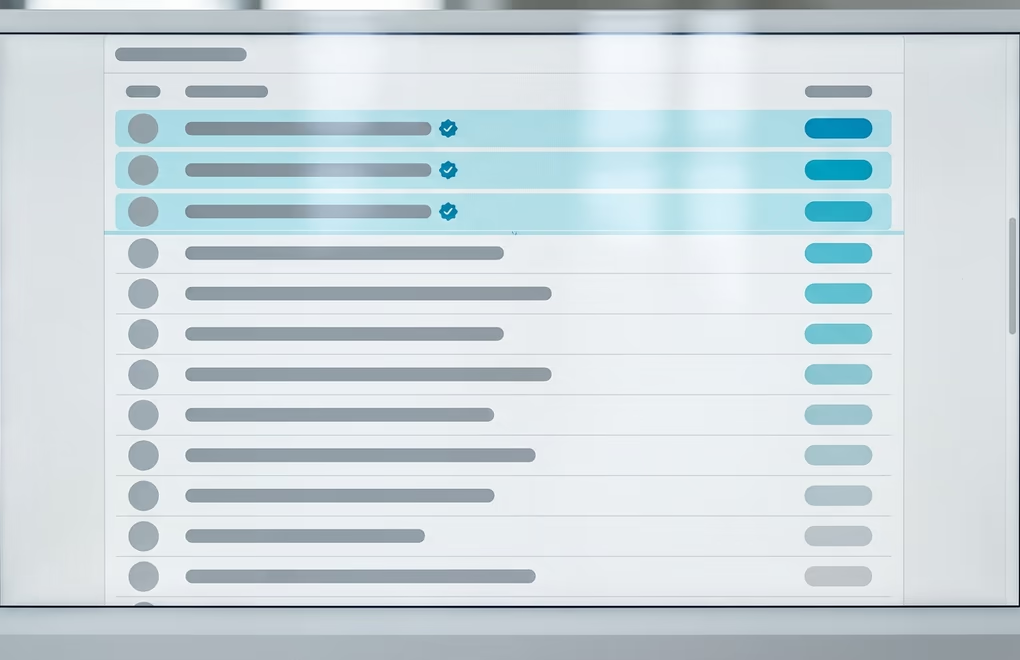
Lead qualification and lead scoring get used as if they mean the same thing, and keeping them apart makes both more useful. Scoring is the automatic half, a number your CRM or agent adds up from signals like job title, company size, and how often someone opens your emails. Qualification is the judgment half, where a person or a smart agent looks at that score plus the context and decides to pursue, nurture, or drop the lead. Scoring ranks the list, and qualification acts on it.
Getting this filter right is where small teams win back their week. Salesforce research found that reps spend under 30% of their week actually selling, and every unqualified lead you chase eats into that thin slice, so qualification is what protects it. Spend your selling hours on the leads that can close, let the rest go politely, and the same effort produces more revenue without a single extra hour of work.
What makes a lead qualified?
A lead is qualified when it clears two bars, fit and intent. Fit means the person matches who you sell to, the right industry, company size, and role. Intent means they show a real reason to buy now, a fresh pain or active research into a solution they have started comparing. Sales teams sort leads into a few named types as they move from mild interest to ready to talk, and knowing the labels keeps marketing and sales pointing at the same people.

A marketing qualified lead, or MQL, has shown interest, downloaded something, followed you, or engaged with a few posts, but nobody has confirmed they can buy. A sales qualified lead, or SQL, has been checked by a person and has confirmed need, budget, and timing, so it deserves real selling effort. A product qualified lead, or PQL, has already used your product on a trial and hit a usage point that signals they are ready to pay. Some teams add a sales accepted lead, or SAL, the step where a rep formally agrees an MQL is worth working, which stops good leads from falling between the two teams.
Only a slice of marketing qualified leads ever become sales qualified. HubSpot's cross industry data puts the average conversion from a marketing qualified lead to a sales qualified one near 13%, which is exactly why a rep should not treat every MQL as a real opportunity. For a founder or a solo consultant, these labels can feel like corporate overkill, and in a way they are, since you are the marketing team and the sales team at once. Keep the idea and drop the ceremony. You still want to know the difference between someone who liked a post and someone who replied to say they have this exact problem and a budget to fix it, because the second is worth a call today and the first is worth a follow up next week.
Which lead qualification framework should you use?
A lead qualification framework is a short checklist of what to confirm before you call a lead qualified, and the three worth knowing are BANT, CHAMP, and MEDDIC. BANT checks Budget, Authority, Need, and Timeline. CHAMP leads with Challenges instead of budget. MEDDIC is the heavy one for complex deals, adding metrics, the economic buyer, decision criteria, and an internal champion. Pick the lightest one that fits your deal size.

BANT is the right default for most small businesses, because it is fast and it maps to the four questions that actually kill deals. Can they pay, can this person say yes, do they have a problem you solve, and are they buying on a timeline you can work with. You can qualify a lead against BANT inside a 15 minute call without it feeling like an interrogation, as long as you ask about the problem first and let budget come up naturally once they trust you.
Reach for CHAMP when budget is a sensitive subject and asking about it early would end the conversation, which is common with founders spending their own money. Save MEDDIC for deals big enough to justify the extra homework, the kind with a procurement step and several people signing off. The mistake I see most is a solo consultant running MEDDIC on a 3,000 dollar project, turning a simple yes into a month of discovery. Match the framework to the money on the table, and never let the checklist outlast the deal it is meant to size.
How do you qualify a lead on LinkedIn before the first message?
You can qualify most of a LinkedIn lead before you ever message them, because their profile and their posts answer the fit and intent questions for free. Fit is on the profile, their title, their company, its size, and how long they have held the role. Intent is in their recent activity, a post about the problem you solve, a complaint about a competitor, a new job, or a comment on a thread in your space. Read both, and you walk into the first message already knowing whether this person is worth your time.

Start with fit, since it takes 10 seconds and rules out most of the list. Open the profile and check that the role, the company, and the seniority match your ideal customer. A buying signal is the intent half, and it is what separates a cold name from a warm one. Someone who just posted about struggling with the exact thing you fix is telling you they are in the market, and that single signal is worth more than 100 names pulled from a title search with no context behind them.
The practical routine is a short daily list. Pick people who match your ideal customer, look for one recent signal on each, and skip anyone with neither fit nor a reason to talk. This is exactly the qualification our free ideal customer profile template is built to speed up, and our guide to how to prospect on LinkedIn walks the daily habit end to end. Qualifying on LinkedIn first means every message you send goes to someone you already have a reason to contact, which lifts your reply rate far more than any clever opening line.
How does lead scoring turn signals into a keep or drop call?
Lead scoring turns all those signals into a single number so you can rank a long list and work the top of it first. You give points for fit signals, a matching title or company size, and for intent signals, a relevant post, a reply, a demo booked, then set a threshold where a lead becomes worth a real conversation. The threshold matters more than the exact points, because it is the line that decides who gets your time this week.

Keep the model simple enough to trust. A workable start is fit worth up to 50 points and intent worth up to 50, with anything above 70 treated as qualified, 40 to 70 as worth nurturing, and below 40 set aside. Those numbers are a starting line, not a law, and you tune them against reality. If leads scoring 75 keep going nowhere, your threshold is too low or your fit signals are wrong. Review the leads that closed last quarter, see what they scored, and move the line to match what actually buys.
The other half of scoring is subtraction, and it keeps your list honest. Take points away for the signals that predict a dead end, a free email address on a business deal, a job title with no buying power, a company far too small to afford you, or a location you cannot serve. Set a hard floor where a lead is disqualified and dropped, not parked, because a list padded with leads that will never buy lies to you about how healthy your pipeline is. Dropping a lead early saves the hours you would have spent nursing a deal that was never going to close.
How does AI qualify leads at scale?
AI lead qualification uses a model to do the fit and intent read on every lead automatically, at a scale no person could match by hand. Instead of you opening profiles one at a time, an agent checks each lead against your ideal customer, scans their recent activity for buying signals, scores them, and surfaces only the ones worth your attention. The judgment behind it matches the manual version, and the only thing that changes is how many leads it can cover in a day.
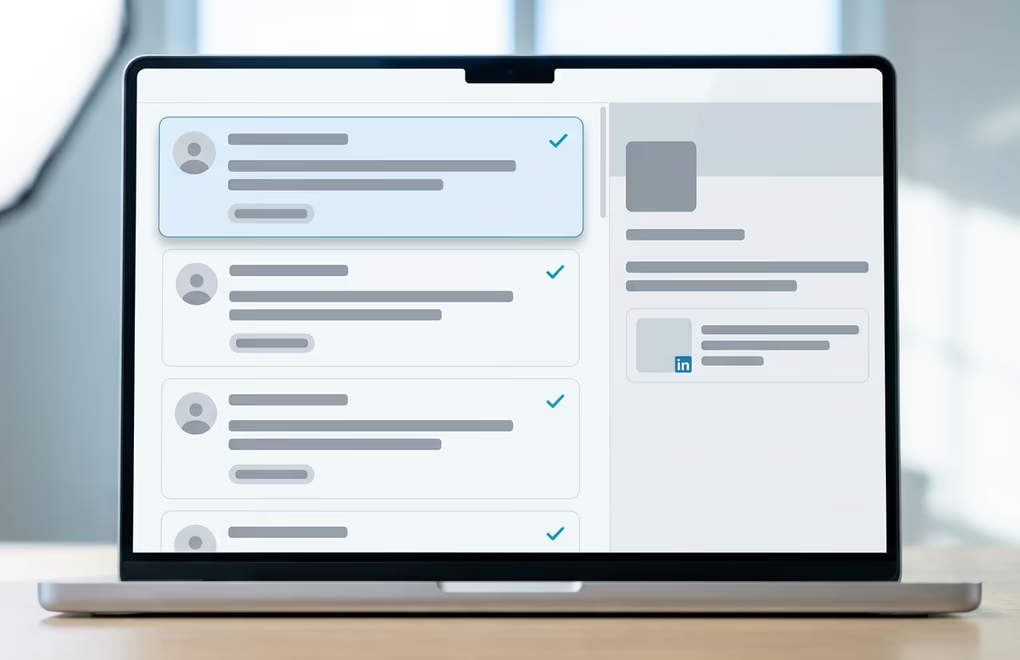
This is how LinkedGrow runs lead qualification on LinkedIn. Its agents take your website, work out who you sell to and which competitors and signals to watch, then read fit and intent on real people from your own account and hand you only the leads that clear the bar. Every lead comes attached to the LinkedIn post or activity it came from, so you can see why it was qualified before you reply. Our AI SDR software page shows where the agents do the sorting and where they stop and let you take the conversation.
The step that makes AI qualification improve over time is the feedback loop. The agent scores every source on what it actually produced, the replies and the meetings, and quietly drops the signals that looked promising but led nowhere. A person doing this by hand tends to keep chasing a source out of habit long after it stopped paying. Over a few weeks, that scoring against real outcomes pushes your qualified list from a good guess toward a reliable one, and it runs whether or not you had time to look that week.
Qualify the leads you can actually close
Lead qualification is not busywork you do to please a CRM. It is the decision that protects your selling time, and the teams that do it well stop meeting people who were never going to buy. Set your fit and intent bars, pick the lightest framework your deals allow, score honestly, and drop the leads that fail early instead of nursing them for months. That discipline is worth more than any new channel, because it makes every hour you already spend selling count for more.
If the qualifying is the step that never gets done because you are busy delivering, LinkedGrow runs it for you, reading fit and buying signals on LinkedIn and handing you only the people worth a real conversation, and it writes to each of them in your own voice with voice training. It comes with a 7 day trial you can cancel any time before it charges. Set your ideal customer, let the LinkedGrow agents qualify the leads, and spend your own hours on the ones ready to become clients.
Frequently asked questions about lead qualification
Lead qualification is the process of deciding whether a lead is worth pursuing before you spend real time on them. You check fit, meaning whether they match who you sell to, and intent, meaning whether they have a live reason to buy. A qualified lead clears both bars, so your selling hours go to people who can actually close.
Lead scoring is the automatic step that adds up signals like job title, company size, and engagement into a number that ranks your list. Lead qualification is the judgment step that reads that score plus the context and decides to pursue, nurture, or drop the lead. Scoring ranks the leads, and qualification acts on them.
BANT suits most small businesses, since it checks budget, authority, need, and timeline in one short call. Use CHAMP when asking about budget early would end the conversation, and save MEDDIC for large deals with several decision makers. Match the framework to your deal size rather than running the heaviest one on every lead.
Check fit on the profile, comparing the role, company, and seniority against your ideal customer, then check intent in their recent activity, such as a post about the problem you solve, a job change, or a relevant comment. A lead with both a matching profile and a recent buying signal is qualified enough to message with a real reason.
The cost depends entirely on the channel you use. Paid ads and bought lists can run from a few dollars to well over 100 dollars per qualified lead in competitive markets, while qualifying leads yourself on LinkedIn costs mostly time. A cost per lead calculator turns your outreach volume and reply rate into a figure you can compare against paid options.
The people you just read about are already on LinkedIn.
LinkedGrow runs an agent that finds the ones who match the customers you already have, sends the invitation in your words, and opens the conversation. You pick it up when somebody answers.
Build my agent free