
Most LinkedIn outreach messages get ignored, and the reason is not the platform. The reason is that the average inbox in 2026 is a graveyard of identical templates that all open with the same flattery, name-drop the same vague point of intersection, and pivot to a pitch within three sentences. If you have ever opened LinkedIn and seen seven unread messages from people you have never spoken to, you already know what those messages say without reading them. They all sound the same because they were all written from the same playbook, and that playbook stopped working a long time ago. What actually works in 2026 is a small set of LinkedIn outreach message templates that treat every recipient as a real person with context, and tools like LinkedGrow exist to help creators and operators show up that way at scale.
The shift is not subtle. Five years ago, a half-personalized template at high volume was enough to fill a calendar. Today the inbox is loud, recipients are exhausted, and LinkedIn itself has tightened both the visibility of unsolicited messages and the consequences of getting reported as spam. What that means in practice is simple. Your message either earns its place in the recipient's attention by showing genuine context, or it gets archived without being read. There is no middle ground anymore, and pretending otherwise is the single biggest reason most outreach campaigns underperform in 2026.
This guide walks through the ten outreach frameworks that consistently get replies, the anatomy of a message that earns a response, the personalization rules that separate signal from spray, the follow-up cadence that respects the recipient, and the mistakes that quietly destroy your reply rate. Whether you are a solopreneur trying to fill your pipeline, a recruiter searching for senior talent, an agency running outreach on behalf of clients, or a founder doing customer discovery, the principles are the same and the templates translate across all of those use cases.
Why do most LinkedIn outreach messages get ignored in 2026?
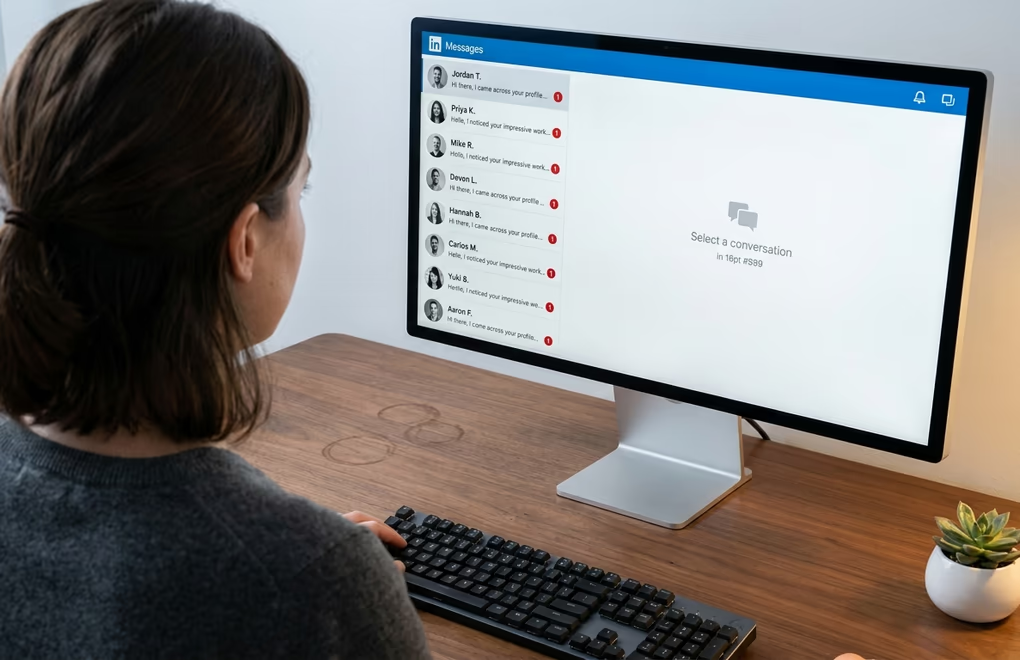
The honest answer is that most outreach is built to feel personal rather than be personal, and the gap between those two has become impossible to hide. The classic template opens with something like "I saw your profile and was impressed by your work in..." and then pivots to a paragraph about the sender. That structure has been recycled so many millions of times that recipients now recognize it as a tell. The moment a reader sees "I came across your profile," their brain registers it the same way it registers a phone call from an unknown number, and the rest of the message is processed as noise.
The second reason is that most outreach is written from the sender's point of view. The message focuses on what the sender does, who the sender works with, and what the sender wants to talk about. None of that matters to the recipient in the first thirty seconds of contact. What matters is whether the message gives them a reason to keep reading that is rooted in their own world, not in the sender's pitch deck. When people complain that LinkedIn DMs feel like spam, what they are really saying is that they feel addressed as a target rather than as a peer, and that perception kills response rates before the body of the message is even read.
The third reason is volume. LinkedIn data shows that inbox volume has climbed sharply year over year as more sales teams shift budget from cold email to LinkedIn. The same recipient who used to get two unsolicited messages per week now gets two or three per day, and the cognitive load of reading each one carefully has collapsed. The recipient is no longer evaluating your message against silence. They are evaluating it against the seven other identical templates already buried in their inbox. If your opening line is interchangeable with those seven, you lose by default, even if the offer underneath is excellent. That is why generic templates plateau no matter how much you scale them, and why smarter social selling strategies have moved away from volume entirely.
What does a LinkedIn outreach message that actually gets replies look like?
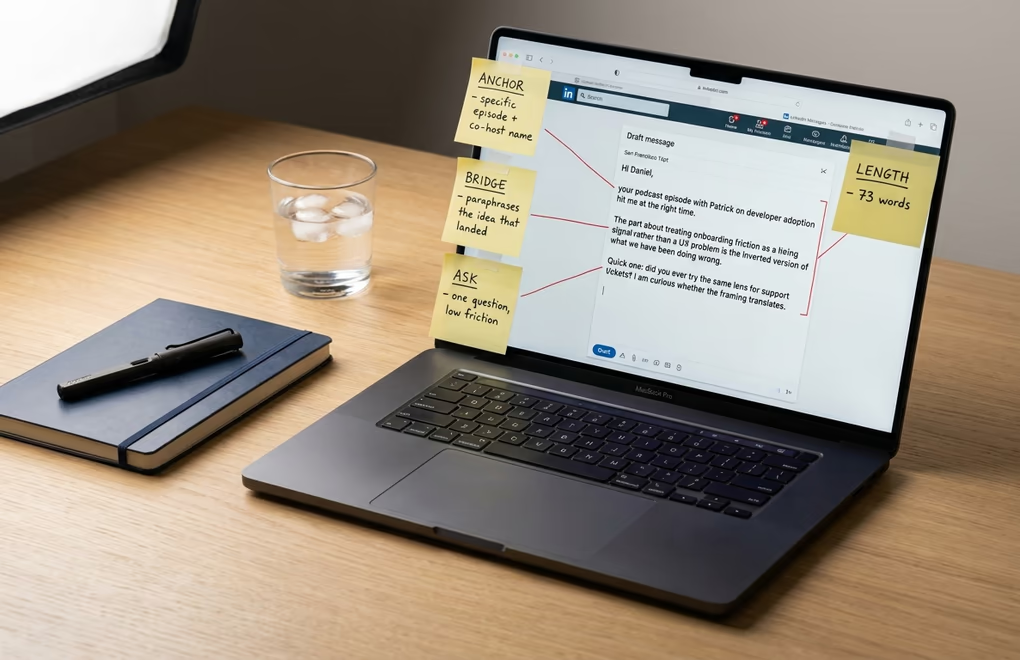
A high-response LinkedIn outreach message has four moving parts, and removing any one of them tanks the reply rate. The first part is an anchor, which is the specific reason you are messaging this exact person at this exact moment. An anchor can be a recent post they published, a podcast they appeared on, a comment they left under someone else's post, a company milestone, a job change, or a piece of content they wrote two years ago that aged well. What makes an anchor work is that the recipient instantly understands you did not pull their name from a list. You found them because of something specific, and that specificity is the first signal that this message is worth a few extra seconds.
The second part is the bridge, which is the sentence or two that connects the anchor to the reason you are reaching out. The bridge is where most people overreach. They use the anchor as a transparent setup and pivot immediately to the pitch, which makes the personalization feel manufactured. A good bridge is honest about why the anchor caught your attention and stops short of selling. It says "this is what made me think we should talk" without saying "this is what I want to sell you."
The third part is the ask, and the rule is that the ask must be smaller than the recipient expects. Most outreach asks for a 30-minute call, which is a heavy lift for someone who has just learned you exist. A frictionless ask is a question they can answer in one sentence, an offer to send them something useful, or a request for their opinion on a specific question. The lower the friction, the higher the reply rate, and replies are what create the actual conversation where business eventually happens.
The fourth part is the length. Messages that land between 60 and 150 words consistently outperform longer notes, partly because LinkedIn truncates long messages on mobile and partly because shorter messages signal respect for the recipient's time. If you cannot make your case in 150 words, you do not have a clear enough case to make. Run your draft through a LinkedIn character counter before sending if you want a visual sense of how the message will read in the recipient's feed.
Which 10 LinkedIn outreach message templates actually get responses?
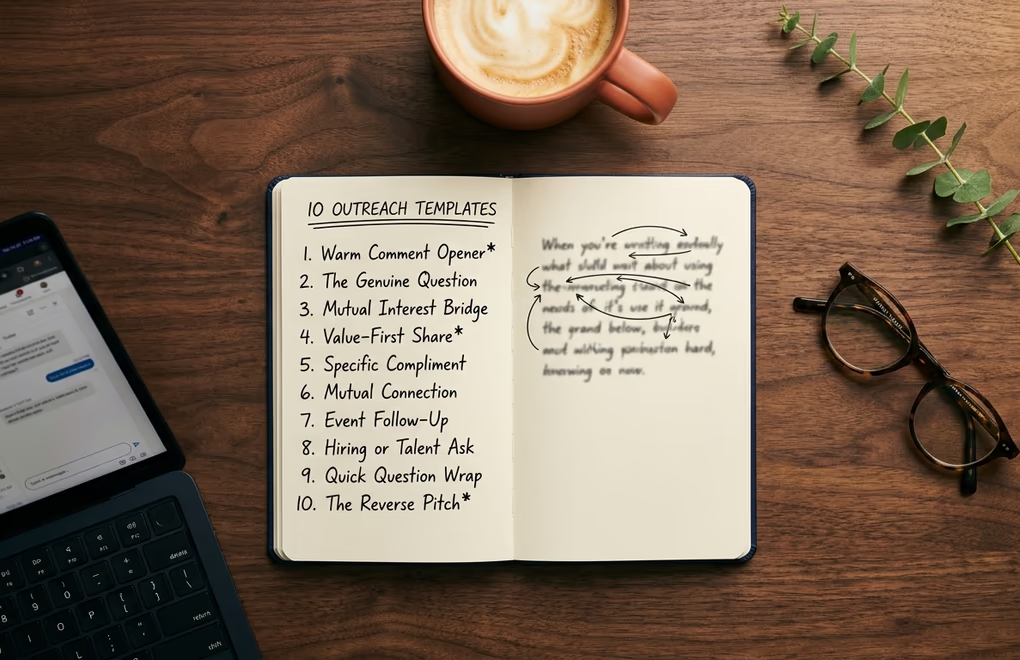
The ten templates below are framework starters, not copy-paste scripts. Each one has earned its place through repeated use across thousands of conversations, and each one can be adapted to almost any audience as long as you respect the underlying structure. Read them as recipes, not as ingredients.
1. The warm-comment opener
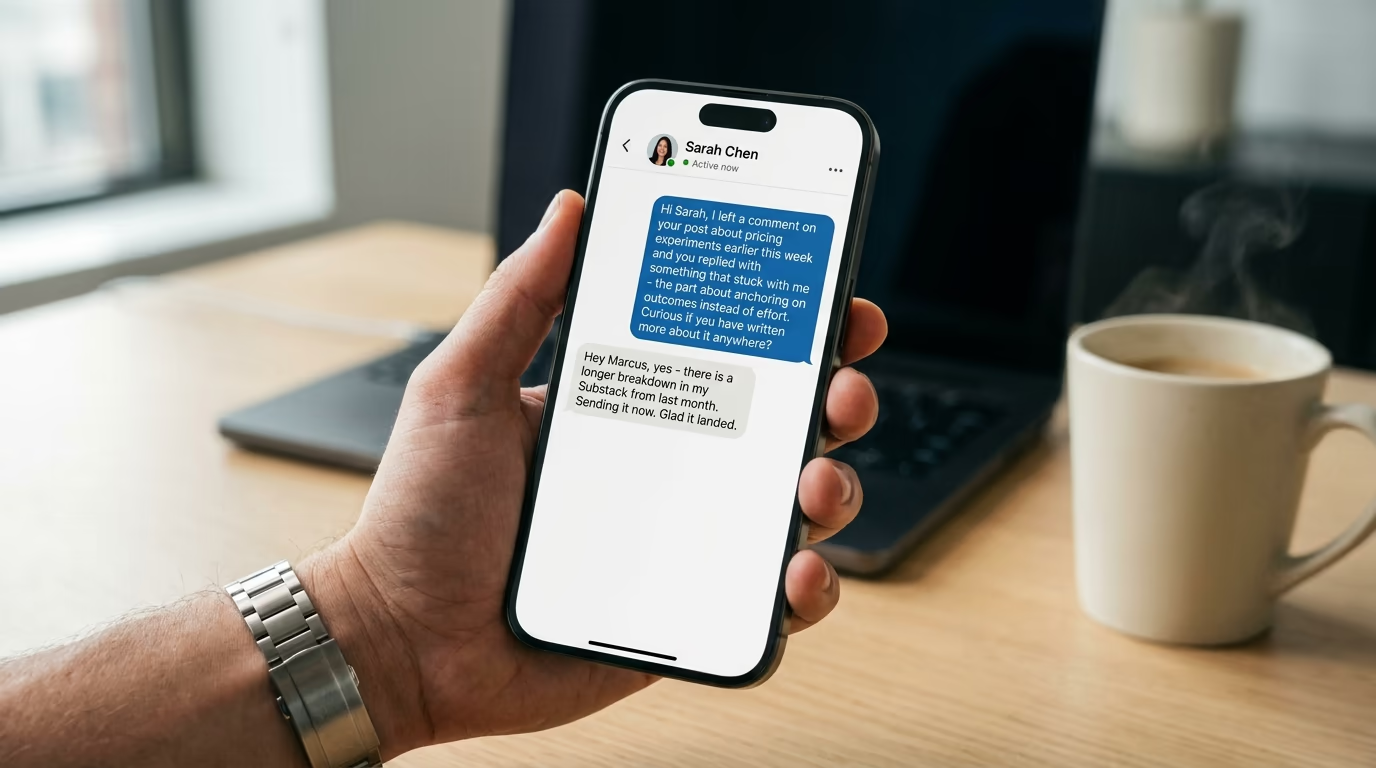
This is the highest-converting template by a wide margin, and it relies on engaging with the recipient's content before sending the message. A few days after leaving a thoughtful comment under one of their posts, you reach out and reference the exchange. "Hey [Name], I left a comment on your post about [specific topic] earlier this week and you replied with something that stuck with me. I wanted to follow up because [specific reason]. Are you open to a quick exchange on [narrow question]?" The reply rate climbs sharply because the recipient already recognizes your name and the conversation feels continued rather than initiated.
2. The genuine question
Ask the recipient something only they can answer, framed as curiosity rather than research. "Hi [Name], you mentioned in your [post or talk] that [specific claim]. I have been wrestling with the same question in my own [context] and I am curious whether you would do it the same way today or if your view has shifted. Genuinely asking, not selling anything." The reply rate on this template depends entirely on the specificity of the question. Generic questions get ignored. Questions that demonstrate you actually read or watched their material get a response far more often than people expect.
3. The mutual-interest bridge
When you and the recipient operate in the same niche but have not interacted, the mutual-interest bridge does the work. "Hey [Name], we are both working on [specific shared problem or audience] and I have noticed your posts on [topic] for a while. I had a question about how you handle [narrow tactical detail] and figured it was worth asking the source. Open to a quick exchange?" The key is that the shared interest must be narrow enough to feel like a real overlap, not a category as broad as "marketing" or "SaaS."
4. The value-first share
You send something useful before asking for anything in return. "Hi [Name], I came across [resource, article, dataset, or tool] and thought of your work on [their specific topic]. It might already be on your radar but if not, it saved me a few hours this week and I figured I would pass it along. No agenda." The reply rate is excellent because the message asks for nothing, and a meaningful chunk of recipients will reply with thanks, which opens the conversation naturally. This template only works if the resource is genuinely relevant. Sending a generic ebook attached to a fake-personal note collapses the whole thing.
5. The specific compliment
Generic compliments get filtered as flattery. Specific compliments land because they prove you actually consumed the work. "Hi [Name], the line in your [specific post or talk] about [exact phrase or idea] was one of those things I wish I had said myself. I screenshotted it. Quick question if you have a minute: [specific narrow ask]." The compliment is the anchor, and the ask follows naturally. The trap to avoid is praising something vague like "your content" or "your insights." The more specific the compliment, the more credible it becomes.
6. The mutual connection mention
When you share a real connection, surface them honestly. "Hi [Name], [Mutual's name] and I have worked together on [context] and your name came up when we were talking about [topic]. I was already familiar with your work on [specific angle] and thought it was worth a direct intro rather than going through [Mutual] for it. Quick question: [ask]." Only use this template when the mutual connection is genuine and recent. Name-dropping a stranger you both happen to be connected to is worse than not mentioning anyone at all.
7. The event or content follow-up
Use this template within 24 to 48 hours of a podcast appearance, webinar, conference talk, or major piece of content the recipient just published. "Hi [Name], I listened to your conversation with [host] on [topic] this morning and I had a follow-up question about [specific point at minute X or section Y]. Curious how you would apply that thinking to [adjacent situation]." The freshness signal is what makes this work. Mentioning a podcast from three months ago does not have the same effect as mentioning one that aired yesterday.
8. The hiring or talent ask
For recruiters and founders sourcing senior hires, the template that converts is short and respectful. "Hi [Name], not a generic recruiter pitch. I am hiring for [exact role] at [company], and your background in [specific experience] is the closest match I have seen all month. The compensation band is [range] and the team is [brief honest context]. If you are not actively looking, I get it. If you have 60 seconds of curiosity, I can send a one-page brief." The honesty about compensation and the explicit acknowledgment that they may not be looking outperforms vague "great opportunity" outreach by a huge margin.
9. The quick-question wrap
Short, narrow, low-stakes. "Hi [Name], quick one. You wrote that [specific quote or claim] in your [post or article]. In your experience, does that still hold for [edge case or new context]? Asking because I am running into the opposite signal and trying to figure out what I am missing." The implied vulnerability of admitting you might be wrong tends to invite a generous response from people who would otherwise ignore an outreach message. Use this when you want a real conversation rather than a sales conversation.
10. The reverse pitch
Position the recipient as the expert and yourself as the one trying to learn. "Hi [Name], I am building [specific thing] and you are the person whose work has shaped my thinking on it the most. I am not asking for a call. I am asking whether you are open to me sending one short specific question by message, and you can answer it in a sentence or skip it entirely." The conditional opt-in inverts the usual outreach dynamic. Instead of the recipient deciding whether to engage with an unknown ask, they decide whether to receive a question first. The yes rate on the framing step is unusually high, and it sets up the actual conversation as already consented to.
How do you personalize a LinkedIn cold message without sounding fake?
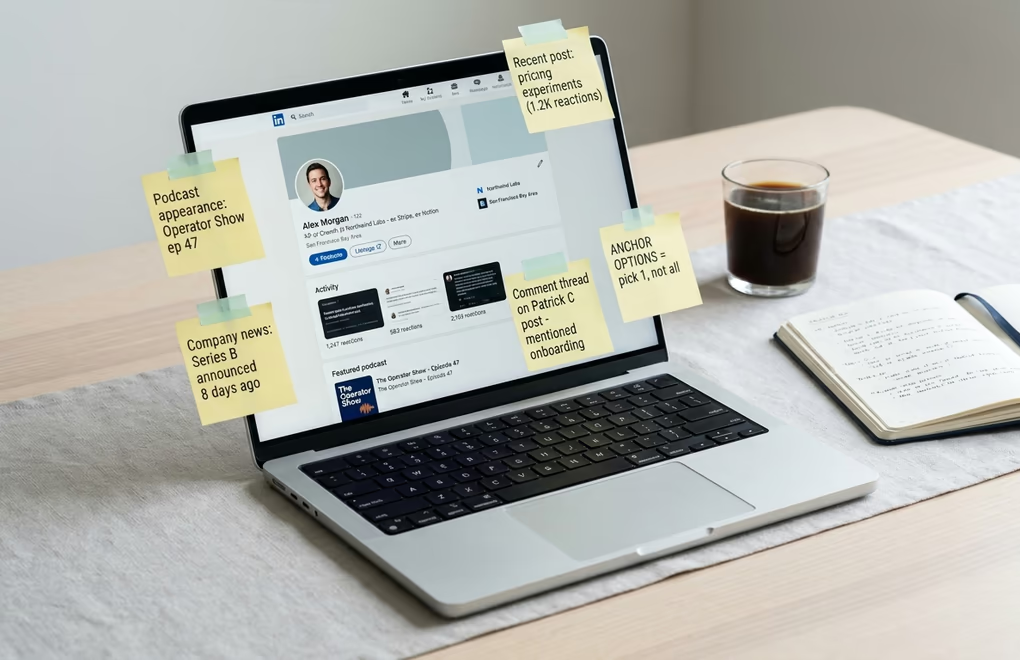
Personalization in 2026 is not about inserting the recipient's first name into a template. Tools have done that for a decade, and recipients have grown to recognize it as a tell rather than a courtesy. Real personalization is built on a piece of context that the recipient knows only they have shared, and the easiest way to find that context is to spend five minutes on their profile before writing anything. Read their most recent three posts. Skim their featured section. Check their experience section for a recent job change or company milestone. Scroll their activity feed and find a comment they left under someone else's post that reveals an opinion. One of those signals will become your anchor.
The trap most senders fall into is using a real signal in a fake-feeling way. Naming a recipient's post but then immediately pivoting to a pitch makes the personalization feel like a setup, which is worse than no personalization at all. The fix is to spend more than one sentence on the anchor. If you mention their podcast appearance, say what specifically stuck with you. If you reference their post, paraphrase the part that landed. The depth of engagement with the anchor is what makes the rest of the message feel honest, and depth is what AI tools tend to skip because it requires actually reading the source.
There is a place for tools, though. Drafting at scale is exhausting, and a lot of outreach dies not from bad strategy but from sender fatigue by message thirty. The right approach is to use an AI tool to draft the structural skeleton and to write the personalized anchor by hand. LinkedGrow works on the same principle for content. The platform learns your voice through voice training on your sample posts, and you can use that same voice consistency when drafting outreach so the messages sound like you wrote them and not like you ran them through a generic AI. The combination of human anchor plus voice-trained drafting is what makes scale and authenticity compatible in 2026.
One more rule. Never use a piece of personalization that the recipient would feel weird about. Mentioning that you saw they were promoted is fine. Mentioning that you noticed their company hit a layoff round is not. Referencing their public posts is welcome. Referencing their personal page or family content is uncomfortable. The line is whether the data point was published in a professional context with the implicit consent that strangers might read it. If you have to ask whether using a detail is appropriate, the answer is to skip it.
A template gives you a starting point, and the specific first line is what earns the reply. LinkedIn cold outreach writes that line from the post that surfaced the person, and the free connection request message generator does the shorter version that fits inside an invitation note. For the full sequence around the message, our guide on how to reach out to someone on LinkedIn walks through finding the person, the note, and the follow-up, and the wider LinkedIn outreach strategy shows how to build the list, read buying signals, and stay under LinkedIn's limits before a single template goes out.
When should you follow up on a LinkedIn outreach message?
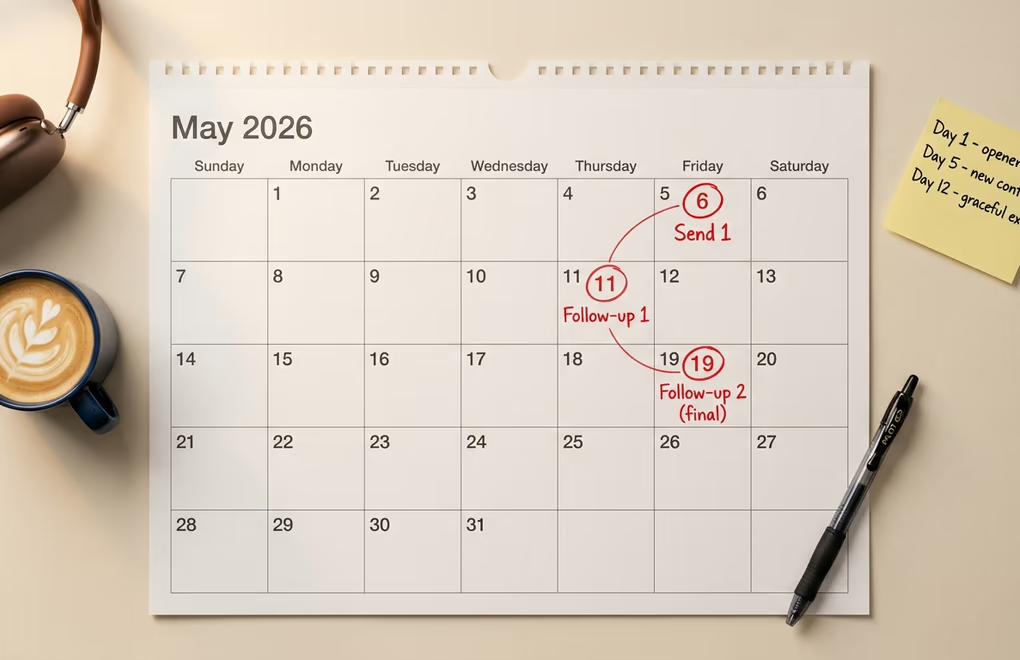
The right cadence depends on the urgency of the ask, but the default that works for almost every outreach situation is a three-touch sequence. The original message goes out on day one. The first follow-up lands four to five days later, and the second follow-up lands six to seven days after that. Anything tighter than four days feels pushy because the recipient has likely seen the original message and chosen not to reply yet. Anything looser than ten days between touches loses the connection between messages and resets the conversation in the recipient's mind. Running that spacing across a long list by hand is what quietly breaks down, which is where automated LinkedIn messages keep every touch on time at a human pace and stop the sequence the moment someone answers.
Each follow-up should add something the original message did not. A first follow-up that simply says "just bumping this up" is the laziest possible move and signals that you are working a queue rather than a relationship. A good first follow-up references a new development on your side, asks a sharper version of the original question, or shares a small piece of value. A good second follow-up acknowledges the lack of response and offers a graceful exit. "Totally fine if this is not the right time. I will not message again, but if you ever want to revisit, the door is open." That close earns surprisingly high response rates because it removes the social pressure that was driving the silence.
Skip the third follow-up unless something genuinely new has happened. A piece of news, a new product launch, a major company milestone on their side, or a meaningful introduction you can offer. Sending a third "hey just checking in" with no new context damages your sender reputation, occasionally gets your account flagged, and erodes whatever goodwill the first two messages had built. The goal of follow-up is to deepen the conversation, not to wear the recipient down. People who eventually buy because they were worn down are not the kind of customers worth building a pipeline around.
What mistakes kill response rates on LinkedIn DMs in 2026?
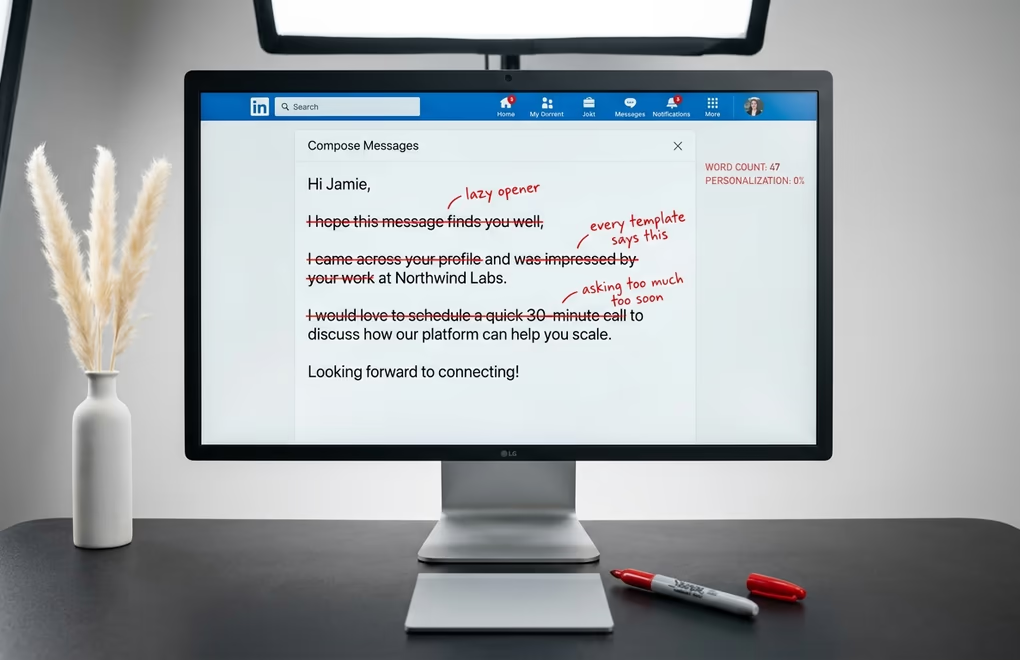
The first mistake is pitching in the opening message. The opening message exists to start a conversation, not to close a deal. Any sentence that asks for a 30-minute call, attaches a calendar link, or describes your offer in detail belongs in message three or four, never message one. Pitching early is the single fastest way to get archived, because it tells the recipient that you see them as a target rather than a peer, and that perception is impossible to recover from in the same thread.
The second mistake is using a voice that is not your own. AI tools are great at producing copy that sounds professional but generic, and that generic register is now itself a tell. Readers in 2026 can spot AI-generated outreach within the first sentence, and once they spot it, they assume the rest of the message is automated too. The fix is to write the way you actually talk. Use contractions. Use sentence fragments occasionally if that is how you write. Let your weird specific phrasing leak through, because that is what proves a human wrote the message. If you want to streamline drafting, train an AI tool on your own samples first using something like the voice training feature inside LinkedGrow, which lets you generate messages that sound like you rather than like a generic chatbot.
The third mistake is volume without targeting. Sending five hundred identical messages a week feels productive but quietly destroys your sender reputation when the inevitable spam reports start arriving. LinkedIn now adjusts the deliverability of your messages based on how previous recipients have engaged, which means that a wave of ignored messages today reduces the visibility of your messages tomorrow. A tighter list of 50 well-researched recipients almost always outperforms a sloppy list of 500, both in absolute replies and in long-term account health. The same logic underpins the social selling use case, where attention to the few beats noise at the many.
The fourth mistake is treating outreach as a separate channel from content. Recipients who have seen you publish thoughtful posts in their feed are far more likely to reply to a direct message because they already recognize your name and have some sense of what you stand for. Outreach without a content presence is asking strangers to vouch for you without any context. The fix is to run outreach alongside a consistent content cadence, which is exactly what personal branding on LinkedIn is supposed to produce. People reply to people they recognize, even faintly, and consistent content is the cheapest recognition you can buy.
The fifth mistake is ignoring the data. Most senders never review which templates got replies and which got ignored, which means they keep using whatever message felt clever at the time. The operators who improve their reply rates over a year are the ones who track every send, note the response, and rotate templates out of the playbook the moment they stop performing. You do not need fancy software for this. A spreadsheet with sender, recipient, template used, and response status is enough to surface patterns within a month, and the patterns are usually surprising. LinkedIn's own Sales Navigator messaging guidance covers some of the platform-specific best practices around InMail crediting and acceptance, which is worth reading if you spend any time inside that tool.
Frequently Asked Questions
Anywhere between 10 and 25 percent is considered solid for personalized LinkedIn outreach in 2026, with the top operators reaching 30 percent or higher when every message references a specific trigger from the recipient. Generic templates blasted at scale tend to sit closer to the 1 to 3 percent range and often get reported as spam.
The strongest LinkedIn outreach messages land between 60 and 150 words. That length gives you enough room for a specific opener, one clear reason for reaching out, and a frictionless question, without feeling like a pitch. Anything past 200 words usually gets skimmed, and anything under 30 words feels lazy unless you have a perfect anchor.
For most B2B outreach, a personalized connection request followed by a warm direct message after acceptance beats InMail on both cost and response rate. InMail makes sense when the prospect is out of network and your offer is genuinely senior or time-sensitive. For volume outreach to a fit ICP, connection requests are almost always the better route in 2026.
Two follow-ups is the sweet spot, spaced roughly four and ten days after the original message. A third follow-up is acceptable only if you have new context to add, like a piece of value or a relevant trigger. After that, the conversation is over. Pushing further damages your sender reputation and gets you reported.
LinkedIn actively detects and restricts third-party automation tools. The safest approach is human-paced outreach combined with software that drafts and personalizes messages rather than sending them on autopilot. Tools that operate inside the LinkedIn interface or scrape profiles at volume put your account at real risk of restriction or permanent ban.
The people you just read about are already on LinkedIn.
LinkedGrow runs an agent that finds the ones who match the customers you already have, sends the invitation in your words, and opens the conversation. You pick it up when somebody answers.
Build my agent free