

The difference between an SDR and a BDR comes down to which direction the leads flow. An SDR, a sales development representative, works the inbound side and qualifies the leads that marketing brings in. A BDR, a business development representative, works the outbound side and starts cold conversations with people who have never heard of you. Both hand qualified prospects to an account executive who closes, and at most companies under about fifty people the two titles describe the same job.
LinkedGrow is a lead generation platform for founders, freelancers, consultants, and small teams who want a steady flow of client conversations from LinkedIn without hiring a sales floor to get them. Its AI agents run the outbound prospecting and the first round of qualification that an SDR and a BDR would do, on your own account, so the roles this guide describes are ones you can staff, automate, or split between the two.
This guide covers what each role actually does day to day, the differences that matter when you structure a team, who earns more in 2026, where the account executive and the career path fit in, and how to decide whether to hire an SDR, a BDR, both, or an agent that runs the repetitive work for you. It's written for someone building a pipeline, not studying for a sales exam, so every section ends on a decision you can act on.
What does an SDR do, and what does a BDR do?
An SDR spends the day on leads that already raised a hand, while a BDR spends it creating demand from a cold start. The SDR follows up on demo requests, content downloads, and trial signups, checks each one against a fit list, and books the good ones onto an account executive's calendar. The BDR researches target accounts, writes cold email and LinkedIn messages, runs multi touch sequences, and turns a name on a list into a first conversation. The goal is the same, but the starting point is the opposite.

Works the warm leads marketing generates. Responds fast, qualifies against a checklist, and books meetings. Rewarded for speed and conversion, not for finding new names.
Builds the target list from nothing and reaches cold. Researches accounts, personalizes each touch, and absorbs a lot of silence. Rewarded for net new opportunities created.
The reporting line often follows the direction of the work. An SDR who lives off marketing leads sometimes reports into marketing, since the two are judged on the same funnel, while a BDR who owns cold outreach usually reports into sales. That's a tendency rather than a rule, and plenty of teams put both under one sales development manager. What rarely changes is the handoff, because whichever rep qualifies the prospect passes it to a closer once it clears the bar. If you want the outbound motion in detail, our guide to how to prospect on LinkedIn walks the BDR workflow step by step.
SDR vs BDR: which differences actually matter?
The differences that matter for building a team are lead source, the metric each is judged on, and the skill each role rewards. An SDR is measured on how many qualified meetings they convert from inbound and how fast they respond. A BDR is measured on net new opportunities created from outbound and the reply rate on cold sequences. Fast triage and product knowledge win for an SDR, while patient research and thick skin win for a BDR.

An SDR works marketing qualified leads that arrived warm. A BDR works cold accounts they sourced themselves.
An SDR replies through email, chat, and the phone. A BDR runs cold email, LinkedIn, and calls in a planned sequence.
An SDR is judged on meetings booked and lead response time. A BDR is judged on net new opportunities and cold reply rate.
An SDR frequently sits close to marketing. A BDR usually reports into sales, since outbound is a sales owned motion.
Read those four rows together and the practical takeaway is that these are two different temperaments, not two ranks. An SDR who thrives on a full inbound queue can stall when handed a blank prospecting list, and a BDR who enjoys the hunt can find inbound triage boring. Hiring for the wrong one is a common and expensive mistake, because the resume often reads the same while the day to day work does not. When you write the role, describe the actual motion, since that is what tells a candidate whether they'll last in the seat.
SDR vs BDR salary: who earns more in 2026?
A BDR usually earns a little more than an SDR in 2026, though the gap is small. Across US benchmarks, SDR base pay runs about $55,000 to $60,000 with on target earnings near $83,000 to $85,000, while BDR on target earnings sit around $83,000 to $90,000. Outbound is the harder pipeline motion, so it carries a larger variable component, and that lifts BDR pay by a few thousand dollars at the same company rather than by a full salary band.

The number that matters most is the one nobody prints on the offer letter. On target earnings assume the rep hits full quota, and most don't. The 2026 benchmarks put typical attainment between 60 and 80 percent of target, which means real take home for both roles usually lands under the headline OTE. A new rep also needs three to six months to ramp before they produce at full rate, so the first two quarters rarely resemble the projection either.
For a founder weighing the cost, base and OTE are only where the bill starts. A working rep also needs a prospecting tool, a data source, a dialer or sequencer, and a manager's time to coach them, and none of that produces a single meeting during the ramp. Add it up and one outbound rep can cost well over $100,000 in the first year before the pipeline justifies it, which is the math that pushes a lot of small teams to test outbound another way before they commit to a headcount.
Where do the account executive and the career path fit in?
The account executive, or AE, is the third role people mix up with the other two, and it's the one that closes. An SDR or a BDR qualifies a prospect and books the meeting, then hands it to an AE who runs the demo, handles objections, and signs the deal. That handoff is also the career ladder, since the standard path runs SDR or BDR first, then a move into an AE seat once a rep proves they can qualify well and hold a real conversation.

The ratio between the roles tells you how a team is built. One AE can only run so many live deals at once, so a growing team usually staffs several development reps for each closer, feeding a steady supply of qualified meetings up the chain. When that supply dries up, the AEs spend their day prospecting instead of closing, which is the most expensive way to fill a calendar. Keeping the top of the funnel full is the whole reason the SDR and BDR roles exist, and it's why the qualification step gets so much attention.
Qualification is where a development rep earns the promotion, since a meeting booked with a bad fit wastes the closer's time and quietly burns the rep's reputation inside the team. Learning to score a prospect against a real fit list, rather than booking anyone who answers, is the skill that separates a rep who moves up from one who churns. Our guide to lead qualification covers the frameworks and the scoring thresholds both roles lean on.
Should you hire an SDR, a BDR, or both first?
Hire the role that matches where your leads come from. If marketing already sends you more inbound than your closers can work, an SDR pays for itself first by qualifying that flow before it goes cold. If you have a clear picture of who you sell to but almost no inbound, a BDR who can prospect cold is the one to hire first. Most small companies need the outbound motion long before they need a dedicated inbound qualifier, simply because they don't yet generate enough inbound to keep one busy.
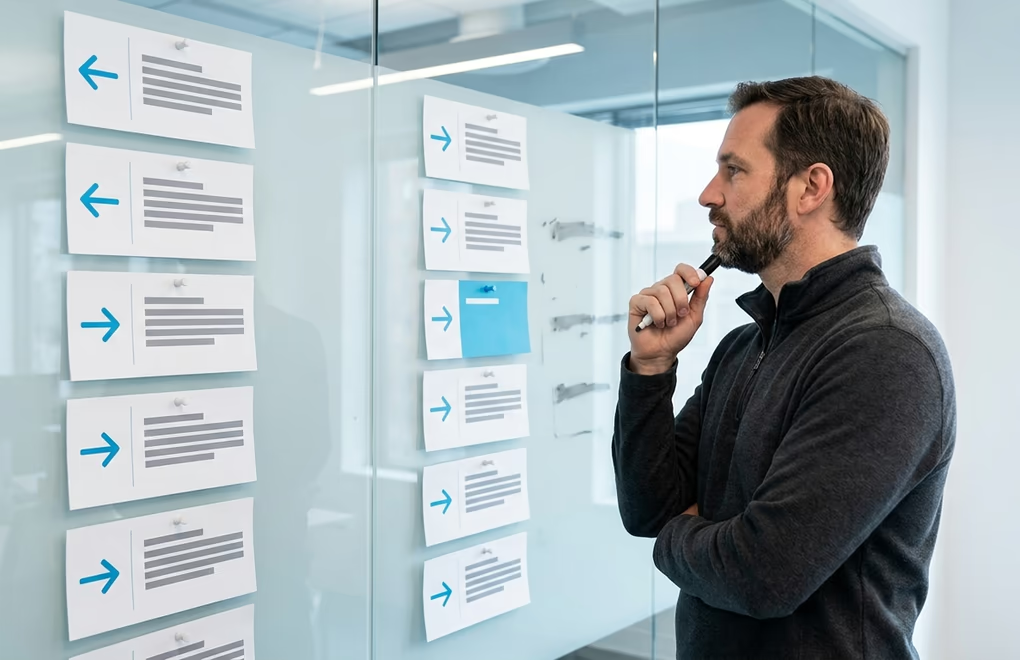
Hiring both at once only makes sense once two conditions hold together. You need enough marketing spend to produce a steady inbound queue, and a defined list of target accounts worth chasing cold, at the same time. Below that point, one rep splitting their week between inbound and outbound does neither well, and the honest move is to pick the motion that fits your pipeline today and staff the other later. A company with a strong product and quiet marketing is an outbound problem, and a company drowning in demo requests is an inbound one.
There's a third answer that suits founders and small teams, which is to not hire either yet and automate the outbound motion instead. The searching, the scoring, and the first message are the repeatable steps that eat a BDR's day, and a tool can carry them at a fraction of the cost of a headcount while you learn what actually converts. Once the pipeline is predictable enough to justify a salary, you hire with real data on what works. The next section walks through where an agent fits and where a person still has to step in. If you're deciding how the whole funnel connects, our guide to building a sales pipeline maps the stages these roles feed.
Can an AI agent do the SDR and BDR work instead?
An AI agent can run the repetitive outbound work an SDR and a BDR do, though not the closing an AE handles. The searching, the fit scoring, the first draft of each message, and the follow up until someone replies are all repeatable steps a tool does well. Judgment on a warm reply and the actual sales conversation still need a person, so an agent behaves like a tireless prospecting rep rather than a full sales hire.
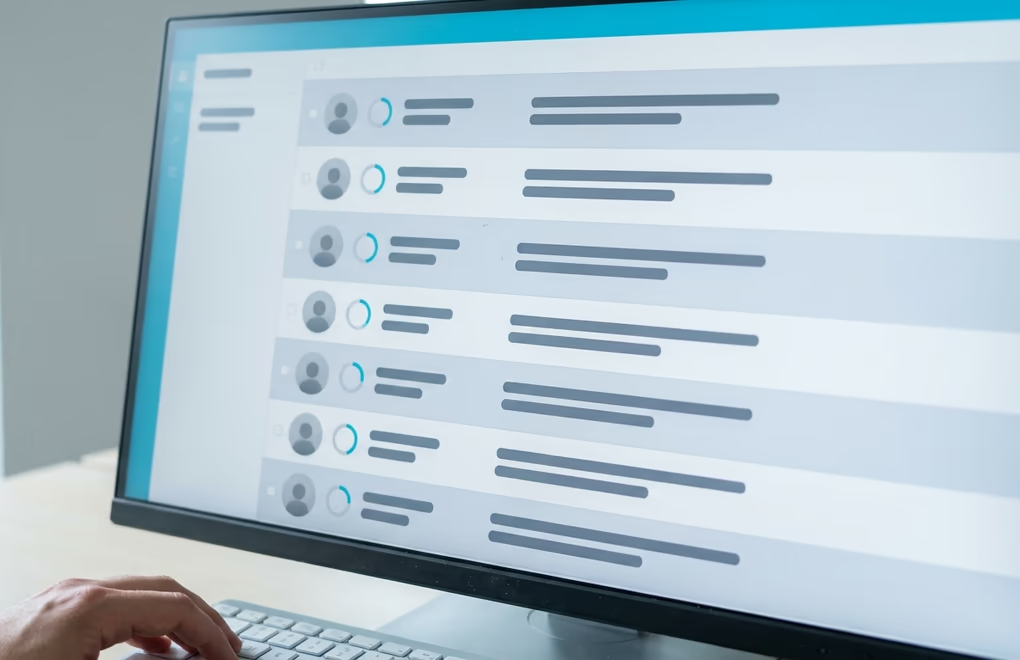
LinkedGrow runs this on LinkedIn, on your own account. You paste your website and the agent reads what you sell, then proposes the buyer, the roles, the industries, and the company sizes that describe your ideal customer. You correct it, and from then on every prospect it finds is scored against that profile through ICP scoring, so weak matches never reach you. Each scored lead links back to the post or comment that surfaced them, the agent drafts a message from that context rather than from a job title, sends at a human pace, and hands you the conversation the moment a reply is worth your time.
The cost gap is what makes this worth a look before a hire. An outbound rep runs well past $80,000 a year in on target earnings alone, while an AI SDR on the LinkedGrow Pro plan is $59 a month, or $89 a month on Business for a team running several accounts, with the option to add another AI BDR agent as you grow. That won't close your deals for you, and it isn't meant to. It keeps the top of the funnel full while you spend your time on the replies that matter. Every plan starts with a 7 day trial you can cancel any time before day 7, and you can book a demo to watch it work on your own account before you decide.
How to decide SDR vs BDR for your own team
The SDR and BDR debate is really a question about your pipeline, not about two job titles. An SDR turns the inbound you already earn into booked meetings, a BDR manufactures pipeline from cold accounts, and an AE closes whatever either one qualifies. Decide which of those motions is your actual bottleneck this quarter, and the right first hire, or the decision to automate instead, becomes obvious.
Start by counting the demand you already have. If you have more inbound than your closers can work, an SDR is your answer, and if you have a product people want but a quiet inbox, the outbound motion is what you're missing. Either way, the repetitive searching and messaging underneath both roles is the work you can hand to a tool first, so you learn what converts before you commit to a salary. Once those first replies start landing, our guide to prospecting on LinkedIn picks up the rest of the outbound playbook.
Frequently asked questions about SDR vs BDR
The difference comes down to which direction the leads flow. An SDR, a sales development representative, works inbound and qualifies the leads that marketing brings in. A BDR, a business development representative, works outbound and starts cold conversations with people who have never heard of you. Both qualify prospects and book meetings for an account executive who closes, so the goal is identical and only the starting point changes. At most companies under fifty employees the two titles describe the same job, and the split only becomes real once inbound and outbound each need a dedicated owner.
No, they sit at the same level. Both are entry roles that qualify prospects and hand them to a closer, and neither manages the other. The small pay gap that sometimes favors a BDR reflects the harder outbound motion, not a more senior title. Where companies do separate the two, a BDR is often given a slightly more strategic brief around new markets and target accounts, but on the org chart an SDR and a BDR report to the same manager and share the same path upward toward an account executive seat.
A BDR usually earns slightly more, though the gap is small. US SDR base pay in 2026 runs about $55,000 to $60,000 with on target earnings near $83,000 to $85,000, while BDR on target earnings sit around $83,000 to $90,000. Outbound prospecting is the harder pipeline motion, so it carries a larger variable component, which lifts BDR earnings by a few thousand dollars at the same company. On target earnings assume full quota, and since most reps land between 60 and 80 percent of target, real take home for both roles usually comes in under the offer letter number.
The SDR and the BDR fill the top of the funnel, and the AE closes the bottom of it. An SDR qualifies inbound leads, a BDR creates outbound opportunities, and both book meetings for an account executive who runs the demo, handles objections, and signs the deal. It is also the career ladder, since the common path runs SDR or BDR first, then a promotion into an AE seat once a rep proves they can qualify and hold a conversation. A company typically staffs several development reps for every AE, because one closer can only work so many live deals at once.
An AI agent can run the repetitive outbound work an SDR and a BDR do, but not the closing an AE handles. The searching, the fit scoring, the first draft of each message, and the follow up until someone replies are repeatable steps a tool does well. LinkedGrow does exactly that on LinkedIn: it builds your ideal customer profile from your website, scores every prospect it finds, writes each message from what that person actually posted, and sends at a human pace from your own account, then hands you the warm replies. Judgment on those replies and the sales conversation itself still need a person, so the agent is closer to a tireless prospecting rep than a full sales hire.
The people you just read about are already on LinkedIn.
LinkedGrow runs an agent that finds the ones who match the customers you already have, sends the invitation in your words, and opens the conversation. You pick it up when somebody answers.
Build my agent free