

A sales cadence is the planned sequence of touches you use to reach a prospect: which channels you send on, in what order, and how many days apart, until they reply or you stop. A good one runs 6 to 8 touches across 2 to 3 weeks and mixes channels so no single message has to carry the whole conversation. The reason it works is plain math from The Brevet Group's widely cited numbers, which put about 80% of sales at five or more follow ups while 44% of reps give up after the first.
LinkedGrow is a lead generation platform for founders, freelancers, consultants, and small teams who want a steady flow of client conversations from LinkedIn. Its AI agents run a sales cadence for you on your own account, so the sequence this guide describes is one you can build by hand and follow yourself, or hand to an agent that sends every touch at a human pace. Either way the thinking is the same, and it's more thought than most reps give the problem before they fire off one message and call it outreach.
This guide covers what a sales cadence actually is, why a sequence beats a single message, how many touches to send and over how long, the steps to build one from scratch, a day by day cadence built for LinkedIn rather than the phone, and how buying signals and AI change the way a modern cadence runs. It's written for someone trying to book more conversations this month, so every section ends on something you can put to work.
What is a sales cadence?
A sales cadence is a repeatable schedule of outreach touches aimed at one prospect, built from three decisions: the channels you use, the order you use them in, and the days between each touch. A touch is any single contact, whether an email, a LinkedIn message, a comment on someone's post, a phone call, or a voicemail. The cadence is the whole run of those touches, from the first hello to the last follow up, designed once and then followed the same way for every lead who fits the same profile.
People trip over the words more than the idea. A sales cadence and a sales sequence mean almost the same thing, a planned series of touches over time. When teams do split them, cadence names the rhythm you design on paper and sequence names the automated version of that plan running inside a tool, while a workflow is the wider term for any automated series of steps. The labels matter far less than the discipline, since the value comes from deciding the touches in advance instead of contacting a prospect whenever you happen to think of them.
The channels you pick define the whole feel of the cadence. A traditional outbound rep leans on cold email and the phone, with LinkedIn as a light touch in between. Someone selling a service to founders often does the reverse, running most of the cadence on LinkedIn where their buyer already reads, and treating email as backup. Neither is wrong, and what matters is choosing the channels your buyer actually answers on, then spacing the touches so the sequence feels like a person following up, not a machine checking a box.
Why does a sales cadence get more replies than one message?
A sales cadence gets more replies because most buyers never answer the first touch, and a single message has no plan for the silence that follows. Timing is the real reason it works. Your message lands on a day the prospect is busy, or traveling, or simply not thinking about the problem you solve, and a good reason to buy from you is worth nothing if it arrives at the wrong hour. A cadence keeps showing up over 2 to 3 weeks until one of those touches finally catches the prospect on a day they can act.
There's also a trust reason underneath the timing one. A prospect who sees a single message from a stranger has no reason to believe you'll still be around next month, but a prospect who watches you follow up politely a few times, add something useful each time, and never turn pushy, starts to read you as someone who does what they say. That's why the follow ups in a cadence carry as much weight as the opener. Each one is a small proof that you're consistent, which is exactly the quality someone is testing for before they hand you their business.
Most reps sink the whole effort by quitting on the wrong side of that math. If it takes five or more touches to reach a buyer and you send two, you've done the hard work of finding and messaging the prospect, then walked away right before the sequence was about to pay off. A written cadence removes the decision entirely, because the next touch is already scheduled and you don't get to talk yourself out of it on a slow afternoon. Our guide to cold outreach goes deeper on writing touches people actually answer.
How many touches should a sales cadence have, and over how long?
A cold sales cadence usually runs 6 to 8 touches across 2 to 3 weeks, with 2 to 4 days between each touch. Inbound leads who already asked for something can take a few more touches and a faster pace, because the interest is fresh and they expect to hear back, so those cadences often pack the same number of touches into 10 to 15 days. The spacing is the number people get wrong most, so it's worth setting on purpose rather than reaching out whenever guilt reminds you a lead exists.
Both ends of the spacing dial cost you replies. Leave a full week between touches and the prospect forgets the earlier ones, so every message reads like a cold open and the sequence never builds. Stack 3 touches into 2 days and you flip from present to pushy, which gets you muted or reported rather than answered. A touch every 2 to 4 days keeps a sales cadence warm without crowding, and it gives your earlier messages time to be seen before the next one arrives.
Timing within the day is the detail the big playbooks skip, and it's worth a moment. Weekday mornings in the prospect's own time zone tend to beat late afternoons, because a message read before the day gets away has a chance of a reply while one read at 6pm gets archived. On LinkedIn, a touch that goes out while your prospect is already active, just after they've posted or commented, sits at the top of a warm feed rather than the bottom of a cold inbox. The exact hour matters less than the principle: send when your buyer is likely at their desk, not when it's convenient for you to clear the task.
How do you build a sales cadence step by step?
You build a sales cadence in five decisions, made once and reused for every prospect who fits the same profile: who you're targeting, which channels to use, the timing between touches, what each message says, and how you'll measure and adjust it. Skip any of the five and the cadence leaks, because a great message on the wrong channel or a perfect sequence aimed at the wrong person both end in silence. Here is what each decision actually involves.

Write down the exact buyer this cadence is for, by role, company size, and the problem they have. A cadence built for one clear person always beats one written for everybody.
Pick the two or three places your buyer actually answers. For most founders and consultants that's LinkedIn first, with email as the backup, and the phone only if you have a number.
Lay 6 to 8 touches across 2 to 3 weeks, a touch every few days. Write the day of each one now, so following up never depends on you remembering to.
Give every touch its own job and its own angle, never a copy of the last one. Open with their context, add something useful in the middle, and close each with one easy question.
The fifth decision is the one that keeps the cadence alive: measure it and adjust. Track how many prospects reply and how many book a call, not how many messages you sent, because activity feels like progress without being it. When a cadence pulls a solid reply rate, keep it and run more prospects through it. When it goes quiet, change the opener or the channel before you change the whole thing, since one weak first touch can sink a sequence that's otherwise sound. If your replies keep stalling at the qualifying stage, our guide to lead qualification shows how to score a prospect before you spend a cadence on them.
What does a LinkedIn sales cadence look like?
A LinkedIn sales cadence replaces the cold email and phone touches of a classic sequence with warm signals on the platform your buyer already uses: viewing a profile, engaging with a post, sending a connection request, then messaging once you're connected. It works well for founders, freelancers, consultants, and agencies, because their buyers spend real time on LinkedIn and a message there feels less like an intrusion than a cold email to a work inbox. Here is a 7 touch version that runs over about 2 weeks.
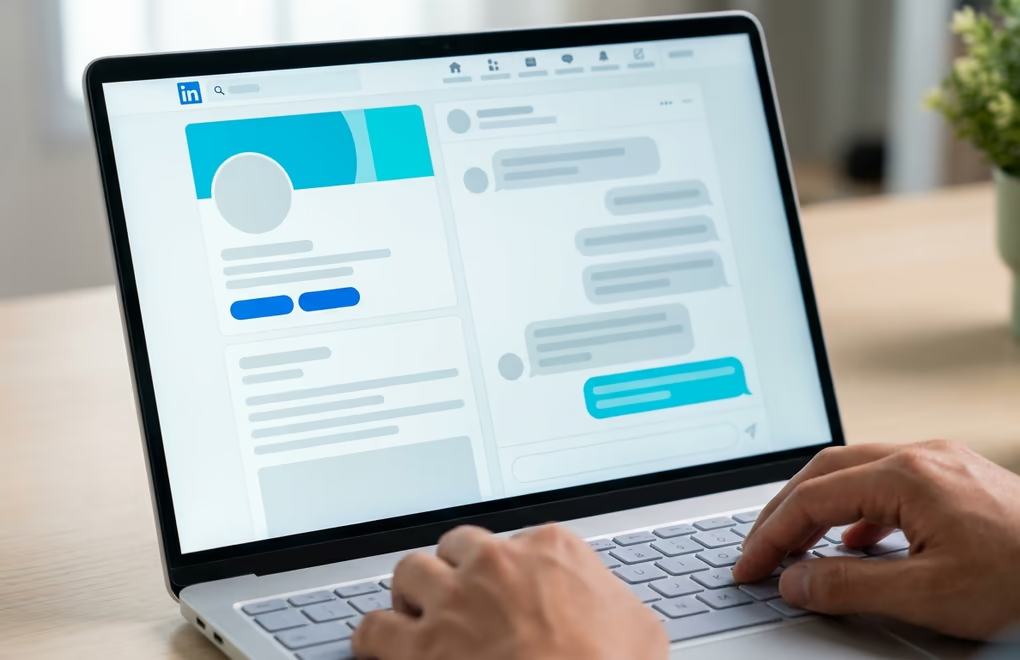
View their profile so your name shows up, then leave a genuine comment on a recent post, with no pitch. You're just becoming a familiar face before you ever ask for anything.
Send a connection request with a short note that references what they posted, not what you sell. A request tied to their own words gets accepted far more often than a blank one.
Once they accept, open a real conversation about the problem they hinted at, and ask one easy question. Still no pitch, because the goal here is a reply, not a sale.
If they replied, keep it going. If they didn't, send something useful with no ask, a relevant example or a short resource, so the follow up gives before it takes.
Now name what you do, tied to their situation, and offer a short call if it's useful. By now you've earned the right to ask, because you've shown up 4 times without pushing.
If it's still quiet, send a short break up note that leaves the door open. A graceful close often earns the reply that four follow ups didn't, and it protects the relationship either way.
Two rules keep a LinkedIn cadence from reading as automation. Every touch has to reference the prospect, not a template, so the comment, the connection note, and the first message all point at something they actually said or did. And the pace has to look human, which means a handful of these sequences at a time rather than hundreds of identical requests in an hour, the pattern LinkedIn is quickest to flag. For the exact wording of each touch, our LinkedIn outreach message templates give you openers you can adapt, and the wider guide to prospecting on LinkedIn covers how to find the right people to run this on.
How do buying signals and AI change your sales cadence?
Buying signals change the trigger for a sales cadence from a name on a list to a moment of real interest, and that timing is what lifts the reply rate. A buying signal is any action that hints a prospect is thinking about your problem right now: a post complaining about the thing you fix, a new role that comes with a fresh budget, a comment on a competitor, or an event they just attended. Starting a cadence in the hours after a signal, instead of on a random Tuesday, means your first touch lands while the problem is already on their mind.
Watching for those signals across hundreds of prospects is exactly the work that used to be impossible by hand, and it's where AI now runs the cadence for you. LinkedGrow's agents read your website to learn who you sell to, watch for buying signals on LinkedIn, and start a sequence from your own account when someone fits and shows interest. Each message is drafted from what that person actually posted rather than a job title, every touch goes out at a human pace, and the sequence pauses the second someone replies so the conversation reaches you warm instead of raw.
Handing the cadence to an agent frees you for the decisions that need judgment. Sending each touch on schedule and following up until someone answers is repeatable work, so a tool carries it tirelessly while you spend your time only on the replies worth a conversation. An AI SDR on the LinkedGrow Pro plan runs for $59 a month, well under the cost of a rep doing the same repetitive work, and every plan starts with a 7 day trial you can cancel any time before day 7. You can also book a demo to watch a cadence run on your own account before you commit.
Turn your sales cadence into booked meetings
A sales cadence is only ever as good as the discipline behind it, and the whole point of writing one down is to take the discipline out of your hands on the days you don't feel like following up. Decide the channels your buyer answers on, lay 6 to 8 touches across 2 to 3 weeks, give each message its own job, and then run the same sequence for every prospect who fits, so a lead is never dropped because you forgot they existed. That alone puts you ahead of the many reps who quit after two touches.
From there, two things lift your reply rate: better triggers and steadier follow through. Start your cadence on a real buying signal rather than a cold name, and never let a sequence stall before the fifth touch, where most replies come from. Whether you run that by hand or hand it to an agent, the sequence is what turns scattered outreach into a pipeline you can count on. When you're ready to connect the whole funnel, our guide to building a sales pipeline maps the stages a cadence feeds.
Frequently asked questions about sales cadences
A sales cadence is a repeatable schedule of outreach touches aimed at one prospect, built from three decisions: which channels you use, the order you use them in, and the number of days between each touch. A touch is any single contact, whether that's an email, a LinkedIn message, a comment on someone's post, a phone call, or a voicemail. The cadence is the whole run of those touches from the first hello to the last follow up, so the point is that nothing is left to when you happen to remember a prospect. You decide the sequence once, then follow it for every lead who fits the same profile.
Most cold sales cadences land between 6 and 8 touchpoints, and inbound leads who already raised a hand can take a few more because they expect to hear from you. The number matters less than the persistence behind it, since The Brevet Group's widely cited figures put roughly 80% of sales at five or more follow ups while 44% of reps stop after the first. Fewer than 5 touches and you quit before most buyers were ever going to answer. More than about 12 and you're usually annoying the ones who were never going to reply anyway, so a tight sequence of well spaced touches beats a long one.
A cold sales cadence usually runs 2 to 3 weeks from the first touch to the break up message, with 2 to 4 days between each touch so you stay present without crowding the inbox. Inbound leads move faster because the interest is fresh, so those cadences compress the same number of touches into 10 to 15 days. The trap at both ends is real. Space the touches a full week apart and the prospect forgets who you are between them, but stack 3 touches in 2 days and you read as desperate. A steady rhythm of a touch every couple of days is what keeps a sales cadence warm.
In everyday use a sales cadence and a sales sequence mean the same thing, a planned series of outreach touches over time. Where teams draw a line, cadence describes the rhythm and timing you design on paper, while sequence often names the automated version of that plan running inside a tool. A workflow is the wider term for any automated series of steps, of which an outreach sequence is one kind. Don't get stuck on the labels. Whether you call it a cadence or a sequence, the work is the same: decide the channels, the order, and the spacing, then run it the same way for every prospect who fits.
Yes, an AI agent can run the repetitive half of a sales cadence, which is the sending, the spacing, and the follow up until someone replies. LinkedGrow does this on LinkedIn from your own account: it finds prospects who match your ideal customer, drafts each message from what that person actually posted, sends every touch at a human pace, and pauses the sequence the moment someone answers so you can take the conversation from there. What it doesn't do is judge a warm reply or hold the sales conversation, because those still need you. So the agent runs the cadence, and you run the relationships it surfaces.
The people you just read about are already on LinkedIn.
LinkedGrow runs an agent that finds the ones who match the customers you already have, sends the invitation in your words, and opens the conversation. You pick it up when somebody answers.
Build my agent free