Most real estate agents pour their marketing energy into Instagram reels and Facebook groups while ignoring the one platform where their highest-value clients actually make business decisions. A LinkedIn marketing strategy for real estate agents that works doesn't look anything like what you're doing on other social platforms, and that's precisely why so few agents have figured it out yet. The professionals browsing LinkedIn aren't scrolling past vacation photos between cat videos - they're in business mode, thinking about career moves, relocations, investments, and the kind of life decisions that involve buying or selling property. When I started building LinkedGrow, real estate agents were among the first users who told me they knew LinkedIn mattered but had no idea what to actually post there.
The numbers tell a compelling story about why LinkedIn deserves your attention. LinkedIn's visitor-to-lead conversion rate runs roughly three times higher than Facebook's for professional services, and the audience skews dramatically toward higher income brackets and decision-making roles. Real estate millionaires use LinkedIn at far higher rates than any other social platform, which means the buyers and sellers you most want to reach are already there waiting for someone to earn their trust. The problem is that fewer than half of real estate agents actively use the platform, which creates an enormous opportunity for agents willing to show up consistently with content that actually helps people.
This guide covers everything you need to build a LinkedIn presence that attracts buyers, sellers, and referral partners without spending hours every week creating content. You'll learn why LinkedIn outperforms other platforms for real estate professionals, the specific content types that position you as the go-to local expert, how to optimize your profile so it converts visitors into conversations, the referral network strategy that most agents completely overlook, and how to use AI tools to create market update posts in minutes instead of hours. Whether you're a solo agent building your personal brand or part of a brokerage looking to stand out in a crowded market, this playbook gives you a clear path from LinkedIn lurker to local authority.
Why is LinkedIn the most underutilized platform in real estate?
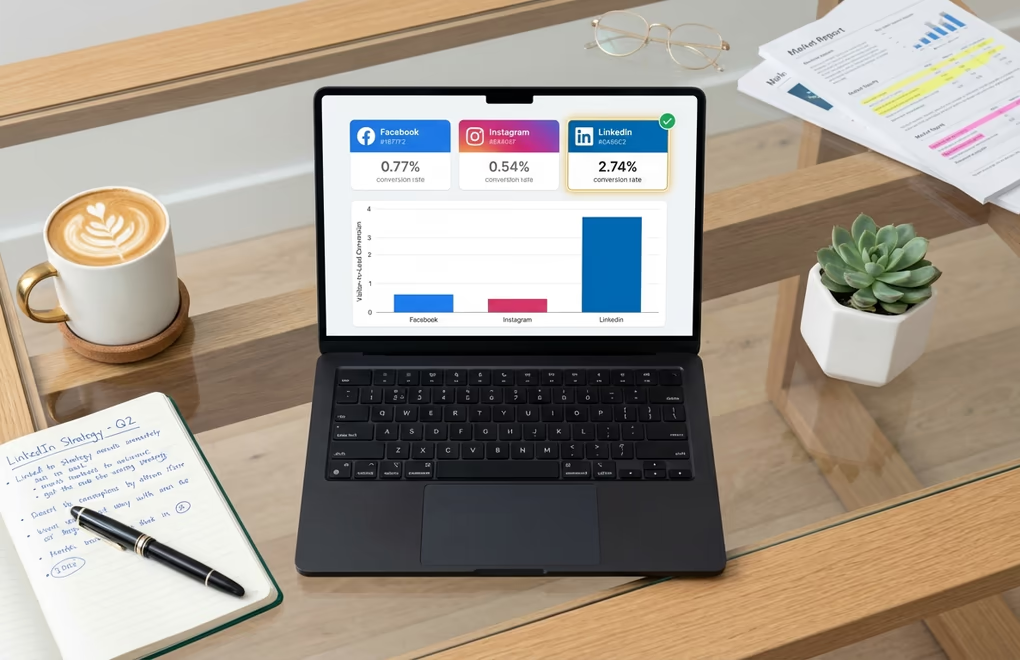
Walk into any real estate office and ask agents which social platforms they use for marketing. Nine out of ten will mention Facebook and Instagram first, maybe TikTok if they're under forty. LinkedIn barely registers as an afterthought, which is remarkable given that it's the single platform where people expect to encounter business content and actually engage with it seriously. On Instagram, your beautifully staged listing photo competes with travel influencers and food bloggers for three seconds of attention from someone lying on their couch. On LinkedIn, a thoughtful post about local market trends lands in front of professionals who are actively thinking about their careers, their finances, and yes, where they want to live next.
The audience composition difference is what makes LinkedIn so valuable for real estate, and it's something most agents never think about carefully enough. LinkedIn's user base is overwhelmingly composed of professionals with college degrees, management-level positions, and household incomes that put them squarely in the home-buying demographic. These aren't people casually browsing for entertainment - they're decision-makers who read your content through the lens of "is this person someone I'd trust with a major financial transaction?" That professional evaluation mindset is exactly the context you want your marketing to appear in, and no amount of Instagram polish can replicate it because the fundamental intent of the user on each platform is completely different.
There's also a practical reality that makes LinkedIn uniquely powerful for lead generation in real estate: people use LinkedIn when they're going through professional transitions, and professional transitions almost always involve housing decisions. Someone who just accepted a VP role at a company across the country needs to sell their current home and buy a new one, and that transition starts playing out on LinkedIn long before they ever search Zillow. The executive who posts about their new position, the family relocating for a career opportunity, the entrepreneur who just closed a funding round and wants to upgrade their living situation - all of these signals are visible on LinkedIn to agents who know where to look and how to position themselves as the obvious choice when the housing conversation begins. An AI sales agent can watch for those signals across your market and open the conversation the moment one appears, so a promotion or a company move does not scroll past before you ever notice it.
The competitive landscape makes the opportunity even more attractive. Because so few agents invest in LinkedIn seriously, the bar for standing out is remarkably low compared to Instagram where every agent in your zip code is posting professionally photographed listings with drone shots and sunset lighting. On LinkedIn, simply showing up twice a week with a well-written market insight post puts you ahead of the vast majority of agents in your market. The LinkedIn algorithm in 2026 actively rewards original knowledge-sharing content, and real estate agents who share genuine local expertise are exactly the kind of creators the platform wants to amplify.
What content attracts buyers, sellers, and referral partners?
The biggest mistake real estate agents make on LinkedIn is treating it like a listing aggregator. Posting "Just listed! Beautiful 4BR/3BA in Oak Park" with a photo carousel might work on Facebook where your audience includes family friends and past clients, but on LinkedIn it reads as advertising in a space where people come for insight and conversation. The content that actually performs on this platform is the content that teaches something, shares a perspective, or tells a story that professionals can relate to regardless of whether they're currently in the market for a home. That shift in approach is what separates agents who use LinkedIn effectively from agents who post listings to crickets and conclude the platform doesn't work.
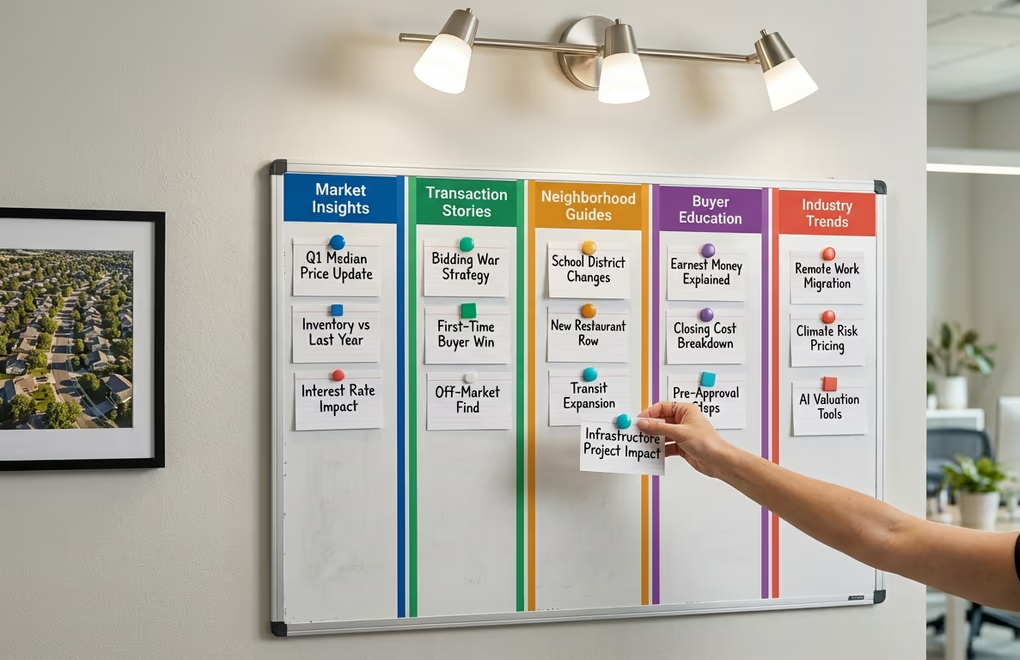
Market insight posts are your bread and butter on LinkedIn, and they're easier to create than most agents realize. Take the data you already track for your day-to-day work - median sale prices, days on market, inventory levels, price-per-square-foot trends - and turn it into a short narrative that helps people understand what's happening in your local market. A post that says "Homes in the Riverside neighborhood are sitting 40% longer than they were six months ago, and here's what that means for buyers who've been waiting on the sidelines" delivers genuine value to anyone connected to that area. HR managers read it and think of you when their company relocates someone. Financial advisors see it and mention your name to clients asking about real estate investments. The ripple effect of one well-crafted market update is far more powerful than any listing post could ever be.
Transaction story posts are another content pillar that resonates deeply on LinkedIn, as long as you focus on the lesson rather than the brag. Instead of "Congratulations to my clients on their new home!" try sharing the strategy behind a difficult negotiation, the creative solution you used to solve a problem that almost killed a deal, or the market insight that helped a buyer make a confident decision in a competitive situation. These posts work because they demonstrate your expertise through narrative rather than claims, and professionals on LinkedIn are naturally drawn to stories about problem-solving and strategic thinking. Keep names and addresses private of course, but the details of what you did and why you did it are what make people think "I want this agent in my corner when I'm ready to move."
Neighborhood deep-dive content positions you as someone who doesn't just sell houses but genuinely understands communities. Write about the new restaurant district emerging in a once-overlooked part of town, the school district changes that are about to shift property values, or the infrastructure project that's going to transform commute times for an entire suburb. This type of content attracts a completely different audience than listing posts - it pulls in urban planners, local business owners, HR professionals handling relocations, and investors evaluating opportunities. Each of these people represents a potential client or referral source, and they found you because you provided local knowledge they couldn't get from Zillow or Redfin.
First-time buyer education posts round out your content mix by addressing the questions that professionals in your network are quietly asking themselves but don't want to admit they don't know. How earnest money works, what a pre-approval actually involves, the true cost breakdown of closing, how to evaluate whether renting or buying makes more financial sense at current rates - these evergreen topics attract engagement from people at every career stage. A thirty-year-old product manager who just got promoted might not be ready to buy for another year, but if your post about navigating a competitive offer situation was the thing that finally made them understand the process, you're the agent they'll reach out to when the time comes. Using a tool like LinkedGrow's AI post generator trained on your voice can turn these educational topics into polished posts in minutes, which means you can consistently publish this type of content without it consuming your entire morning.
A practical weekly posting framework makes the whole content strategy executable rather than aspirational. Aim for 3 posts per week on this rotation: Monday is your market insight day (share a local stat, price shift, or inventory change with context on what it means for buyers or sellers), Wednesday is your story or lesson day (a transaction win, a negotiation lesson, or a behind-the-scenes moment that humanizes your expertise), and Friday is your education or engagement day (a first-time-buyer tip, a poll about neighborhood preferences, or a hot take on a local development that invites comments). This rotation ensures you never run out of topics because you're cycling through formats rather than trying to invent something new each time, and it gives your audience a predictable rhythm that builds anticipation. Agents who follow a rotation like this using a content calendar report that content creation drops from hours of deliberation to minutes of execution each week.
How do you position yourself as the local market expert?

Every agent claims to know their market. Very few demonstrate it publicly in a way that actually convinces anyone, and the gap between claiming expertise and proving it is where LinkedIn gives you an unfair advantage. When you consistently publish content that reveals genuine local knowledge - the kind of detail that only comes from working the streets, attending city council meetings, and studying transaction data week after week - you create a body of evidence that no competitor can fabricate overnight. Your profile becomes a living portfolio of market intelligence that speaks louder than any tagline about being the "neighborhood expert."
The profile itself is where this positioning starts, and most agents waste the opportunity completely. Your LinkedIn headline shouldn't just say "Real Estate Agent at Keller Williams" - it should communicate your specific value proposition and geographic focus in a way that makes someone want to learn more. Something like "Helping Austin families find their next home | 12 years of Central Texas market expertise" immediately tells a visitor what you do, who you serve, and why you're credible. Your banner image should reinforce the local positioning too, whether that's a professional shot of your market area's skyline, a collage of properties you've sold, or a branded graphic that highlights your specialization. Profiles with professional photos get viewed roughly seven times more often than those without one, so invest in headshots that communicate warmth and professionalism rather than using a cropped photo from your cousin's wedding.
Your About section is where you convert profile visitors into conversations, and it should read like a conversation rather than a resume. Open with a sentence about who you help and the transformation you create for them, then weave in your track record with specific numbers that demonstrate results. "I've helped 200+ families navigate the Denver metro market over the past decade, specializing in the neighborhoods between Capitol Hill and Cherry Creek where I've personally closed more transactions than any other individual agent" is infinitely more compelling than listing your certifications and designations. Include a clear call to action at the end - whether that's an invitation to connect, a link to your market reports, or simply your phone number for anyone who wants to talk about their housing plans.
Beyond the static profile elements, your content consistency is what solidifies the personal brand positioning over time. LinkedIn's algorithm now evaluates what it calls "topical authority" - meaning it categorizes creators based on what they consistently post about and rewards those who stick to their lane with broader distribution within that topic. An agent who publishes two market insight posts every week for six months builds a topical authority signal that tells LinkedIn "this person is a credible voice on real estate in this area," which means your posts start reaching people beyond your direct network who are interested in real estate topics. That algorithmic recognition is something you earn through consistency rather than purchase through ads, and once you have it, every new post benefits from the reputation you've built with previous ones.
Recommendations from past clients bring the whole positioning together by adding third-party validation that you can't create yourself. Ask your best clients to write LinkedIn recommendations that tell specific stories about results rather than generic praise. "Sarah helped us sell our home in twelve days for five percent over asking during a slow market" carries infinitely more weight than "Sarah is a wonderful agent and I highly recommend her." Aim for recommendations that mention your local knowledge, your negotiation skills, or the way you guided them through a complex situation, because those specific narratives reinforce everything your content already communicates about your expertise.
How do you build a referral network most agents overlook?
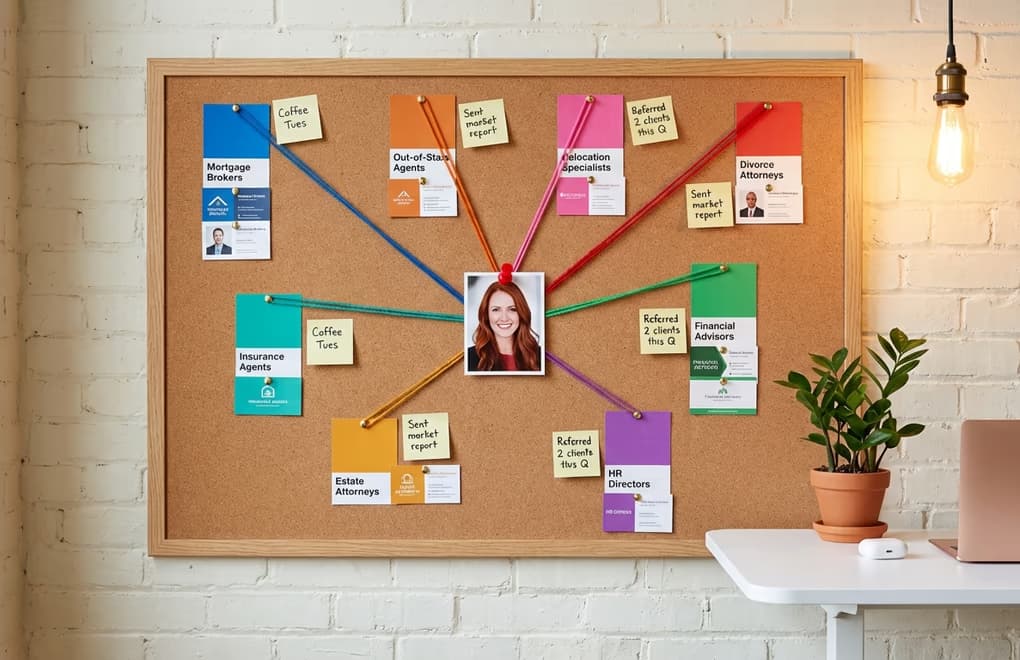
Here's the insight that transforms LinkedIn from "another social media platform" into a genuine business development engine for real estate: the most valuable people on LinkedIn for an agent aren't buyers and sellers - they're the professionals who influence where buyers and sellers go. Mortgage brokers, divorce attorneys, estate planning lawyers, financial advisors, HR directors at major employers, corporate relocation specialists, and even other real estate agents in different markets are all sitting on LinkedIn, and each one of them represents a potential stream of referrals that could sustain your business for years. Most agents focus exclusively on finding the next individual client when they should be building relationships with the people who can send them ten clients over the next decade.
HR managers and corporate relocation coordinators are particularly valuable connections that most agents never think to pursue. Large employers constantly transfer executives between offices, and someone in HR always knows about these moves months before the employee starts searching for housing. If you've built a genuine relationship with the HR director at a regional hospital, a growing tech company, or a manufacturing firm, you become the agent they recommend to every relocating employee. The way you build that relationship on LinkedIn is the same way you build any professional relationship - by being genuinely helpful before you ever ask for anything in return. Comment thoughtfully on their posts, share content that's relevant to their work, and when you do connect directly, lead with value rather than a pitch.
Financial advisors represent another referral channel that most agents ignore entirely, even though the connection is obvious once you think about it. When a financial advisor's client asks about real estate as an investment, or when they're restructuring someone's portfolio and real estate equity comes into the conversation, that advisor needs a trusted agent to refer to. If your LinkedIn content has been demonstrating your market expertise and investment knowledge for months, you're the natural recommendation. The same logic applies to divorce attorneys who need to advise clients on property valuations and sales, estate lawyers handling property dispositions, and insurance agents whose clients are buying or selling homes.
Building these relationships on LinkedIn follows a specific pattern that works much better than randomly sending connection requests with "I'd love to connect!" messages. Start by identifying twenty to thirty professionals in complementary fields within your market area using LinkedIn's search filters. Follow them first and engage genuinely with their content for two to three weeks before sending a connection request, so when you do reach out, your name is already familiar. Your connection message should reference something specific from their content and offer to be a resource rather than asking for referrals. Once connected, maintain the relationship by consistently engaging with their posts and occasionally sharing content that's directly relevant to their expertise - a mortgage rate analysis post that a mortgage broker would find valuable, or a market trend piece that a financial advisor could share with their own clients. A LinkedIn outreach tool runs that same sequence for you, pacing the follow and the connection note so twenty or thirty of these relationships move forward at once instead of one at a time.
Other real estate agents in different geographic markets are a referral source that produces some of the highest-quality leads in the industry. When an agent in Chicago has a client relocating to your market in Dallas, they need someone they trust to handle the receiving end. Agents who are visible on LinkedIn with strong local content naturally attract these cross-market referral opportunities because the referring agent can look at your profile and immediately confirm that you know the market, you have a track record, and you present professionally. Some of my most productive professional relationships started with a simple LinkedIn comment on another agent's post in a different state, and those connections have generated referrals in both directions for years.
How do you use AI to create market update posts faster?
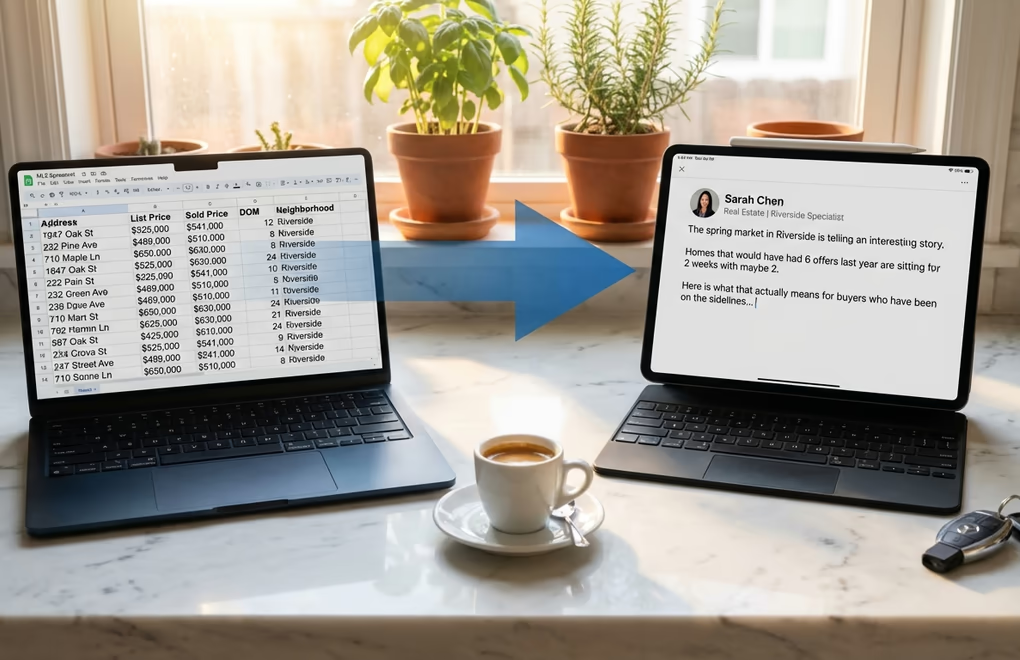
The number one reason real estate agents abandon LinkedIn after a few weeks is always the same: they don't have time to write quality posts while also prospecting, showing properties, negotiating deals, and managing transactions. That objection was valid three years ago when creating a market insight post meant sitting in front of a blank screen for forty-five minutes trying to sound intelligent. In 2026, it's no longer a valid excuse because AI writing tools have made it possible to go from raw market data to a polished LinkedIn post in under ten minutes, and the quality of AI-generated content has reached the point where it genuinely sounds like a knowledgeable professional wrote it - as long as you train the tool on your voice first.
The key to making AI work for real estate content is the voice training step that most agents skip entirely. Generic AI content reads like a press release and sounds like everyone else on the internet, which defeats the whole purpose of building a personal brand on LinkedIn. But when you feed an AI tool five or ten of your existing posts, emails, or even transcribed phone conversations with clients, it learns your specific vocabulary, your sentence rhythm, the phrases you naturally reach for, and the tone that makes your writing recognizably yours. After that training, when you give it a topic like "inventory levels in the south end are dropping and here's what that means for spring buyers," the draft it produces already sounds like you wrote it yourself, and you only need to spend a few minutes adding the personal touches and local details that make it genuinely valuable.
The practical workflow looks something like this: once a week, spend fifteen minutes pulling the key numbers from your MLS - new listings, closed sales, median prices, days on market for your focus neighborhoods. Feed those numbers into your AI tool along with a direction like "write a LinkedIn post about the spring market shift in the Westside neighborhoods, focusing on what this means for first-time buyers." The AI produces a draft that captures your voice and structures the information into a compelling narrative. You spend five minutes tweaking the draft, adding a personal anecdote or local detail the AI couldn't know, and scheduling it through LinkedGrow's scheduler. In less time than it takes to drive to a showing, you've created a post that positions you as the most informed agent in your market and reaches hundreds of professionals who might need your services or know someone who does.
What makes the BYOK approach particularly attractive for agents is the cost structure. Traditional AI marketing tools charge fifty to a hundred dollars per month in subscription fees that add up alongside your MLS fees, CRM costs, and all the other software expenses that eat into your commission checks. With a bring-your-own-key model, you connect your own AI provider API key and pay only for the actual content you generate, which typically works out to a few dollars a month for the volume of posts most agents need. That means the barrier to consistent, high-quality LinkedIn content drops to essentially zero, and the excuses for not doing it disappear entirely.
Batch creation is the strategy that makes this sustainable over months and years rather than fizzling out after two weeks of enthusiasm. Instead of creating posts one at a time throughout the week, set aside one hour on Sunday evening to create and schedule all your LinkedIn content for the entire week ahead. That concentrated effort is far more efficient than trying to squeeze in content creation between showings on a busy Tuesday, and it ensures you never miss a posting day because you got caught up in a transaction. The agents who succeed on LinkedIn aren't the ones who have the most time - they're the ones who have the smartest systems for creating consistent content despite having no time at all.
Referral partners and local buyers are findable rather than lucky, which is what makes any of this repeatable. LinkedIn prospecting runs that search daily against the profile of the people who have already worked with you.
What LinkedIn mistakes do real estate agents make most often?
Treating LinkedIn like a listing feed is the mistake that kills engagement before an agent ever builds momentum. Posting "Just listed!" with MLS photos gets zero traction on a platform where people expect insight and conversation, not advertising. Save your listing announcements for Instagram and Facebook, and use LinkedIn exclusively for content that demonstrates expertise, shares lessons, or starts professional conversations. The agents who complain that "LinkedIn doesn't work for real estate" are almost always agents who tried posting listings for two weeks and gave up when nobody engaged.
Connecting without engaging first wastes your most powerful tool on the platform. Sending 50 blank connection requests to mortgage brokers and HR managers without ever liking their content, commenting on their posts, or following their activity makes you invisible when they finally accept. The algorithm prioritizes showing your content to connections who have interacted with you recently, so those silent connections might as well not exist. Spend 10 minutes daily commenting thoughtfully on posts from your target referral partners before you ever send a connection request, and your acceptance rate and subsequent visibility will both improve dramatically.
Inconsistency costs agents more than any tactical error because the compounding effect of regular posting only kicks in after sustained effort. Agents who post enthusiastically for 3 weeks, disappear for a month, and then try to restart from scratch never build the algorithmic trust or audience expectations that drive organic reach. LinkedIn's platform rewards creators who show up predictably, and it takes 8 to 12 weeks of consistent posting (minimum twice per week) before the compounding growth becomes visible in your impressions and inbound messages.
Your First Thirty Days on LinkedIn as a Real Estate Agent
The agents who will dominate their local markets on LinkedIn over the next few years are starting right now, and the barrier to entry has never been lower. You don't need a massive following, a professional content team, or hours of free time every week. You need a clear strategy, the discipline to execute it consistently, and the right tools to make the process efficient enough to sustain alongside your actual real estate business.
In your first week, optimize your profile using the framework from section three - professional headshot, compelling headline with geographic focus, a conversational About section that demonstrates results, and a banner image that reinforces your local expertise. Spend thirty minutes connecting with the professionals in your referral network categories and following ten to fifteen agents in other markets whose content you admire. In week two, publish your first market insight post and your first transaction story, keeping both focused on delivering genuine value rather than promoting yourself. By week three, you should have a rhythm going: two posts per week, ten minutes of engagement on other people's content each day, and one new connection request to a professional in a complementary field.
By the end of your first month, you'll have published eight to ten pieces of content that demonstrate your local expertise, built connections with twenty to thirty professionals who could become referral sources, and established a posting cadence that feels sustainable rather than overwhelming. The compounding effect of consistent LinkedIn activity means that months two and three will deliver noticeably more engagement, more profile views, and more inbound messages than month one, and by month six you'll wonder why you spent so many years competing for attention on platforms where your highest-value clients weren't even looking. The best time to start building your LinkedIn presence was a year ago, but the second best time is this week, and every day you wait is a day your competitors might figure this out before you do. Start building your personal brand on the platform where it actually matters for your business, and let the results speak for themselves.
Frequently Asked Questions
Two to three posts per week is the sweet spot for most agents. Consistency matters far more than volume, so pick a schedule you can maintain for months without burning out. Agents who post twice a week consistently outperform those who post daily for two weeks and then disappear for a month.
Market insight posts that share local pricing trends, neighborhood analysis, and transaction lessons consistently outperform listing promotions. Content that teaches buyers and sellers something useful gets shared more widely and attracts the kind of professional connections who send referrals.
LinkedIn attracts a higher-income, professionally-minded audience that converts at significantly better rates than Instagram for real estate. While Instagram works well for visual property marketing, LinkedIn excels at building the professional trust and referral networks that drive the highest-value transactions.
Start with organic content to establish your expertise and build a genuine audience before spending on ads. Most agents see strong results from consistent organic posting alone, and when you do run ads later, the established credibility from your profile makes those ads convert much better.
Start by connecting with every professional you already know, then post two market insight pieces per week while actively commenting on posts from other professionals in your area. The combination of helpful content and genuine engagement typically builds a relevant following of several hundred connections within three months.
The people you just read about are already on LinkedIn.
LinkedGrow runs an agent that finds the ones who match the customers you already have, sends the invitation in your words, and opens the conversation. You pick it up when somebody answers.
Build my agent free