

A solid LinkedIn content strategy for coaches that attracts clients is something I spent two years watching people get wrong. Not because they lacked expertise or didn't know their craft, but because they were doing content completely wrong. They'd post a motivational quote on Monday, share someone else's article on Wednesday, maybe throw up a "happy to announce" post on Friday. Then they'd wonder why nobody was reaching out for coaching. The truth hit me when I started building LinkedGrow and talked with dozens of coaches using the platform: most coaches treat LinkedIn like a billboard when they should be treating it like a conversation. And that single mindset shift changes everything about how you show up on the platform.
Here is why this matters right now. The coaching industry reached $5.34 billion in global revenue according to the latest ICF Global Coaching Study, with over 109,000 professional coaches worldwide competing for clients. That is a lot of noise. At the same time, LinkedIn remains the single most effective platform for B2B lead generation, responsible for roughly 80% of all social media B2B leads. But only about 3% of LinkedIn's members post content consistently. For coaches willing to show up with a real LinkedIn content strategy, the math is absurdly favorable: massive demand, a platform built for professional trust-building, and almost no competition from peers who are too busy or too uncertain to post.
This guide is the playbook I wish every coach had before writing their first LinkedIn post. You will learn the content pillar framework that attracts clients instead of just likes, the specific post types that turn readers into prospects, and how to build a system that keeps you visible without eating your entire schedule. Whether you are a life coach, executive coach, business consultant, or career strategist, the principles work because they are grounded in how LinkedIn actually distributes content and how real humans make buying decisions about coaching.
Why is LinkedIn the best lead generation channel for coaches?

Coaches have a unique challenge compared to most businesses. You are selling a deeply personal, high-trust service. Nobody hires a coach because they saw a flashy ad. They hire a coach because they believe that specific person understands their problem and can help them solve it. That is exactly why LinkedIn outperforms every other platform for coaching businesses. When someone scrolls their LinkedIn feed, they are in a professional growth mindset. They are thinking about their career, their leadership gaps, their team dynamics, their next move. That is the exact moment you want to appear in their world with content that speaks to those thoughts.
Think about the alternative platforms. Instagram rewards aesthetics, not expertise. Twitter rewards hot takes and arguments. TikTok rewards entertainment. None of these are bad platforms, but they attract people in entertainment mode, not investment mode. LinkedIn is where decision-makers, executives, and ambitious professionals go specifically to learn and connect. According to recent LinkedIn statistics, four out of five members drive business decisions at their companies. These are people who have budgets, authority, and genuine motivation to invest in their growth. For coaches, that is the most qualified audience on the internet.
The organic reach opportunity on LinkedIn is something most coaches completely underestimate. Because so few people create content regularly, the algorithm is generous with distribution. A well-written post from a coach with 500 connections can easily reach 5,000 to 10,000 people if it generates early engagement. Compare that to Instagram where you might reach 10% of your followers on a good day. The LinkedIn algorithm in 2026 specifically prioritizes "knowledge and advice" content, which is exactly what coaching content is at its core. You don't need to dance, go viral, or build a massive following. You just need to consistently share genuine expertise in a way that resonates with the specific people you want to reach.
There is another factor that makes LinkedIn uniquely powerful for coaches: the compounding trust effect. When the same person sees your name in their feed two or three times a week for several months, something shifts. You go from being a stranger to being a familiar voice, and then from a familiar voice to a trusted expert. That compounding effect is the engine behind inbound coaching leads. By the time someone sends you a message saying "I've been following your content for a while and I think we should talk," the sale is already half made. They have pre-qualified themselves through months of consuming your perspective, and the conversation starts from trust rather than skepticism. No cold outreach strategy in the world can replicate that dynamic.
What content pillar framework attracts coaching clients?
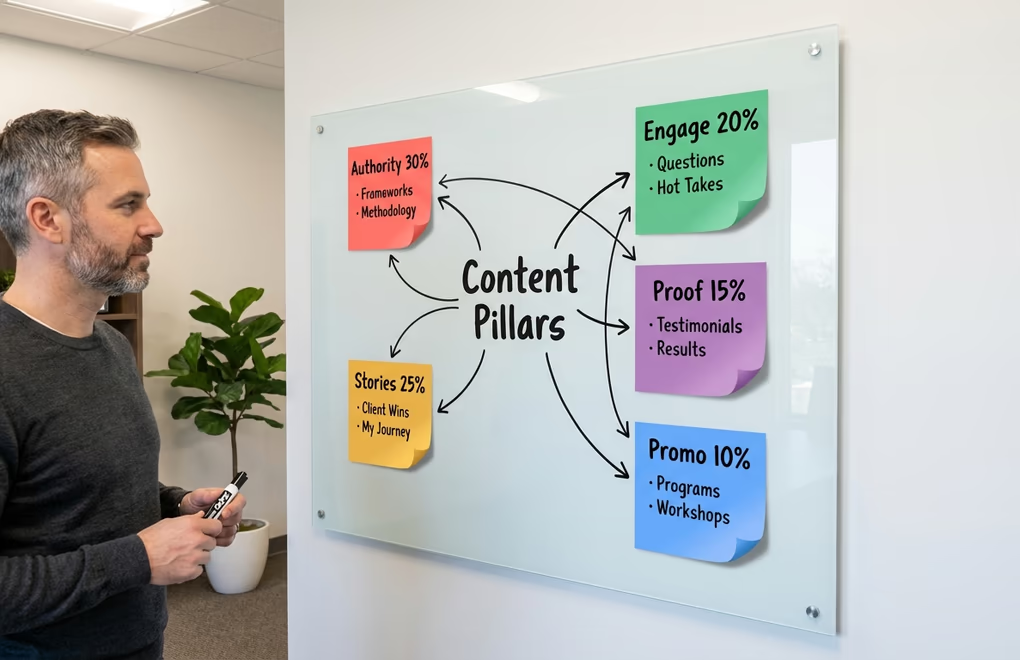
Random posting is the number one reason coaches fail on LinkedIn. Two free tools handle the basics so you can focus on the content itself: the LinkedIn headline analyzer scores your profile in 30 seconds, and the LinkedIn post templates library gives you fill-in-the-blank starting frameworks. For the paid stack, most coaches compare Taplio alternatives before settling on a tool. You might get lucky with one post, but without a structured approach, you will never build the consistent presence that converts followers into clients. The solution is a content pillar framework - a set of repeating themes that you rotate through, so every post serves a clear purpose in your client attraction system. I recommend five pillars for coaching businesses, each playing a specific role in the journey from stranger to paying client.
Pillar one: Authority content (30% of your posts). These are the posts where you teach. Share your frameworks, your methodologies, your unique perspectives on the problems your clients face. If you are a leadership coach, write about the patterns you see in struggling managers and the specific shifts that transform them. If you are a career coach, break down exactly how you help clients navigate salary negotiations or career pivots. Authority content positions you as someone who genuinely knows what they are talking about, and it is the foundation of everything else. The mistake most coaches make with authority content is being too vague. "Communication is important for leaders" teaches nothing. "The three-question framework I use when a client's team stops giving them honest feedback" teaches something specific and reveals your expertise in action.
Pillar two: Story content (25% of your posts). Humans are wired for narrative, and coaching is fundamentally about transformation stories. Share your own journey into coaching. Talk about the moment a client had a breakthrough that changed their career. Describe the before-and-after of a leadership team you worked with. Story content creates emotional connection in a way that pure teaching never can. The most powerful stories for coaches follow a simple structure: the situation before coaching, the specific challenge or turning point, and the transformation that followed. You don't need to name clients - abstract the details enough to protect confidentiality while keeping the emotional truth intact.
Pillar three: Engagement content (20% of your posts). These are the posts designed to start conversations. Ask provocative questions that your ideal clients care about. Share a contrarian opinion about something in your industry. Take a clear stance on a debate in your niche. Engagement content serves two purposes: it boosts your algorithmic reach by generating comments, and it reveals what your audience is thinking. When someone leaves a detailed comment on your post about work-life balance as a leader, that person just told you they are struggling with that exact issue. They might be your next client. Engagement content turns passive readers into active participants in your world.
Pillar four: Social proof content (15% of your posts). Testimonials, case studies, client wins, and tangible results. This is the pillar that directly addresses the question every potential client has: "Does this actually work?" When you share that a client went from dreading Monday mornings to getting promoted within six months, or that a founder you coached doubled their revenue after implementing your strategic framework, you are providing the evidence that makes someone comfortable investing in coaching. Don't just post screenshots of testimonials. Tell the story behind the result and explain what made the difference.
Pillar five: Promotional content (10% of your posts). This is where you actually talk about your offer. Open enrollment for a group program, a free workshop you are hosting, a new package you have created. The key is that promotional content should never exceed 10% of what you post. When it does, people tune you out because your feed starts feeling like an infomercial. But when 90% of your content is genuinely valuable and only 10% is promotional, the people who have been absorbing your expertise for weeks or months actually welcome the invitation to work with you. That is the magic of this framework - you earn the right to sell by spending most of your time giving.
Which 7 post types turn LinkedIn readers into coaching prospects?

Now that you have the strategic framework, let's get practical. These are the seven specific post types that I've seen generate the most coaching inquiries on LinkedIn. Each one maps to one or more of your content pillars, so you can mix and match as you build your weekly content plan.
The Transformation Post. This is the single most effective post type for coaches. You describe a client's situation before working with you, the key insight or shift that happened during coaching, and where they are now. It combines story and social proof into one powerful narrative. The trick is specificity. "My client grew their business" is forgettable. "My client went from working 70-hour weeks and missing her daughter's soccer games to building a team that runs the operation while she works 40 hours and actually takes real vacations" creates a vivid picture that your ideal client sees themselves in. Always get permission before sharing, and change enough details to protect privacy while keeping the emotional core intact.
The Contrarian Take. Challenge something that everyone in your industry assumes is true. If you are a business coach, maybe you disagree with the obsession over hustle culture. If you are a leadership coach, perhaps you think the standard advice about giving feedback is outdated. Contrarian takes generate massive engagement because people either strongly agree or strongly disagree, and both reactions lead to comments. Just make sure your contrarian opinion is genuine and backed by your actual coaching experience, not manufactured controversy for clicks. LinkedIn's 2026 "Authenticity Update" specifically penalizes engagement bait, so your stance needs to be real.
The Framework Post. Take one of your coaching frameworks, the ones you actually use with clients, and lay it out step by step. Give it a memorable name if you can. "The 3R Method for Recovering From a Bad Quarterly Review" or "My Five-Question Monday Reset That Prevents Burnout" - these posts get saved, shared, and bookmarked because they offer immediately actionable value. The beauty of framework posts is that they demonstrate your methodology without giving away the whole coaching experience. Readers get a taste of how you think and what working with you would feel like.
The Vulnerability Post. Share a genuine struggle - a time you failed, a lesson you learned the hard way, a mistake you made with a client (without violating confidentiality). Vulnerability posts on LinkedIn consistently generate the highest comment rates because they invite human connection in a sea of polished corporate content. When an executive coach admits they struggled with imposter syndrome during their first year, every reader who has felt that way immediately connects with them on a deeper level than any amount of expertise-flaunting could achieve.
The Behind-the-Scenes Post. Pull back the curtain on what coaching actually looks like. Not the glossy brochure version, but the real process. What happens in a typical first session? How do you prepare for a client call? What does your week look like as a coach? This type of content demystifies coaching for people who are curious but nervous about taking the leap. It reduces the fear of the unknown that stops many potential clients from reaching out in the first place.
The Hot Take on Industry News. When something happens in the business world, in leadership culture, or in your specific coaching niche, share your perspective quickly. Tie it back to the work you do with clients. If a major company announces layoffs, a career coach might share their take on how to navigate uncertainty. If a new management study comes out, a leadership coach can weigh in with what they see on the ground. Timeliness combined with expertise is a powerful combination.
The Carousel Post. Carousel posts, which are PDF documents uploaded to LinkedIn, get some of the highest dwell times on the platform because users swipe through each slide. For coaches, carousels work brilliantly for frameworks, step-by-step processes, and comparison guides. A 10-slide carousel titled "8 Signs Your Team Trusts You vs. 8 Signs They Don't" can reach thousands of people and generate a flood of saves. The key is to make each slide visually clean and focused on a single point - don't cram too much onto one slide.
How do coaches attract clients on LinkedIn without being salesy?

Every coach I talk to has the same fear: "I don't want to come across as pushy or salesy on LinkedIn." And honestly, that instinct is correct. Hard selling on LinkedIn does not work for coaching businesses. The moment someone feels like they are being pitched, they mentally categorize you as a salesperson, not a trusted advisor. The entire foundation of coaching is trust, and aggressive selling undermines that foundation before you even get a chance to demonstrate your value.
The alternative is what I call attraction-based content marketing. Instead of pushing your offer at people, you create content so genuinely helpful that people pull themselves toward you. Every post you write should leave the reader thinking one of three things: "This person really understands my situation," "I never thought about it that way before," or "I want to know more about how they work." If your content consistently triggers these reactions, you will never need to cold message anyone or write "DM me if you want to chat" on every post.
The call to action in coaching content should almost always be soft, not hard. Instead of "Book a free call with me," try ending your posts with questions that invite conversation: "What has been your experience with this?" or "Does this resonate with you?" When people respond in the comments, you have a natural opening to continue the conversation in DMs, not by pitching, but by asking follow-up questions and providing additional value. The transition from public content to private conversation to coaching discovery call happens organically when you lead with genuine curiosity about the other person's situation.
One technique that works incredibly well for coaches is what I call the "generous expert" approach. Give away your best thinking freely. Teach the frameworks you use with paid clients. Share the exercises that create breakthroughs. This scares some coaches because they think if they give everything away, nobody will pay them. But the opposite is true. People don't pay coaches for information - they pay for implementation, accountability, and personalized guidance. The more you demonstrate the depth of your expertise through free content, the more people trust that the paid experience must be even more valuable. It is counterintuitive, but generosity is the most effective sales strategy for coaching businesses.
Your LinkedIn profile also plays a critical role in the non-salesy approach. When someone reads your content and clicks through to your profile, they should find a page that clearly communicates who you help and what outcomes you deliver, not a wall of credentials and certifications. Write your headline for your ideal client, not for other coaches. Instead of "ICF Certified Executive Coach | ACC," try something like "Helping first-time VPs navigate the transition from manager to leader." Your personal brand should make it immediately obvious what working with you would look like and who it is for.
Content brings the right people past your profile, and what happens next decides whether any of them become clients. Coaches who would rather not spend their evenings in the search bar hand that half to LinkedIn prospecting, which scores people against the clients you already have and brings back the post that surfaced each one.
How do you build a content system that doesn't eat coaching hours?

Let me be honest about the biggest barrier coaches face with LinkedIn content. It is not lack of ideas. It is not writer's block. It is time. You are busy coaching clients, running your business, handling admin, trying to have a life outside of work. The last thing you want is to spend two hours every morning staring at a blank LinkedIn text box trying to think of something smart to say. That is why you need a system - a repeatable process that turns content creation from an open-ended creative struggle into a contained, predictable weekly task.
The Two-Hour Batch Method. Set aside two hours once per week - I recommend Monday mornings - and write all your LinkedIn content for the week in one sitting. Using your five content pillars as a guide, draft three to four posts. Monday you are fresh and your creative energy is highest. By Thursday afternoon, after five coaching sessions and a pile of emails, your brain is cooked. Batching removes the daily decision of "what should I post today" and replaces it with a weekly habit that becomes automatic over time. Start each batch session by scanning your notes for ideas you captured during the week, then match each idea to one of your five pillars.
Your coaching sessions are actually the richest source of content ideas you will ever have. Every time a client asks a great question, write it down. Every time you notice a pattern across multiple clients, note it. Every time you deliver a framework in a session and see the lightbulb moment in their eyes, that is a post. You don't need to reveal confidential details. Abstract the situation, change the specifics, keep the insight. Most coaches sit on a goldmine of content ideas every single day and let them vanish because they don't have a simple capture system. A notes app on your phone is enough. Just get the idea out of your head and into a list before it disappears.
Once your posts are drafted, schedule them in advance. This is where post scheduling tools become essential for coaches. When your content is queued up for the week, your LinkedIn presence continues building even while you are deep in coaching sessions. You are not pulling out your phone between client calls to publish a post. It is already done, already live, already generating visibility and conversations while you focus on the work you actually love doing. The best times to post on LinkedIn are during morning business hours, Tuesday through Thursday, so schedule accordingly.
Here is where AI fits into the picture, and it is a genuine game-changer for busy coaches. The challenge is not using AI to write your posts - it is using AI in a way that sounds like you and not like a robot. Writing AI-powered LinkedIn posts that don't sound robotic is about training the tool on your voice. With LinkedGrow's voice training, you feed in samples of your writing, and the AI learns your tone, your sentence structure, your vocabulary. When you then give it a content idea from your weekly list, the draft already sounds like you wrote it. You edit, add a personal touch, and publish. What used to take 45 minutes per post takes 15 minutes, and that is the difference between posting consistently and giving up after two weeks.
Don't forget the other half of the equation: engagement. Posting without engaging with others is like giving a speech and then immediately leaving the room. Spend 15 minutes a day, ideally right after your post goes live, leaving thoughtful comments on posts from people in your target audience. Not "Great post!" comments, but real observations, additional insights, or respectful disagreements. This does two things. The person you commented on notices you and often reciprocates on your content. And their entire network sees your comment, which expands your visibility to people who might never have found you through your own posts alone. Strategic commenting is the most underrated lead generation tactic on LinkedIn for coaches.
Your Next Client Is Already Scrolling LinkedIn
The people who need your coaching are on LinkedIn right now. They are scrolling during their morning commute, between meetings, during lunch. They are looking for someone who understands the challenges they are facing, someone who offers a perspective that feels different from the generic advice everywhere else. The question is whether you are showing up in their feed with content that makes them stop, think, and eventually reach out.
You don't need thousands of followers. You don't need to go viral. You need a clear set of content pillars, a weekly batching habit, and the willingness to share your real expertise and your real stories with the specific people you are best positioned to help. The coaches who will thrive in 2026 are not the ones with the biggest audiences. They are the ones who showed up consistently, spoke to the right people, and built genuine thought leadership one post at a time.
If the idea of maintaining this kind of presence feels overwhelming alongside your coaching workload, that is exactly the problem tools like LinkedGrow are designed to solve. Voice-trained AI drafts, scheduling, content calendar views, and hook generation - all built for coaches who want to spend their time coaching, not struggling with content. Start with your five pillars, batch two hours on Monday, and let the system do the rest. Your ideal clients are waiting to find you.
Frequently Asked Questions
Two to four times per week is the sweet spot for most coaches. Consistency matters more than volume. Posting three times every single week will build more authority and attract more clients than posting daily for two weeks and then going silent for a month.
Client transformation stories and contrarian takes on your niche generate the most leads. People hire coaches who demonstrate understanding of their problems. Posts that share specific frameworks, challenge common assumptions, or reveal behind-the-scenes coaching processes consistently outperform generic motivational content.
No. Direct selling on LinkedIn alienates your audience. The most successful coaches use content to build trust and demonstrate expertise, then let interested prospects reach out naturally. Keep promotional content under 10% of your total posts and always lead with value first.
Yes, when used correctly. The key is choosing AI tools that learn your writing voice rather than producing generic content. Tools like LinkedGrow train on your past writing so generated drafts already sound like you. Always edit AI drafts to add personal anecdotes and specific client examples.
Most coaches start receiving inbound inquiries after 60 to 90 days of consistent posting. The first month builds visibility, the second builds recognition, and the third builds trust. Your timeline depends on your niche, posting frequency, and how actively you engage with others in your network.
The people you just read about are already on LinkedIn.
LinkedGrow runs an agent that finds the ones who match the customers you already have, sends the invitation in your words, and opens the conversation. You pick it up when somebody answers.
Build my agent free