
Most advice about how to network on LinkedIn starts and ends with connection requests, as if the entire platform were a contact database where you collect names. That approach worked tolerably in 2018, when LinkedIn was mostly a job board with a feed bolted on, but it doesn't hold up anymore. The platform now has over a billion members, and the people worth connecting with get dozens of cold requests every week from strangers who want something. Standing out by sending another blank request is like trying to get noticed at a crowded party by walking up to someone and handing them your business card without saying a word.
The people who actually build valuable LinkedIn networks in 2026 use a different model entirely. They post content that demonstrates what they know, they comment on other people's posts in ways that add genuine value, and they send connection requests only after the other person already recognizes their name from the feed. By the time the request arrives, it isn't cold at all. This content-first approach works for founders, freelancers, coaches, job seekers, and anyone else who wants to build professional relationships on LinkedIn without feeling like a used-car salesperson.
This article covers the full strategy: setting your profile up so it converts visitors into connections, using content to attract inbound requests, building visibility through strategic commenting, writing connection requests that actually get accepted, and maintaining your network so relationships don't go stale after the initial handshake. LinkedGrow is a LinkedIn content creation and scheduling platform that makes consistent posting easier (the engine behind the content part of this strategy), but every tactic here works regardless of the tools you use.
The difference between networking that feels natural and networking that feels forced comes down to sequence. When you post first, engage second, and request third, every interaction has context. When you skip straight to the request, you are asking a stranger to trust you with no evidence that you are worth their time. The six tactics below follow that sequence, from setting up your profile through maintaining long-term relationships, and each one builds on the one before it.
Why does networking on LinkedIn still matter in 2026?
LinkedIn is the only major social platform where professional intent is the default. Everyone on the platform is there in a work context, which means a connection request from a stranger is normal (even expected), while the same approach on Instagram or Twitter would come across as invasive. That professional context makes LinkedIn the most efficient place to build relationships that lead to clients, partnerships, job offers, mentorship, and referrals.
The LinkedIn algorithm in 2026 actively rewards networking behavior. When you engage with someone's content (comment, react, share), the algorithm starts showing you more of their posts and showing your posts to their audience. This creates a visibility loop: the more you interact with people in your target network, the more LinkedIn surfaces your content to their connections, and the more inbound requests you receive from people who already know your name and perspective.
The algorithm also distinguishes between passive connections (people you added once and never interacted with) and active relationships (people whose content you regularly engage with). Active relationships get more distribution from the algorithm, so a network of 500 engaged connections who regularly interact with your content will generate more reach, more opportunities, and more inbound leads than a network of 10,000 inactive connections who never see your posts because the algorithm stopped showing them.
This is why the old "connect and collect" strategy is dead. Adding thousands of people without engaging with them wastes your time and actively hurts your reach by diluting your audience with people who will never interact with your posts. Every connection who ignores your content teaches the algorithm that your content isn't interesting, and the algorithm responds by showing it to fewer people. Quality networking isn't a nice sentiment anymore, it's how the algorithm actually works.
How should you set up your profile before networking?
Your LinkedIn profile is the landing page that people see before they decide whether to accept your connection request, reply to your message, or follow you after seeing your comment on someone else's post. If your profile doesn't quickly communicate who you are, what you do, and why someone in your target network would benefit from connecting with you, the best outreach strategy in the world won't save you.
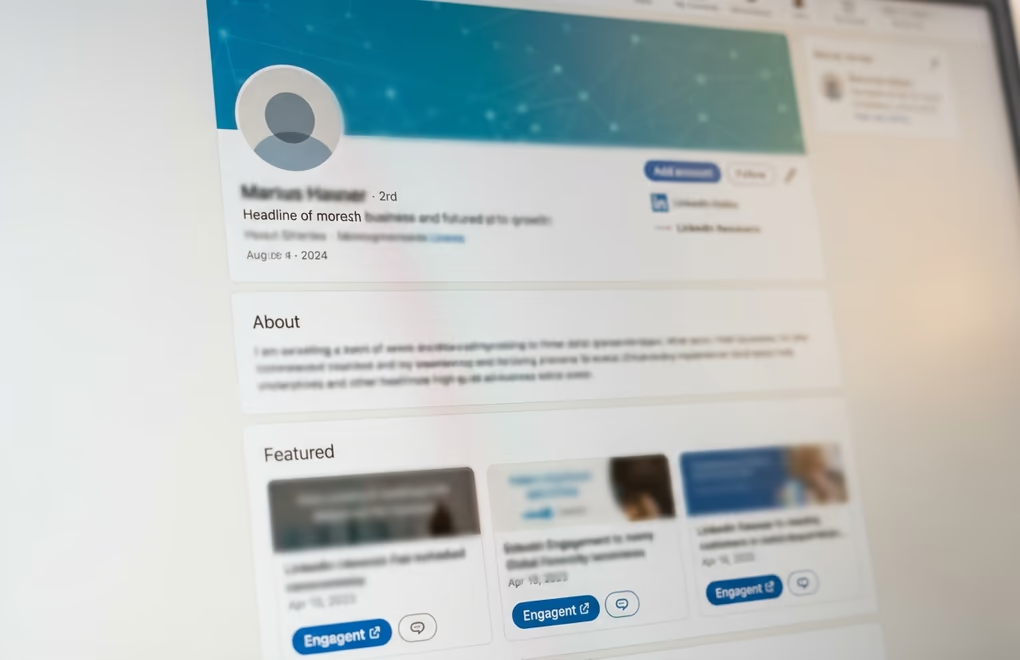
Start with your headline, because it appears everywhere: under your name in the feed, in search results, in connection requests, and in comments. Your headline should tell people what you do and who you do it for in plain language. "I help B2B SaaS companies build pipeline through LinkedIn content" communicates far more than "Marketing Professional | Passionate About Growth" because the first version gives people a reason to connect and the second gives them nothing.
Your About section is where you tell your professional story in a way that connects with the people you want in your network. The first two lines are critical because LinkedIn truncates the rest behind a "see more" link. Open with a clear statement of what you do and the results you create, then use the rest of the section to explain your background, your approach, and what kind of conversations you are open to. End with a direct invitation to connect, something like "Always happy to connect with founders building in [your space]. Send me a request and mention what you're working on."
Your profile photo and banner also matter for networking. Profiles with a clear, professional headshot get significantly more connection request acceptances than profiles with no photo or a casual image. Your banner is free real estate: use it to reinforce your headline by summarizing your offer, your brand, or the community you belong to. A branded banner that says "Helping coaches grow on LinkedIn" reinforces your headline every time someone visits your profile.
The Featured section is underused by most people, and that makes it a networking advantage. Pin your best-performing posts, a case study, a lead magnet, or a link to your newsletter. When someone visits your profile after seeing your comment or receiving your connection request, the Featured section gives them something to engage with immediately, which makes them much more likely to accept, follow, and eventually reach out to you.
How does posting content grow your LinkedIn network?
Content is the most effective networking tool on LinkedIn because every post you publish reaches people beyond your current connections. When your existing connections engage with your post (react, comment, share), the algorithm shows that post to their connections as well, meaning people you have never met see your name, your perspective, and your expertise. The ones who find it valuable send you connection requests on their own, without you ever having to reach out first.

The compounding effect is where content-based networking really separates from connection-request networking. If you send 10 connection requests today, you might get 6 new connections and that's the end of it. If you publish a post that gets 2,000 impressions, you might get 3 connection requests today, 2 tomorrow when someone finds it in their feed, and 1 more next week when a comment resurfaces it. Over a month of consistent posting (3 to 5 times per week), those inbound requests compound into dozens or hundreds of new connections from people who already know what you think and what you stand for.
You don't need to post original thought-leadership essays to make this work. Some of the most effective networking content on LinkedIn is practical and simple: sharing a lesson you learned this week, breaking down a process you use in your work, posting a take on a trend in your industry, or telling a short story about a professional experience. The content ideas that work best for networking are the ones that demonstrate competence and personality at the same time, because people connect with people they find both knowledgeable and relatable.
Consistency matters more than perfection here, and posting twice per week every week will grow your network faster than posting a masterpiece once a month, because the algorithm rewards regular activity and your audience needs to see your name repeatedly before they decide to connect. Scheduling your posts in advance makes consistency realistic even when your week gets busy, and using a tool like LinkedGrow to draft and schedule content in batches means the networking machine keeps running even on days when you are too deep in client work to think about LinkedIn.
One pattern that accelerates content-based networking is tagging people you mention in your posts. If you write about a concept you learned from a specific person, tag them. If you write about a tool, an event, or a company, tag the relevant people. Tagging is a signal: it tells the tagged person you value their work, it surfaces your post to their audience, and it often leads to a reply or reshare that multiplies your reach. Just be genuine about it: tag people because you are genuinely referencing them, not as a growth hack to borrow their audience.
How can commenting build real connections on LinkedIn?
Commenting on other people's posts is the fastest way to get on someone's radar before you ever send a connection request. When you leave a thoughtful comment on someone's post, three things happen: they see your name and typically click through to your profile, the algorithm starts associating the two of you (which means your content will be shown to their audience more often), and anyone else reading the comments sees your perspective and might visit your profile too. A single good comment can generate more profile views than a week of posting, especially if you comment on posts from people with large audiences.
The quality of the comment determines whether this works or falls flat. A comment that says "Great post!" or "Love this" or the clap emoji does nothing for your networking. It doesn't demonstrate that you read the post, it doesn't add any value, and the post author has no reason to remember you. The comments that build real connections are 30 to 60 words long, reference something specific from the post, and add your own perspective, experience, or a follow-up question. For example: "Your point about LinkedIn carousels outperforming text posts matches what I've seen too. I tested it last month with a 7-slide breakdown of our agency process and it got 4x the engagement of my usual text posts."
Build a daily commenting routine by identifying 10 to 15 people you genuinely want to connect with (potential clients, peers in your industry, creators whose content you respect) and turning on notifications for their posts. When they publish something new, be one of the first to leave a substantive comment. LinkedIn gives significantly more visibility to early comments (those posted within the first 30 to 60 minutes), so speed matters. Spending 15 minutes each morning commenting on posts from your target list will generate more real networking progress than an hour of sending cold connection requests. If building that target list in the first place is the sticking point, dedicated LinkedIn prospecting tools surface the right people by role, industry, and recent activity so your daily list is never guesswork.
After you have commented on someone's posts 3 to 5 times over a couple of weeks, they almost certainly recognize your name. That is the moment to send a connection request. Your request won't be cold, because they have already seen your face and your thoughts in their comment section. This warm approach has dramatically higher acceptance rates than a request from a complete stranger, and the conversation that follows feels natural because you already have shared context to build on.
What should you say in a LinkedIn connection request?
The connection request note has 300 characters, and the best ones use far fewer than that. Your note should accomplish one thing: give the other person a reason to believe that you are connecting with them specifically, not mass-adding everyone in their industry. That means referencing something concrete: a post of theirs you found valuable, a mutual connection, a shared event, or a specific aspect of their work that you want to learn more about.
A connection note that works looks like this: "Hi Sarah, I saw your post about building a content calendar for agency clients, and it matched exactly the problem I'm solving at my own agency. Would love to follow your work." That note works because it names the specific post, explains the relevance, and makes the ask low-stakes (following their work, not pitching a service). Compare it to: "Hi, I'd like to add you to my professional network on LinkedIn." The second one is the default template, and most active LinkedIn users ignore it.
After your connection request is accepted, don't immediately pitch. The most common networking mistake on LinkedIn is treating a new connection as a sales lead and dropping a product link or a calendar booking request in the first message. This burns the relationship before it starts. Instead, send a genuine thank-you message, mention what about their profile or content caught your attention, and let the conversation develop naturally. If there is a genuine fit for collaboration or business down the line, it will surface through normal interaction.
For people you really want to connect with (potential collaborators, ideal clients, industry leaders), the outreach message approach should be a multi-touch sequence. Comment on their posts for a week or two first. Then send a connection request with a genuine note. After they accept, send a brief message that adds value (sharing a resource relevant to what they post about, asking a specific question about their expertise, or complimenting a specific piece of work). Keep each message under 100 words and focused on them, not on you. The relationship builds over weeks, not in a single message.
Sending one good connection request is easy enough. Sending them every working day without running into the weekly ceiling is the real problem, and the LinkedIn connection limit page explains the warm-up ramp that keeps an account comfortably underneath it.
How do you maintain relationships with your LinkedIn network?
Building a network is only half the work, and the half that most people skip is maintaining it. A connection that goes dormant after the initial request accepted is barely better than no connection at all. The algorithm will stop showing your content to each other, the relationship fades from memory, and when you eventually need something (a referral, an introduction, a collaboration), you are starting from scratch with someone you technically already know.
The simplest maintenance habit is to spend 10 to 15 minutes each day engaging with your feed before you do anything else on LinkedIn. React to posts from your connections, leave substantive comments on the ones that interest you, and send a quick DM when someone shares a win, a challenge, or something you have a genuine reaction to. This keeps the algorithm feeding your content to them and theirs to you, and it keeps you present in their awareness without being intrusive.
LinkedIn's notifications make maintenance easier than most people realize. The platform tells you when a connection starts a new job, has a work anniversary, gets mentioned in the news, or publishes a post. These are natural conversation starters that take almost no effort to act on. Sending a quick "Congrats on the new role, the company looks like a great fit for what you've been building" takes 30 seconds and keeps the relationship alive in a way that feels genuine, because it is. You are reacting to a real event, not manufacturing a reason to reach out.
For your most important connections (the 20 to 50 people who are your key collaborators, clients, referral partners, or mentors), go beyond passive engagement. Set a monthly reminder to check in with each person, share something relevant to their work, or introduce them to someone in your network who could help them. The people who are generous with introductions and resources become the nodes in their professional community, and that generosity comes back in ways you can't predict or plan for.
A content calendar that includes engagement time alongside posting time makes network maintenance a system instead of an afterthought. Block 15 minutes in your morning for commenting and DMs, schedule your own posts for the week using LinkedGrow's content calendar, and track which connections you have engaged with recently so you don't let important relationships go silent for months. The combination of consistent posting and consistent engagement is what turns a list of connections into a real professional network that generates opportunities on both sides.
Turning LinkedIn networking into a daily system
Everything in this article comes down to one shift: treating LinkedIn networking as a system you run daily instead of a thing you do when you need something. The daily routine takes about 30 minutes total: 10 minutes posting or finalizing a scheduled post, 10 minutes commenting on posts from your target list, and 10 minutes replying to DMs and sending connection requests to people you have already warmed up through comments. That rhythm, repeated every weekday, will grow your network faster than any blitz of cold connection requests could.
The tools you use to maintain this system matter less than the consistency of showing up. That said, the posting part is where most people drop off, because creating LinkedIn content from scratch every day is hard to sustain alongside real work. LinkedGrow's voice training and AI content generation helps bridge that gap by turning your ideas into draft posts that sound like you, so the content engine keeps running even when your creative energy is low. You handle the engagement and outreach (the parts that require a real human), and LinkedGrow handles the content production (the part that can be systematized). Try it free for 7 days with a Pro trial and see whether consistent posting changes the trajectory of your LinkedIn networking.
Frequently asked questions about LinkedIn networking
LinkedIn allows up to 100 connection requests per week, which works out to about 14 per day. Staying under that limit keeps your account safe. Sending 5 to 10 well-targeted requests per day with a short personal note consistently beats sending 50 generic ones, because acceptance rates drop when you spray requests to people who have no reason to know you. Quality over volume protects your account and your reputation.
Data from outreach tools shows that acceptance rates are roughly the same whether or not you include a note. The difference shows up after the connection is accepted: people who received a personalized note are more likely to reply to your first message. If you have something genuine to reference (a shared event, a post of theirs you liked, a mutual connection), include a note. If the note would be generic filler, skip it and follow up with a message after they accept.
Lead with genuine curiosity instead of a pitch. Comment on their content with something specific you noticed, share your own perspective or experience on their topic, and ask questions that show you actually read what they posted. When you send a connection request, reference something concrete about them or their work, never your product or service. Save any business conversation for after you have exchanged at least a few real interactions, and only bring it up if the fit is obvious.
Consistent posting is the single most effective way to grow your LinkedIn network without sending connection requests at all. When you publish a post, LinkedIn shows it to your existing connections first, then to their connections if the engagement is strong. People who see your content and find it valuable send you connection requests on their own. Most LinkedIn creators report that 70% or more of their new connections come from inbound requests triggered by their posts rather than outbound requests they sent themselves.
Set aside 10 to 15 minutes daily to engage with your network instead of only showing up when you need something. React to and comment on posts from your key connections, send a direct message when someone shares a win or a challenge, and reshare content from people you genuinely want to support. The goal is to stay visible and present so that when a real opportunity comes up on either side, you are already top of mind. Consistency matters more than volume.
The people you just read about are already on LinkedIn.
LinkedGrow runs an agent that finds the ones who match the customers you already have, sends the invitation in your words, and opens the conversation. You pick it up when somebody answers.
Build my agent free